S8, Ep 15: The Beginner's Mindset: Mac Brown on Embracing Continuous Learning in Fly Fishing

S8, Ep 15: The Beginner's Mindset: Mac Brown on Embracing Continuous Learning in Fly Fishing

Episode Overview

In this episode of The Articulate Fly, host Marvin Cash sits down with Master Casting Instructor Mac Brown for another installment of Casting Angles — a wide-ranging conversation on the philosophy of continuous improvement in fly fishing and fly casting. Recorded just before the Lancaster Fly Fishing Show, the episode centers on one of the most practical yet underappreciated principles in skill development: approaching your craft with a beginner's mind, no matter how many years you've been on the water. Mac draws on feedback from students at recent west coast events — including anglers with 30 to 40 years of experience who received their first structured casting instruction — to illustrate how long-held assumptions can silently ceiling growth. The conversation touches on Mac's "four stages of learning" framework, the infinite circle of knowledge and the parallels between fly casting mastery and elite performance in any discipline. Practical spring fishing news also surfaces in the second half: listeners get actionable intel on early-season Quill Gordon dry fly hatches on wild Appalachian freestone streams, the ideal nymph sizing window as hatches begin (sizes 12–16) and emerging activity of little black stones and blue winged olives on Tennessee tailwaters. Mac and Marvin also preview their respective Lancaster show appearances and detail upcoming guide schools and casting classes at macbrownflyfish.com for anglers planning their spring season.

Key Takeaways
  1. How adopting a beginner's mindset — staying open to new information regardless of experience level — is the single most reliable driver of improvement in fly casting and fishing.
  2. Why intermediate anglers stagnate: the false belief that years of time on the water equates to skill development, which shuts down active learning before it can happen.
  3. How Mac's four stages of learning framework maps the path from novice to expert, and why most anglers get stuck at stage two.
  4. When Quill Gordon dry fly hatches arrive on wild Appalachian freestone streams, they represent one of the season's best dry fly windows because the adult floats for 15–20 minutes while hardening its wings.
  5. Why early-season nymphs (sizes 12–14) are as large as they'll be all year, making this the optimal window to fish bigger nymph patterns before successive hatches progressively reduce insect size.
  6. How structured instruction — rather than YouTube, books or show demos alone — accelerates skill acquisition in ways self-directed learning rarely can.

Techniques & Gear Covered

The episode is primarily instructional and conceptual rather than gear-heavy, but several practical fishing frameworks emerge. Mac references his own book Casting Angles — a fly casting handbook endorsed by the ACA and FFI — as the source material for the four stages of learning discussion, and directs listeners to the article on his website for a deeper read. The conversation touches on the comparative limitations of self-directed learning via YouTube and books versus structured in-person instruction, particularly for developing proper casting mechanics. On the dry fly fishing side, Mac recommends dry fly presentations targeting Quill Gordons on freestone streams in size 12, with the extended float window (15–20 minutes) making these hatches unusually productive for surface takes. Marvin notes that pairing size 14 and 16 nymphs during this same early-season window takes advantage of the year's largest nymph profiles before they diminish through the season. Mac also promotes two-day casting schools through macbrownflyfish.com as the highest-value instructional investment for anglers who want to advance their skills heading into spring.

Locations & Species

The episode references wild freestone streams in the Western North Carolina / Great Smoky Mountains region — Mac's home water around Bryson City — as the primary context for the early Quill Gordon hatch discussion, with these streams producing active trout as water temperatures begin to rise. Tennessee tailwaters are also noted as waters where little black stoneflies and blue winged olives are already appearing, signaling the beginning of productive surface-feeding windows. The target species throughout is wild trout, with Mac's commentary on Quill Gordon hatches specifically framed around waking large fish that have been dormant through winter. The seasonal framing is early spring, a transition period characterized by warming daytime temperatures, emerging hatches and increasingly active trout — one of the most productive dry fly windows of the year in the Southern Appalachians.

FAQ / Key Questions AnsweredHow does a beginner's mindset improve fly casting and fishing skills?

Beginners enter instruction with no preconceptions to dismantle, which makes them highly receptive to new technique and feedback. Mac argues that anglers who believe they are already proficient — after years of fishing without formal instruction — unknowingly stop absorbing new information, effectively stalling their development at the intermediate stage.

What are the four stages of learning in fly casting?

Mac's framework progresses from stage one (open absorption of fundamentals) through stage two (recognizing a problem exists but not knowing how to fix it — where most intermediate anglers stall) to stages three and four, where skills become internalized and self-correcting. He recommends reading the full article on his website for a detailed breakdown of each stage.

When is the Quill Gordon hatch and why is it such a good dry fly opportunity?

The Quill Gordon is an early-season mayfly that emerges on wild Appalachian freestone streams, typically before most other major hatches of the year. The adults float on the surface for 15–20 minutes while hardening their wings — an unusually long window that gives trout ample time to key on them and gives anglers sustained dry fly fishing action. Size 12 patterns are appropriate at peak emergence.

Why should anglers fish larger nymph patterns in early spring?

Nymph size follows a seasonal arc: early in the year, aquatic insects are at or near maximum size before the first hatches reduce their populations and successive generations emerge progressively smaller. Sizes 14 and 16 are particularly effective in this early window, as they match the naturals more accurately than the smaller patterns that will dominate later in the season.

What does Mac Brown recommend for anglers who want to improve most efficiently?

Mac consistently points to in-person structured instruction — particularly his two-day casting school — as the highest-leverage investment for improvement. He contrasts this with YouTube and book-based learning, which lack the real-time feedback loop required to correct ingrained errors and build proper mechanics into muscle memory.

Related Content

S7, Ep 16 - Simplifying Complexity: Effective Teaching Strategies in Fly Fishing with Mac Brown

S7, Ep 20 - Practice Makes Perfect: Mac Brown on Mastering Casting Techniques

S7, Ep 28 - Warming Waters and Active Fish: A Spring Fishing Update with Mac Brown

S6, Ep 10 - Casting Angles with Mac Brown

S6, Ep 141 - Mastering Cold Weather Fly Fishing with Mac Brown

Connect with Our Guest

Follow Mac on Facebook, Instagram and Twitter.

Follow the Show

Follow The Articulate Fly on Facebook, Instagram,

Tämä jakso on lisätty Podme-palveluun avoimen RSS-syötteen kautta eikä se ole Podmen omaa tuotantoa. Siksi jakso saattaa sisältää mainontaa.

Jaksot(1106)

S8, Ep 76: The Truth About Rod Action: Mac Brown's Guide to Better Casting Techniques

S8, Ep 76: The Truth About Rod Action: Mac Brown's Guide to Better Casting Techniques

Episode OverviewOn this episode of The Articulate Fly's Casting Angles series, fly casting instructor Mac Brown of Mac Brown Fly Fish in Bryson City, North Carolina, joins host Marvin Cash to take apa...

14 Loka 11min
S8, Ep 75: Autumn Angling Insights: George Costa's Tips for Central PA's Changing Waters

S8, Ep 75: Autumn Angling Insights: George Costa's Tips for Central PA's Changing Waters

Episode OverviewThis Central PA Fishing Report from The Articulate Fly, a fly fishing podcast, catches up with George Costa, manager of TCO Fly Shop in State College, Pennsylvania, for an early-fall l...

9 Loka 3min
S8, Ep 74: Pennsylvania Smallmouth Wrap-Up: Captain Brian Shumaker on Low Water and Stingy Fish

S8, Ep 74: Pennsylvania Smallmouth Wrap-Up: Captain Brian Shumaker on Low Water and Stingy Fish

Episode OverviewIn the final Pennsylvania Smallmouth Report of the season on The Articulate Fly, Captain Brian Shumaker of Susquehanna River Guides explains how to keep putting smallmouth bass in the ...

7 Loka 9min
S8, Ep 73: REDUX: The Fight for Our Future: Land Tawney on Grassroots Advocacy and Public Lands

S8, Ep 73: REDUX: The Fight for Our Future: Land Tawney on Grassroots Advocacy and Public Lands

Episode OverviewThis award-winning episode of The Articulate Fly, which took 1st place in the 2026 Outdoor Writers Association of America (OWAA) Excellence in Craft awards (Radio/Podcast: Conservation...

2 Loka 54min
S8, Ep 72: Casting Essentials: Mac Brown's Guide to Power and Arc

S8, Ep 72: Casting Essentials: Mac Brown's Guide to Power and Arc

Episode OverviewOn this Casting Angles episode of The Articulate Fly, host Marvin Cash and Mac Brown, fly casting instructor at Mac Brown Fly Fish in Bryson City, North Carolina, unpack the biggest li...

30 Syys 11min
S8, Ep 71: Fall Fishing Forecast: George Costa on Streamers, Hatches and Safety Tips

S8, Ep 71: Fall Fishing Forecast: George Costa on Streamers, Hatches and Safety Tips

Episode OverviewGeorge Costa, manager of TCO Fly Shop in State College, Pennsylvania, returns to The Articulate Fly for another Central PA Fishing Report as the region shifts firmly into fall. Recent ...

26 Syys 4min
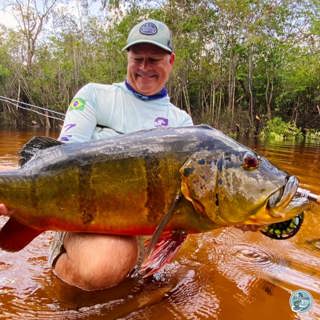
S8, Ep 70: REDUX: Nomadic Waters and the Allure of Amazonian Peacock Bass

S8, Ep 70: REDUX: Nomadic Waters and the Allure of Amazonian Peacock Bass

Episode OverviewIn this episode of The Articulate Fly, host Marvin Cash sits down with Michael Williams, owner and host of Nomadic Waters, to explain how anglers catch Amazon peacock bass on the fly a...

24 Syys 1h 15min
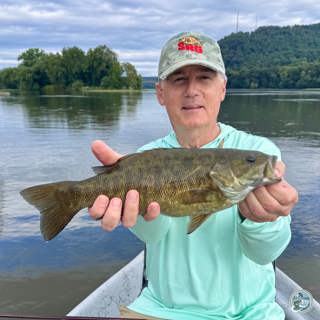
S8, Ep 69: Navigating the Transition: Captain Brian Shumaker on Smallmouth Behavior and Fishing Techniques

S8, Ep 69: Navigating the Transition: Captain Brian Shumaker on Smallmouth Behavior and Fishing Techniques

Episode OverviewOn this Pennsylvania Smallmouth Report from The Articulate Fly fly fishing podcast, host Marvin Cash checks in with Captain Brian Shumaker of Susquehanna River Guides for an early fall...

23 Syys 8min

Suosittua kategoriassa Koulutus

rss-murhan-anatomia
aamukahvilla
psykopodiaa-podcast
voi-hyvin-meditaatiot-2
psykologia
rss-duodecim-lehti
rss-rahamania
kesken
rss-liian-kuuma-peruna
rss-uskonto-on-tylsaa
aloita-meditaatio
rss-luonnollinen-synnytys-podcast
adhd-podi
koulu-podcast-2
rss-suomen-aa-podcast
rss-hereilla
rss-arkea-ja-aurinkoa-podcast-espanjasta
ihminen-tavattavissa-tommy-hellsten-instituutti
rss-niinku-asia-on
rss-koira-haudattuna