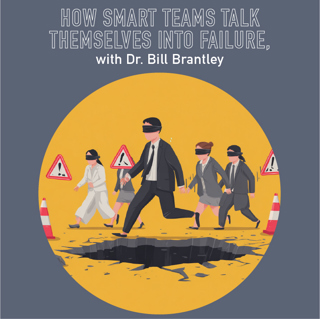
120 - How smart teams talk themselves into Failure, with Dr. Bill Brantley

120 - How smart teams talk themselves into Failure, with Dr. Bill Brantley

Why do smart teams still deliver failed projects?

Most project failures don't begin with a catastrophic mistake. Instead, they begin with small deviations—minor compromises that seem harmless in the moment. A warning sign gets ignored. A shortcut becomes acceptable. A risk is acknowledged but tolerated because "nothing bad happened last time." Over time, those deviations quietly become the new normal.

In this episode of Project Management Happy Hour, Kim Essendrup and Kate Anderson sit down with Dr. Bill Brantley to explore one of the most dangerous patterns in project leadership: normalization of deviance.

The concept comes from sociologist Diane Vaughan's analysis of the Challenger space shuttle disaster. Engineers had long observed problems with the shuttle's O-ring seals. But earlier launches survived those anomalies. Each successful launch reinforced the belief that the risk was acceptable. Gradually, what began as an abnormal warning became accepted behavior.

As Dr. Brantley explains:
"We survived that near miss. It's okay. Next time we'll be okay."

Project teams fall into this pattern all the time.

A design review is skipped because the team is behind schedule.

A test failure gets dismissed because it hasn't caused a real problem yet.

A risk gets documented—but never truly addressed.

Nothing breaks immediately. So the project keeps moving.

The conversation explores how this slow drift toward failure mirrors patterns seen in aviation, engineering disasters, and even mountaineering expeditions. Experienced professionals—people who know better—gradually normalize increasingly risky decisions until the system finally breaks.

But the episode goes further than just diagnosing the problem. Dr. Brantley and the hosts dive into the decision dynamics inside projects.

A typical project team makes dozens—or even hundreds—of decisions every week. Some have immediate consequences, while others take months or years to reveal their impact. One story from the Apollo program illustrates this perfectly: a weld defect made years earlier ultimately contributed to the crisis of Apollo 13.

This delay between decision and consequence creates a dangerous blind spot. Dr. Brantley jokingly calls it the "White Castle effect."

"White Castle burgers are great going down… and then at three in the morning you realize you made a bad decision."

The same thing happens in project management. Decisions that seem harmless in the moment can produce painful consequences much later.

One of the most powerful insights from the discussion is that organizations often fail to reflect on their decisions. Teams act, move forward, and stay busy—but rarely pause to ask whether their decisions are actually improving outcomes.

That reflection step is critical.

"Reflection really helps you break that normalization of deviance."

Without it, teams never notice when small compromises start compounding into systemic risk.

The episode also explores practical techniques for improving project decision-making. One of Dr. Brantley's favorites is red teaming—a method borrowed from military strategy and cybersecurity. In a red-team exercise, someone deliberately challenges the plan and tries to break it. Their job is to expose weaknesses before reality does.

It's a powerful way to counter groupthink and create psychological safety for dissent.

Another theme throughout the conversation is something many project managers intuitively know but rarely articulate: Every action—or inaction—on a project is ultimately a decision.

"Everything is a decision. Nobody is going to come after you around anything other than decisions."

Whether it's changing scope, delaying work, ignoring a risk, or choosing not to act at all, project leaders are constantly making decisions that shape the outcome of the project.

The real question isn't whether decisions are happening.

It's whether those decisions are intentional, visible, and thoughtfully examined.

Because in many projects, failure doesn't arrive suddenly.

It arrives slowly—one accepted deviation at a time.

Love our content? Then join the PM Happy Hour membership at pmhappyhour.com/membership

Tämä jakso on lisätty Podme-palveluun avoimen RSS-syötteen kautta eikä se ole Podmen omaa tuotantoa. Siksi jakso saattaa sisältää mainontaa.

Jaksot(132)

126: "What's your AI Strategy?" Handling the Executive who wants AI in everything

126: "What's your AI Strategy?" Handling the Executive who wants AI in everything

You know the moment. Your project plan is solid. The scope is defined. The team is ready. Then an executive walks by and casually asks: "Can we just make this AI?" Suddenly you're no longer managing a...

3 Kesä 39min
125: How to survive the AI landscape as a PM with PMI's Dr Kelly Heuer

125: How to survive the AI landscape as a PM with PMI's Dr Kelly Heuer

AI is changing work fast enough to give every project manager emotional whiplash. New tools, new workflows, new expectations… and somehow you're still expected to hit deadlines, manage stakeholders, a...

20 Touko 58min
124: Drowning in Tasks: How Successful PMs Organize the Chaos

124: Drowning in Tasks: How Successful PMs Organize the Chaos

If your to-do list is 47 items long, your Slack won't shut up, and you ended the day thinking, "Cool… but what did I actually accomplish?"—welcome. You're among friends. In this episode, Kim and Kate ...

6 Touko 56min
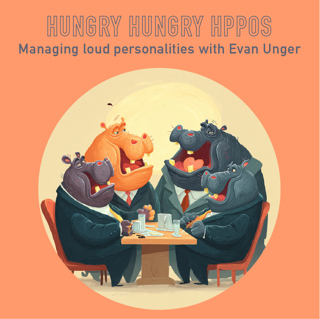
123 - Hungry Hungry HPPOs - managing loud personalities with Evan Unger

123 - Hungry Hungry HPPOs - managing loud personalities with Evan Unger

If your weekly calendar looks like the loser in a state fair quilt competition - just solid blocks of mismatched colors with no room to breathe - this episode is for you. Today, we're joined by facili...

14 Huhti 1h
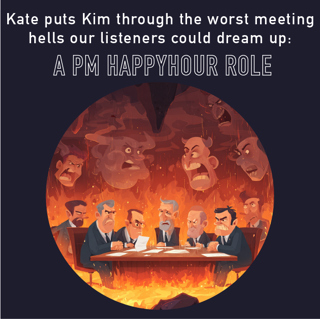
122 - Kate puts Kim through the worst meeting hells our listeners could dream up: a PM HappyHour role play

122 - Kate puts Kim through the worst meeting hells our listeners could dream up: a PM HappyHour role play

Boss fights and boardrooms. Kate puts Kim through meeting hell in this tabletop roleplay episode. Kate: "Help me torture Kim." That was the prompt. What followed was a meeting dungeon built from liste...

3 Huhti 1h 14min

121 - Top Shelf Replay: Embracing the Escalation

121 - Top Shelf Replay: Embracing the Escalation

Escalation: it's a word that can make even experienced project managers tense. But what if you approached it as a tool rather than a threat? In this Top Shelf Replay of Project Management Happy Hour, ...

24 Maalis 45min

119 -  TSR: They told me I'm 'too nice'??

119 - TSR: They told me I'm 'too nice'??

Have you ever gotten feedback that made you want to flip a table because it was both insulting and totally useless? In this Top Shelf Replay, we revisit "They Told Me I'm Too Nice" and break down what...

24 Helmi 1h 2min

Suosittua kategoriassa Liike-elämä ja talous

sijotuskasti
psykopodiaa-podcast
mimmit-sijoittaa
rss-rahapodi
rss-oivalluksia-rahasta-elamasta
asuntoasiaa-paivakirjat
oppimisen-psykologia
hyva-paha-johtaminen
pomojen-suusta
pari-sanaa-lastensuojelusta
rss-rahamania
rss-myynnilla-on-asiaa-kert-kenner
herrasmieshakkerit
ostan-asuntoja-podcast
rss-laakispodi
rss-kaupan-tila
rss-sisalto-kuntoon
rss-set-for-life-sijoita-ja-vaurastu
rss-paikoillenne-valmiit-laakikseen
rss-ainin-sekatoimisto