Will Millennials disrupt democracy?
Democracy Works29 Loka 2018

Will Millennials disrupt democracy?

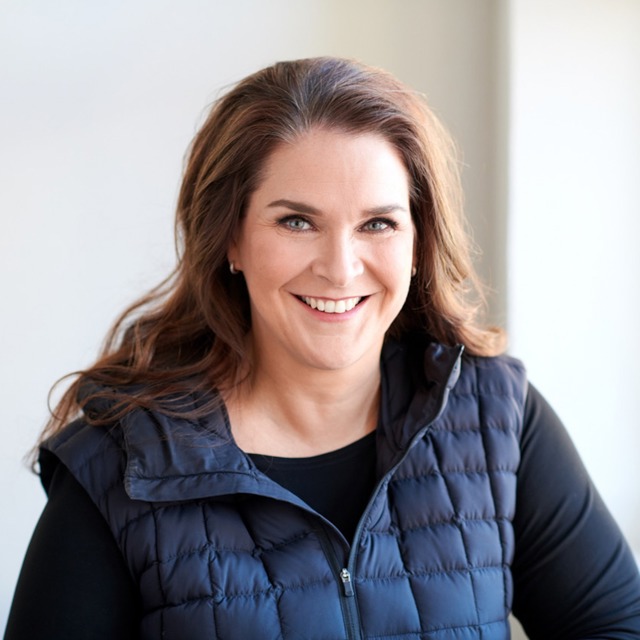
Stella Rouse

From cooking to shopping to getting around town, disruption is the name of the game for Millennials. Will they do the same thing to democracy?

Millennials, or those born between 1981 and 1996, are now largest generational group in the United States. There’s been a lot of talk lately about whether these 20 and 30-somethings will vote in the 2018 midterms. This episode touches on that, but also explores some of the reasons why Millennials feel disengaged from voting and other traditional forms of political engagement.

Our guest this week literally wrote the book on this topic. Stella Rouse is co-author of The Politics of Millennials, which draws upon existing data about Millennials, as well as surveys and focus groups that Stella and co-author Ashely Ross conducted. They found that events like 9/11 an the 2008 financial crisis profoundly shaped the way Millennials view the world and their place within it — views that run counter to older generations and their views of democratic engagement.

Stella is an Associate Professor in the Department of Government and Politics, Director of the Center for American Politics and Citizenship, and Associate Director of the University of Maryland Critical Issues Poll at the University of Maryland.

Additional Information

The Politics of Millennials

Can young people revive civic engagement? A conversation with Peter Levine of The Center for Information and Research on Civic Learning and Engagement

Discussion/Reflection Questions
  • Do you think Millennials are politically active?
  • If so, do you see them engaged more traditionally in campaigns and voting or non-traditionally in the form of protests?
  • How do you think Millennials world views will translate into public policy?
  • If you are not a Millennial, what is the biggest difference you see between this younger generation and your own? Also, what similarities do you see?
  • What do you think the political views of this generation will look like in 20 years?
Interview Highlights [4:49] How do you define a millennial and what about them made you interested in studying their generation further?

Stella: Generally the accepted timeframe is those from the late 80’s to the late 90’s. Millennial are those who grew up mostly around the turn of the century.

[5:30] What are the identity characteristics of this generation?

Stella: It’s composed of a number of factors. Most notably, it is a very diverse generation in American history. They’ve lived around different races and ethnic groups more so than any other generation in the nations history. They are also the first “digital natives”. They don’t know what it’s like to be without the internet or a cellphone in their pocket. This impacts how they experience politics and communicate with others. Also, the events of 9/11 is a significant aspect of this generation in terms of how it views the world around them and the role of America in it.

[7:30] How to millennial see themselves as citizens?

Stella: Millennials are more engaged in non-traditional forms of engagement such as voting or working on campaigns. People look at this and then see the generation as being apathetic politically. However, this doesn’t take into account their engagement in more non-traditional political formats such as protests and rallies. They are also more engaged in the local level than the national level. The key question is how is this activity translated into voting. I don’t have a straight answer for that. A lot of it involved getting them into the habit of voting.

[10:08] Do you sense any momentum on the part of this generation to shape the political system to fit to its interest rather than it adapting to the current political climate?

Stella: Yes. We are seeing a lot of Millennials run for office. Particularly, minorities of this group are running for office. I think in the next few years we’re going to see this continue. Then, once in office, they’ll be able to shape the political landscape to better reflect their world view.

[11:10] This generation also identifies at a greater rate than those before them as global citizens. How does this square with their involvement in local political issues?

Stella: When I say local I don’t mean they’re voting at the local level. Where the participate traditionally is still higher at the national level than the local level. One thing about this generation is that they’re very distrustful of institutions. This includes political parties. This makes sense given the fact that their time has been filled with the greatest partisan divide in American politics in generations. Therefore, they are much more likely to identify as independents. Their lack of identification along party lines leads to lower levels of traditional political engagement in the form of campaigning and voting.

[13:00] We’ve talked about the separation of liberalism and the democratic norm of institutions. Do you see this divide growing as this generations comes into political power?

Stella: It could be, but the jury is still out on this. They have an internal conflict that they distrust institutions but they know they have to play by the rules in order to change it. It’s not clear if they’ll play the game and try to bring about change from the inside or whether they’ll maintain their outsider status and try to change things from the outside.

[14:35] We saw Obama and Sanders as two political figures who resonated with this generation. What about them do you think made them so appealing to this generation?

Stella: They spoke to the issues they cared about. Particularly, Obama really addressed them in the mediums they cared about, such as social media. Even though he is not a millennial, he became the millennial president.

[16:09] How does Donald Trump play among Millennials?

Stella: Not too well. He is not very popular amongst them. That’s not to say there isn’t a segment of the generation who support him, but about two thirds of the generation don’t support him or his policies. His policies related to immigration and diversity go against the preferences of millennials.

[17:02] Is there anything to suggest that millennials will become more conservative as they get older?

Stella: That is a really good question. An important point we try to make is that this group is not monolithic in that they aren’t all liberals. On a number of policies they are more liberal, but on others, they look a lot like older more conservative generations. One particular issue is abortion. Their numbers on this issue look more like those of generation X or the baby boomer generation. This is also repeated when it comes to issues of the economy. They aren’t some socialist block. However, they are very liberal on issues such as healthcare where they think it should be a government protected right. This has a lot to do with the time in which they came to age. Especially on issues such as student loan debt which is another issue area where they’re very liberal. It remains to be determined whether these positions will drift to the right as they get older.

[22:32] What do the older generations need to know in order to work better with Millennials?

Stella: I think one reason why those in government don’t’ reach out to millennials is because they don’t’ see them as an electoral threat because of their low voting numbers. To reach out, they have to meet them halfway. They need to acknowledge that millennials have a lot to say. However, they have to reach out to them in their preferred medium. Ultimately, I don’t think we’ll see politicians change their approach until millennials force them to by showing up on their radar as an electoral issue.

[24:00] What role does the financial situation of this generation have on their willingness to engage politically in more traditional formats?

Stella: Economic power speaks to political power. Their inability to acquire economic power due to unemployment or underemployment prevents the acquisition of this power in order to challenge political leaders. However, we’ve always had this issue amongst the current young generation at any given time.

[28:00] What do you expect to see in terms of Millennial turnout in the 2018 midterms?

Stella: I suspect that we’ll see higher rates than we’ve seen in previous elections. Whether this motivation actually translates to votes is still open to debate. If I had to guess, I’d say we’ll see an increase in voter participation amongst this generation.


Hosted by Simplecast, an AdsWizz company. See pcm.adswizz.com for information about our collection and use of personal data for advertising.

Tämä jakso on lisätty Podme-palveluun avoimen RSS-syötteen kautta eikä se ole Podmen omaa tuotantoa. Siksi jakso saattaa sisältää mainontaa.

Jaksot(331)

How to create social change that sticks

How to create social change that sticks

Changing the world is difficult. One reason is that the most important problems, like climate change and democracy reform are structural. They are larger than any one person can solve on their own, ye...

18 Touko 38min

Talk Nerdy: Black Evidence with Candis Watts Smith

Talk Nerdy: Black Evidence with Candis Watts Smith

Democracy Works host Candis Watts Smith joins Cara Santa Maria on the Talk Nerdy podcast to discuss her new book, Black Evidence: A History and a Warning. From Reconstruction to Redemption, from the e...

4 Touko 1h 4min

When politics enters the doctor's office

When politics enters the doctor's office

From the COVID-19 pandemic to debates over vaccines and the Make America Healthy Again movement, politics and medicine are intertwined in ways not seen in previous generations. When politics enters th...

20 Huhti 31min

The Declaration of Independence and democracy renovation

The Declaration of Independence and democracy renovation

Danielle Allen's work straddles the line between past and present. On one hand, she's on the road this year talking about America's 250th anniversary in the context of her book on the Declaration of I...

6 Huhti 46min

Janet Napolitano on higher education and democracy

Janet Napolitano on higher education and democracy

What is the role of higher education in a democracy? To what extent should American universities respond to the demands of those in power? Are we meeting this moment? As a former governor, cabinet sec...

16 Maalis 34min

Is public media still public?

Is public media still public?

Ayesha Rascoe, host of NPR's Weekend Edition Sunday and Weekend Up First, joins us to discuss what it's like being a political reporter in a polarized country and what the "public" in public media loo...

2 Maalis 20min

Embracing mindful democracy

Embracing mindful democracy

Democracy is often framed as a battle between political candidates or parties that have opposing viewpoints and are trying to win over voters to join their side. However, there’s another way to think ...

16 Helmi 38min

How AI is changing democracy

How AI is changing democracy

AI is changing many aspects of our lives, so it's reasonable to expect that it will impact democracy, too. The question is how? Two experts in technology and politics join us to discuss how we can har...

2 Helmi 46min

Suosittua kategoriassa Koulutus

rss-murhan-anatomia
psykopodiaa-podcast
voi-hyvin-meditaatiot-2
rss-rahamania
rss-koira-haudattuna
rss-narsisti
psykologia
rss-liian-kuuma-peruna
kesken
rss-hereilla
taytta-tavaraa
rahapuhetta
rss-duodecim-lehti
rss-radplus
rss-arkea-ja-aurinkoa-podcast-espanjasta
rss-niinku-asia-on
rss-valo-minussa-2
rss-vapaudu-voimaasi
dear-ladies
rss-eron-alkemiaa