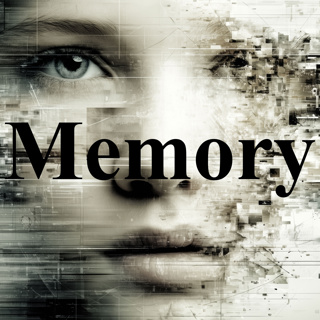
18. The Persistence of Self: Who Are We When We Forget?

18. The Persistence of Self: Who Are We When We Forget?

Chapter 18 — Memory and Identity

In this episode, we confront one of the most profound questions about the human mind: If I lose my memory, do I lose myself? The fear behind this question assumes that identity is nothing more than a stored archive of past events. This chapter challenges that assumption.

We introduce a crucial distinction between narrative identity and enacted identity. Narrative identity is the story we tell about who we have been — the timeline of events, achievements, relationships, and turning points. Enacted identity, by contrast, is how we engage with the world in the present moment — our habits, emotional tone, preferences, gestures, and patterns of response.

This distinction helps explain why a person may forget parts of their personal history yet still display humor, patience, kindness, or resilience. Many core traits are embedded not in explicit recall, but in dispositions, habits, and emotional regulation. They are expressed through behavior rather than narrated through memory.

We explore how personality often survives without a script. A person may struggle to recount their life story but still react with familiar warmth to loved ones, still prefer certain foods, still laugh at the same type of joke. Identity is enacted repeatedly through interaction. It is not only remembered — it is performed.

By the end of this episode, a more grounded perspective emerges. Even when the ability to explain oneself fades, the ability to be oneself often endures. Presence, preference, tone, and connection can remain long after narrative coherence weakens.

Key topics include:

  • Narrative vs. Dispositional Identity: Why identity extends beyond stored autobiographical data.
  • The Style of Engagement: How personality is expressed through recurring patterns of behavior.
  • Enacted Identity: How habits and emotional tendencies sustain the self in action.
  • Presence over Story: Why the lived self can persist even when the narrated self becomes fragile.

Understanding identity in this broader way reframes memory loss not as total erasure, but as transformation. The story may change. The person can remain.

To explore how memory shapes — and does not fully define — who we are, continue in the complete book:

Book: Memory: What Memory Is, Why It Changes, and How We Can Care for It

Jaksot(20)

20. The Future of Memory: Neuroscience, Ethics, and Artificial Intelligence

20. The Future of Memory: Neuroscience, Ethics, and Artificial Intelligence

Chapter 20 — The Future of MemoryIn this final chapter, we look forward. Advances in neuroscience, medicine, and technology are beginning to reshape how we understand — and potentially influence — mem...

22 Helmi 36min

19. The Social Mind: How We Remember Together

19. The Social Mind: How We Remember Together

Chapter 19 — Collective and Shared MemoryIn this episode, we move beyond the individual brain and into the social world. Memory does not exist in isolation. It is distributed across relationships, fam...

22 Helmi 29min

17. The External Brain: Surviving the Age of Digital Amnesia

17. The External Brain: Surviving the Age of Digital Amnesia

Chapter 17 — Technology and MemoryIn this episode, we examine one of the most significant cognitive shifts of our time: the move from internal memory to digital reliance. Smartphones, search engines, ...

10 Helmi 26min

16. The Gym for Your Mind: Why Curiosity Beats Brain Games

16. The Gym for Your Mind: Why Curiosity Beats Brain Games

In this episode, we investigate the multi-billion dollar industry of brain training to separate hope from reality. You will learn why most "memory games" fail to deliver on their promises due to the "...

9 Helmi 34min

15. The Architecture of Thought: Why Structure Beats Effort

15. The Architecture of Thought: Why Structure Beats Effort

Chapter 15 — How Humans Have Remembered for Thousands of YearsIn this episode, we step back centuries — long before notebooks, search engines, or cloud storage — to uncover how human beings once memor...

28 Tammi 37min

14. The Daily Architecture: How Sleep, Stress, and Attention Build Memory

14. The Daily Architecture: How Sleep, Stress, and Attention Build Memory

Chapter 14 — Lifestyle and MemoryIn this episode, we shift from theory to daily life. Memory is not only a mental faculty. It is a biological process sustained — or undermined — by the rhythms of how ...

28 Tammi 32min

13. Survival Mode: When Memory Hides to Protect Us

13. Survival Mode: When Memory Hides to Protect Us

Chapter 13 — Trauma and MemoryIn this episode, we explore what happens when the brain shifts from recording life to surviving it. Trauma does not simply create painful memories. It alters the very way...

27 Tammi 37min

Suosittua kategoriassa Terveys ja hyvinvointi

unicast
rss-hanna-tikander
voi-hyvin-meditaatiot-2
tiedenaiset-podcast
rss-pitaisko-erota
rss-narsisti
vakeva-elama-viisaampi-mieli-vahvempi-keho
psykopodiaa-podcast
puhu-muru
selviytyjat-tarinoita-elamasta
junnut-pelissa
katilon-kahvitunti
paritellen
rss-pt-paahtio
rss-sanelunpurku-podcast
terapiassa
rss-vapaudu-voimaasi
rss-kuumilla-aalloilla
rss-duodecim-lehti
rss-seuraava-potilas