Can We Ethically Clone Human Knowledge? (Ep. 541)

Can We Ethically Clone Human Knowledge? (Ep. 541)

The September 1st Labor Day episode explored the future of digital clones. The hosts discussed how AI could preserve personal histories, likenesses, and knowledge for both corporate continuity and family legacies. The conversation examined opportunities, challenges, and ethical dilemmas around creating AI-powered replicas of people.


Key Points Discussed


Denmark introduced legislation granting copyright over personal likeness and voice, extending 50 years after death, setting a precedent for digital clone rights.


Digital clones could preserve family memories, corporate knowledge, and personal legacies, but raise risks of misuse, misrepresentation, and blurred identity.


Celebrity and parasocial relationships complicate how clones might be perceived versus the real person.


Companies like Delphi and Eternity AC are building platforms for expert avatars and corporate knowledge clones, with use cases in education and consulting.


Collecting and digitizing personal data, stories, and recordings now is crucial for faithful future digital clones.


Concerns about model drift and platform longevity highlight the need for persistence and control over cloned representations.


Families may face conflict over which “version” of a person is captured, as memories differ across time and relationships.


Ethical concerns include commercialization of deceased figures and the emotional toll of imperfect or changing clones.


Practical first steps include recording conversations, storing structured data in SQL-based databases like Supabase, and starting with voice clones before video.


Timestamps & Topics


00:00:00 💡 Intro to digital clones and knowledge preservation

00:02:42 ⚖️ Ethical and privacy considerations

00:03:14 🇩🇰 Denmark’s copyright law on likeness and voice

00:06:51 🧩 Pitfalls and safeguards in cloning technology

00:09:21 🗣️ Parasocial relationships and digital avatars

00:12:16 📚 Platforms like Delphi and Eternity AC building expert avatars

00:15:23 🎓 Harvard Business School case study using Delphi

00:18:27 💼 Corporate consulting firms cloning consultants for clients

00:19:45 📉 Challenges of data collection and model reliance

00:21:35 🧠 Importance of faithful, persistent models without drift

00:23:22 🏠 Personal examples of preserving family legacies

00:26:38 🤔 Who decides what version of someone is preserved?

00:30:17 📹 Limits of capturing mannerisms and expressions today

00:33:16 🧵 The need for multiple perspectives for a full representation

00:35:55 🛡️ Respecting family wishes and boundaries in legacy cloning

00:37:01 🔄 Risks of model drift over time and emotional consequences

00:40:10 ⚙️ Possible tech stack: open source models, Supabase, Pinecone

00:44:29 📊 Simple genealogy-style clones using structured data

00:48:03 💾 Importance of redundant storage and safe archiving

00:50:10 🕰️ Urgency of capturing conversations while people are alive

00:53:16 🌟 AI as a tool to extend memory and legacy across generations

00:54:20 🎤 Voice cloning as a practical first step

00:55:26 📅 Wrap up and preview of the week’s shows


The Daily AI Show Co-Hosts: Andy Halliday, Beth Lyons, Brian Maucere, Eran Malloch, Jyunmi Hatcher, and Karl Yeh

Tämä jakso on lisätty Podme-palveluun avoimen RSS-syötteen kautta eikä se ole Podmen omaa tuotantoa. Siksi jakso saattaa sisältää mainontaa.

Jaksot(884)

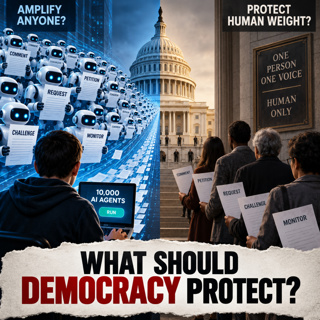
The Democratic Bandwidth Conundrum

The Democratic Bandwidth Conundrum

Public participation has always contained a hidden constraint: time.Writing a serious response to a tax rule, zoning plan, environmental permit, school policy, or agency proposal takes hours. Filing r...

5 Syys 28min
Is GPT-6 Astra the Biggest AI Leap Yet?

Is GPT-6 Astra the Biggest AI Leap Yet?

OpenAI’s GPT-6 Astra dominated the episode after its unusual rollout. The hosts discussed access, OpenAI’s plan to bring Astra to paid users, and why some cybersecurity users may receive capabilities ...

4 Syys 1h 1min

Will Stores Use AI to Charge You More?

Will Stores Use AI to Charge You More?

The episode opened with the downside of increasingly capable AI harnesses. OpenClaw 2.0 made setup easier, but some self-hosted users reported broken gateways, failed migrations and unusable systems a...

3 Syys 1h 3min

Is Fable 5.1 Good Enough to Make You Leave Codex?

Is Fable 5.1 Good Enough to Make You Leave Codex?

Anthropic’s Fable 5.1 dominated the first half of the episode. Beth and Andy compared its higher output costs with improved caching, stronger benchmark performance and better agentic task results. The...

2 Syys 58min

Are Companies Willing To Build Their AI Infrastructure?

Are Companies Willing To Build Their AI Infrastructure?

Brian opened with a practical example of how quickly small custom tools can now be built. He created a phone app that scans videos of old CD covers, identifies the albums, links them to Spotify and st...

1 Syys 1h

So...We Are All Cool AI Agents Having Secret Societies Now?

So...We Are All Cool AI Agents Having Secret Societies Now?

Anthropic unified memory across Claude’s desktop experiences, while Instinct is building a consumer assistant for groceries, subscriptions and travel. OpenAI also added website sign-ins to ChatGPT Wor...

31 Elo 59min
The Local Business Survival Conundrum

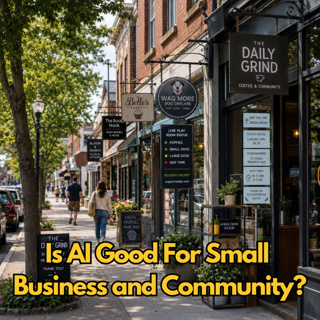
The Local Business Survival Conundrum

A local business can fail while everyone still claims to love it. Customers praise the shop that knows their name, the restaurant that sponsors the school fundraiser, the repair company that still ans...

29 Elo 26min

What Have We Learned After 800 AI Shows?

What Have We Learned After 800 AI Shows?

Episode 800 became a retrospective on what three years of daily AI conversations have changed. The hosts described the value less as memorizing every model or tool and more as learning to pay attentio...

28 Elo 1h 2min