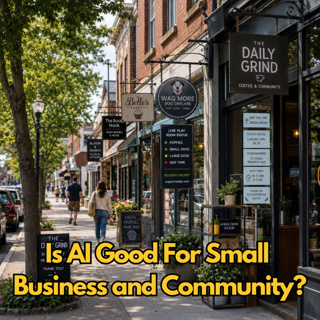
World Models, Robots, and Real Stakes

World Models, Robots, and Real Stakes

On Friday’s show, the DAS crew discussed how AI is shifting from text and images into the physical world, and why trust and provenance will matter more as synthetic media gets indistinguishable from reality. They covered NVIDIA’s CES focus on “world models” and physical AI, new research arguing LLMs can function as world models, real-time autonomy and vehicle safety examples, Instagram’s stance that the “visual contract” is broken, and why identity systems, signatures, and social graphs may become the new anchor. The episode also highlighted an AI communication system for people with severe speech disabilities, a health example on earlier cancer detection, practical Suno tips for consistent vocal personas, and VentureBeat’s four themes to watch in 2026.


Key Points Discussed


CES is increasingly a robotics and AI show, Jensen Huang headlines January 5


NVIDIA’s Cosmos world foundation model platform points toward physical AI and robots


Researchers from Microsoft, Princeton, Edinburgh, and others argue LLMs can function as world models


“World models” matter for predicting state changes, physics, and cause and effect in the real world


Physical AI example, real-time detection of traction loss and motion states for vehicle stability


Discussion of advanced suspension and “each wheel as a robot” style control, tied to autonomy and safety


Instagram’s Adam Mosseri said the “visual contract” is broken, convincing fakes make “real” hard to assume


The takeaway, aesthetics stop differentiating, provenance and identity become the real battlefield


Concern shifts from obvious deepfakes to subtle, cumulative “micro” manipulations over time


Scott Morgan Foundation’s Vox AI aims to restore expressive communication for people with severe speech disabilities, built with lived experience of ALS


Additional health example, AI-assisted earlier detection of pancreatic cancer from scans


Suno persona updates and remix workflow tips for maintaining a consistent voice


VentureBeat’s 2026 themes, continuous learning, world models, orchestration, refinement


Timestamps and Topics

00:04:01 📺 CES preview, robotics and AI take center stage

00:04:26 🟩 Jensen Huang CES keynote, what to watch for

00:04:48 🤖 NVIDIA Cosmos, world foundation models, physical AI direction

00:07:44 🧠 New research, LLMs as world models

00:11:21 🚗 Physical AI for EVs, real-time traction loss and motion state estimation

00:13:55 🛞 Vehicle control example, advanced suspension, stability under rough conditions

00:18:45 📡 Real-world infrastructure chat, ultra high frequency “pucks” and responsiveness

00:24:00 📸 “Visual contract is broken”, Instagram and AI fakes

00:24:51 🔐 Provenance and identity, why labels fail, trust moves upstream

00:28:22 🧩 The “micro” problem, subtle tweaks, portfolio drift over years

00:30:28 🗣️ Vox AI, expressive communication for severe speech disabilities

00:32:12 👁️ ALS, eye tracking coding, multi-agent communication system details

00:34:03 🧬 Health example, earlier pancreatic cancer detection from scans

00:35:11 🎵 Suno persona updates, keeping a consistent voice

00:37:44 🔁 Remix workflow, preserving voice across iterations

00:42:43 📈 VentureBeat, four 2026 themes

00:43:02 ♻️ Trend 1, continuous learning

00:43:36 🌍 Trend 2, world models

00:44:22 🧠 Trend 3, orchestration for multi-step agentic workflows

00:44:58 🛠️ Trend 4, refinement and recursive self-critique

00:46:57 🗓️ Housekeeping, newsletter and conundrum updates, closing

Tämä jakso on lisätty Podme-palveluun avoimen RSS-syötteen kautta eikä se ole Podmen omaa tuotantoa. Siksi jakso saattaa sisältää mainontaa.

Jaksot(878)

The Local Business Survival Conundrum

The Local Business Survival Conundrum

A local business can fail while everyone still claims to love it. Customers praise the shop that knows their name, the restaurant that sponsors the school fundraiser, the repair company that still ans...

29 Elo 26min
What Have We Learned After 800 AI Shows?

What Have We Learned After 800 AI Shows?

Episode 800 became a retrospective on what three years of daily AI conversations have changed. The hosts described the value less as memorizing every model or tool and more as learning to pay attentio...

28 Elo 1h 2min

Are We Really About To Get AGI?

Are We Really About To Get AGI?

The episode opened with Bill Gates’ warning that AI is moving faster than society can adapt. His proposals included taxing robots or AI that replace human workers and potentially protecting some jobs ...

27 Elo 1h 2min

Chrome Wants To Be Your Next AI Agent

Chrome Wants To Be Your Next AI Agent

The episode opened with Google’s push to make Chrome an agentic hub. The hosts discussed Jacob Bank returning to Google after building Relay.app and what happens when the browser can work across tabs,...

26 Elo 1h 3min

Who Should You Trust to Teach You AI?

Who Should You Trust to Teach You AI?

The episode opened with Perplexity Deep Research suddenly behaving very differently from the product Brian had used for months. Instead of detailed research, it returned short answers, mixed old conve...

25 Elo 57min

Is the Backlash Against AI Data Centers Justified?

Is the Backlash Against AI Data Centers Justified?

The episode opened with a fact-check of claims defending the current AI data center buildout. Brian compared arguments about electricity prices, taxes and water use against research he had gathered, w...

24 Elo 1h
The Synthetic Anchor Conundrum

The Synthetic Anchor Conundrum

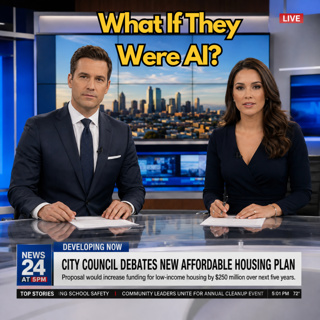
Mirage’s AI news experiment points to a version of media that does not need a studio, a broadcast schedule, or a human anchor reading from a desk. A channel can appear in a day. It can label synthetic...

22 Elo 29min

Should We Rebuild Work Around AI?

Should We Rebuild Work Around AI?

The episode opened with a practical warning for people building AI systems: timestamps and time zones can quietly break databases, automations and search tools. That led into Slack Code, a new collabo...

21 Elo 1h 7min