Tchaikovsky Symphony No. 6 (Part 2)

Tchaikovsky Symphony No. 6 (Part 2)

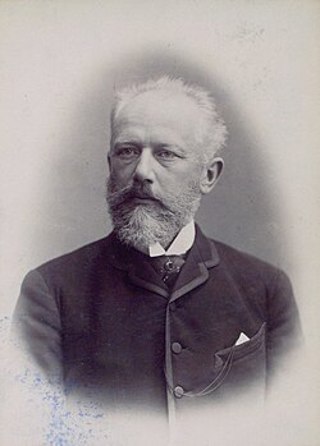
In a letter to Tchaikovsky's nephew Vladimir Davydov, Tchaikovsky wrote: "I'm very pleased with its content, but dissatisfied, or rather not completely satisfied, with the instrumentation. For some reason it's not coming out as I intended. It would be typical and unsurprising if this symphony were torn to pieces or little appreciated, as that wouldn't be the first time such a thing had happened. But I absolutely consider it to be the best, and in particular the most sincere, of all my creations. I love it as I have never loved any of my other musical offspring."

I'm returning to that word sincere this week for Part 2, because it's the through line that makes Tchaikovsky's music so immediately arresting. You always know exactly where you stand with Tchaikovsky, since he always seems to be speaking so honestly in his music. Well, almost always.

The last two movements of Tchaikovsky's 6th Symphony are among the most fascinating in the entire Western classical repertoire, and the reason for their fascination (beyond simply being wonderful movements) is the order in which Tchaikovsky places them. In a typical symphony, the third movement would be either a fast scherzo or a slow movement, depending on what the second movement had been. Since the second movement of this symphony was a waltz, audiences would have expected a slow third movement followed by a fast finale to send them home with some energy. But that is not what Tchaikovsky does. Instead, we hear a thrilling, exhilarating scherzo followed by a devastating slow movement, a choice that completely upended the form of the symphony as a genre, and was revolutionary for its time.

Why did Tchaikovsky do this? And why did this decision, in part, fuel massive controversy surrounding his death, just nine days after the symphony's premiere? We're going to explore all of that today, including the many theories about Tchaikovsky's death, before examining the 3rd and especially the 4th movements of this masterpiece in detail, unpacking the nuances of these profoundly contrasting movements.

Jaksot(283)

Impressions in Blue: Ravel & Gershwin

Impressions in Blue: Ravel & Gershwin

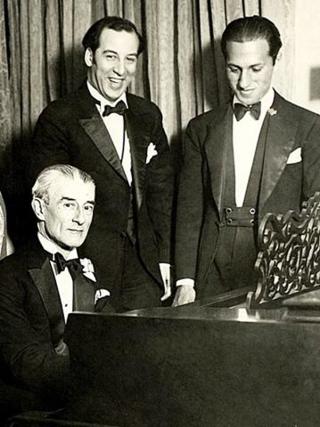
In the mid-1920s, Maurice Ravel wrote a letter to the legendary composition teacher Nadia Boulanger. Boulanger's class was a mecca for composers, both young and old, and musicians from all over the wo...

7 Elo 202544min
Beethoven Piano Sonata in B Flat Major, Op. 106, "Hammerklavier" - Part 2

Beethoven Piano Sonata in B Flat Major, Op. 106, "Hammerklavier" - Part 2

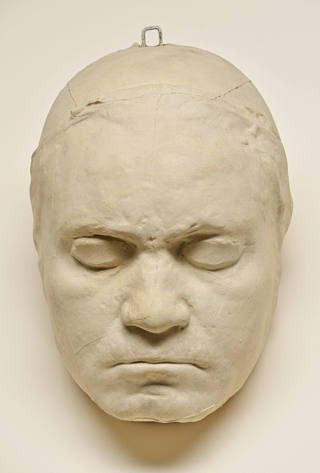
There is a special category when it comes to Beethoven; a catalogue that doesn't include complete symphonies, sonatas, concerti, string quartets, etc., but just single movements. This is the catalogue...

24 Heinä 202553min
Beethoven Piano Sonata in B♭ major, Op. 106, "Hammerklavier" - Part 1

Beethoven Piano Sonata in B♭ major, Op. 106, "Hammerklavier" - Part 1

Beethoven once wrote to his publisher: "What is difficult, is also beautiful, good, great, and so forth. Hence everyone will realize that this is the most lavish praise that can be bestowed, since wha...

10 Heinä 202544min
Weill: The Seven Deadly Sins

Weill: The Seven Deadly Sins

The collaboration between Kurt Weill and Bertolt Brecht is rightly legendary. The two men could not have been more different from each other, and like the Brahms/Joachim relationship I mentioned in my...

26 Kesä 20251h
The Ravel Sound with Norbert Müllemann and Stefan Knüpfer

The Ravel Sound with Norbert Müllemann and Stefan Knüpfer

I so enjoyed making this latest episode in my collaboration with G Henle Publishers. I talked with two absolute experts in their fields, Norbert Mülleman and Stefan Knüpfer, all about how to edit Rave...

12 Kesä 202545min
Dvorak Violin Concerto

Dvorak Violin Concerto

Admit it: if you're a fan of classical music—or even just a regular concertgoer—you might have glanced at the title of this episode and done a double take. The Dvořák Violin Concerto? Not the Cello Co...

29 Touko 202549min
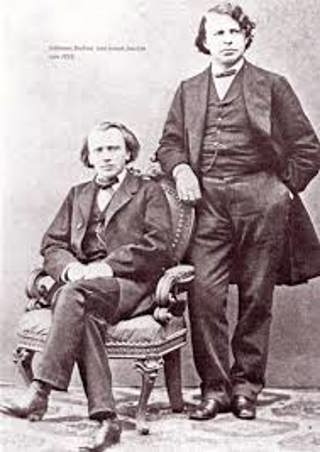
Brahms Double Concerto

Brahms Double Concerto

It's entirely possible that we would not know the name of Johannes Brahms very well if Brahms hadn't met Joseph Joachim as a very young man. Joachim, who was one of the greatest violinists of all time...

15 Touko 202558min
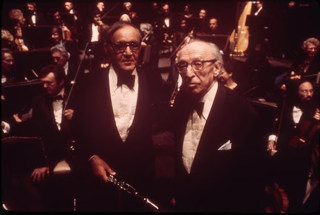
Copland Clarinet Concerto

Copland Clarinet Concerto

The commission for a new Clarinet Concerto from the great American composer Aaron Copland came from a rather unlikely source: Benny Goodman, the man known as the King of Swing. Goodman was one of the ...

1 Touko 202548min

Suosittua kategoriassa Viihde

anni-jaajo
tuplakaak
grekovit
hei-baby-3
terveisia-perheesta
the-harlin-show
dear-shirly
antin-palautepalvelu
bella-table
antin-elokuvakerho
nonsensepodi
dear-shirly-ja-arttu
verhon-takaa
ootsa-kuullut-tasta-2
get-jassud
hollywood-love-stories-2
tahtitehdas
tervo-halme
everypodi
terkuin-jenna