
Tchaikovsky Symphony No. 6 (Part 2)

Tchaikovsky Symphony No. 6 (Part 2)

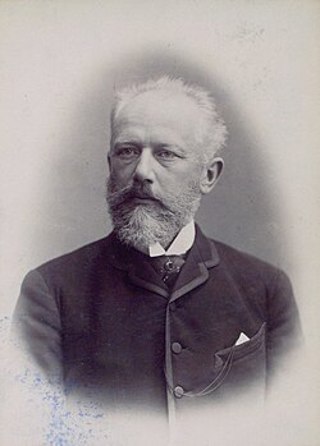
In a letter to Tchaikovsky's nephew Vladimir Davydov, Tchaikovsky wrote: "I'm very pleased with its content, but dissatisfied, or rather not completely satisfied, with the instrumentation. For some reason it's not coming out as I intended. It would be typical and unsurprising if this symphony were torn to pieces or little appreciated, as that wouldn't be the first time such a thing had happened. But I absolutely consider it to be the best, and in particular the most sincere, of all my creations. I love it as I have never loved any of my other musical offspring."

I'm returning to that word sincere this week for Part 2, because it's the through line that makes Tchaikovsky's music so immediately arresting. You always know exactly where you stand with Tchaikovsky, since he always seems to be speaking so honestly in his music. Well, almost always.

The last two movements of Tchaikovsky's 6th Symphony are among the most fascinating in the entire Western classical repertoire, and the reason for their fascination (beyond simply being wonderful movements) is the order in which Tchaikovsky places them. In a typical symphony, the third movement would be either a fast scherzo or a slow movement, depending on what the second movement had been. Since the second movement of this symphony was a waltz, audiences would have expected a slow third movement followed by a fast finale to send them home with some energy. But that is not what Tchaikovsky does. Instead, we hear a thrilling, exhilarating scherzo followed by a devastating slow movement, a choice that completely upended the form of the symphony as a genre, and was revolutionary for its time.

Why did Tchaikovsky do this? And why did this decision, in part, fuel massive controversy surrounding his death, just nine days after the symphony's premiere? We're going to explore all of that today, including the many theories about Tchaikovsky's death, before examining the 3rd and especially the 4th movements of this masterpiece in detail, unpacking the nuances of these profoundly contrasting movements.

Jaksot(284)

A Conversation with Composer Caroline Shaw

A Conversation with Composer Caroline Shaw

Caroline Shaw is one of the most fascinating, innovative, and brilliant composers of our time. Since winning the Pulitzer Prize in 2013, she rocketed onto the scene and has stayed there ever since, wr...

18 Loka 202447min
Ives Three Places in New England

Ives Three Places in New England

In 1929, the conductor Nicolas Slonimsky contacted the American composer Charles Ives about performing one of his works. This was a bit of a surprise for Ives, since he had a checkered reputation amon...

11 Loka 20241h
William Grant Still Symphony No. 1, "Afro-American"

William Grant Still Symphony No. 1, "Afro-American"

Fundraiser link here: https://www.eventbrite.com/e/1026719635067?aff=oddtdtcreator On October 29th, 1931, The Rochester Philharmonic in New York State presented the world premiere of a new symphony by...

3 Loka 20241h 6min
Gershwin: Rhapsody In Blue

Gershwin: Rhapsody In Blue

"It was on the train, with its steely rhythms, its rattle-ty bang, that is so often so stimulating to a composer – I frequently hear music in the very heart of the noise.... And there I suddenly heard...

26 Syys 202448min
Bartok Violin Concerto No. 2

Bartok Violin Concerto No. 2

During Bartok's life, the violin concerto we now know as Violin Concerto No. 2 was simply known as Bartok's only violin concerto. The reason? His first concerto, written when he was a much younger man...

13 Syys 202456min
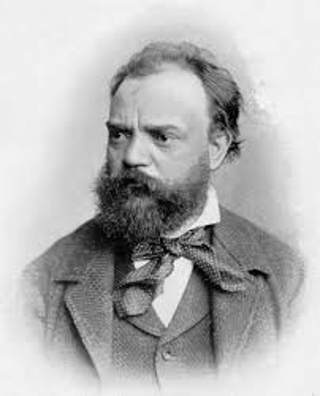
Dvorak Symphony No. 7

Dvorak Symphony No. 7

In December of 1884, Dvorak wrote to a friend about the composition of a new symphony: "I am now busy with this symphony for London, and wherever I go I can think of nothing else. God grant that this ...

29 Elo 202458min
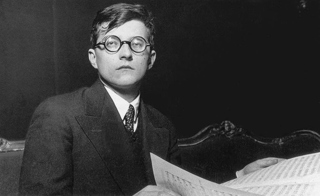
Shostakovich Symphony No. 4

Shostakovich Symphony No. 4

Shostakovich's 4th symphony is not for the faint of heart. It is a massive work, around an hour in length, and it calls for the second largest orchestra of any in Shostakovich's output. It is uncompro...

15 Elo 20241h 8min
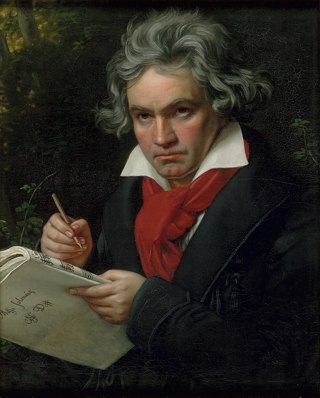
Beethoven Symphony No. 5

Beethoven Symphony No. 5

They are the most famous 8 notes in not only Western Music, but probably in all of music. If you walk down the street and ask someone to name a painting, they might say the Mona Lisa. A movie? Maybe...

1 Elo 20241h 5min

Suosittua kategoriassa Viihde

anni-jaajo
tuplakaak
grekovit
hei-baby-3
terveisia-perheesta
the-harlin-show
dear-shirly
antin-palautepalvelu
bella-table
antin-elokuvakerho
everypodi
verhon-takaa
dear-shirly-ja-arttu
ootsa-kuullut-tasta-2
nonsensepodi
get-jassud
tahtitehdas
hollywood-love-stories-2
terkuin-jenna
suomen-suosituin-podcast