Stravinsky: Petrouchka

Stravinsky: Petrouchka

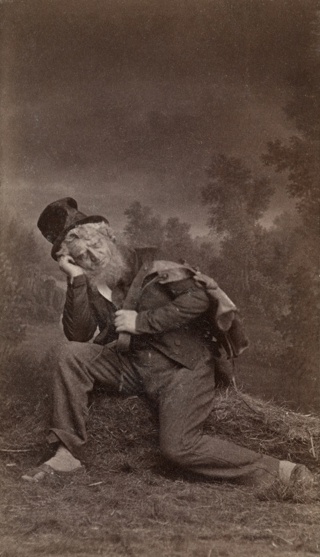
If you listened to my show last week about Stravinsky's ballet The Firebird, you know that Stravinsky's life was never the same after the premiere of the ballet in 1910. Sergei Diaghilev, the founder of the Ballets Russes and Stravinsky's greatest collaborator, said just before the premiere, "this man is on the eve of celebrity." Diaghilev was absolutely right, as The Firebird made Stravinsky a Parisian household name practically overnight. Of course, immediately everyone wanted to know what was next. Stravinsky did too, and he was thinking that he needed to stretch himself even more, as even though the Firebird had caused a sensation, he still felt that it was too indebted to his teachers of the past like Nikolai Rimsky Korsakov and other Russian greats like Borodin or Mussorgsky. At first, Stravinsky dreamed of a pagan Rite, but quickly he changed course, wanting to write something that was NOT ballet music, and in fact would be a concerto for Piano and Orchestra. But instead of just a straight ahead abstract piece, Stravinsky had yet another story in mind. This time it was this: "In composing the music, I had in mind a distinct picture of a puppet, suddenly endowed with life, exasperating the patience of the orchestra with diabolical cascades of arpeggios. The orchestra in turn retaliates with menacing trumpet blasts. The outcome is a terrific noise which reaches its climax and ends in the sorrowful and querulous collapse of the poor puppet."

Diaghilev visited Stravinsky in Lausanne Switzerland expecting to hear more about the pagan rituals Stravinsky had been so excited about, but instead Stravinsky played him this strange piano concerto. But Digahliev, ever the visionary, saw the potential in this story and in this music for dance as well, and convinced Stravinsky to turn the piano concerto into a ballet, and Petrushka was born. Within a few months, Petrushka was written, performed, and was yet another sensation. Today, we'll talk all about the brilliant music that Stravinsky composed for the ballet, the integration of choreography and music, and the radical changes that this music heralded for the western music world.

Tämä jakso on lisätty Podme-palveluun avoimen RSS-syötteen kautta eikä se ole Podmen omaa tuotantoa. Siksi jakso saattaa sisältää mainontaa.

Jaksot(296)

Grieg: Peer Gynt

Grieg: Peer Gynt

Grieg's Peer Gynt suites are among the best-known and best-loved works of classical music in the world. They are practically embedded into popular culture, being used in a dizzying number of cartoons,...

3 Syys 1h 7min
Mozart Clarinet Concerto

Mozart Clarinet Concerto

When it comes to a piece like the Mozart Clarinet Concerto, a few words or phrases regularly come up: the concerto is described as "mellow" or Mozart's "swan song," but most often it is described as "...

20 Elo 51min
Bohuslav Martinu Symphony No. 1

Bohuslav Martinu Symphony No. 1

It took a lot to make the composer and critic Virgil Thomson happy. He was famous for savaging new works he didn't like, and the truth is, he didn't like very many new works at all. One exception was ...

6 Elo 1h 1min
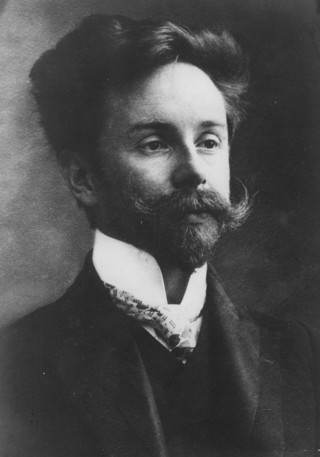
Scriabin Poem of Ecstasy

Scriabin Poem of Ecstasy

Thence the universe resounds
 With a joyful cry  I AM. These are the final lines of Alexander Scriabin's epic Poem of Ecstasy, a 300-line poem that takes nearly 10 minutes to read aloud and is one of ...

23 Heinä 51min
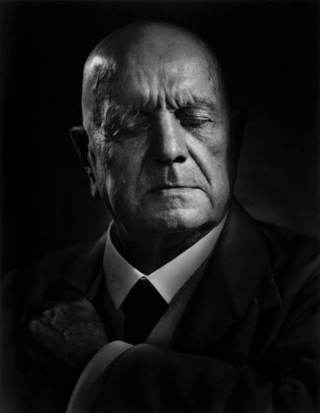
Sibelius Tapiola

Sibelius Tapiola

Ancient, mysterious, brooding savage dreams; Within them dwells the Forest's mighty God, And wood-sprites in the gloom weave magic secrets. These lines are affixed to the first page of Sibelius' tone...

10 Heinä 47min
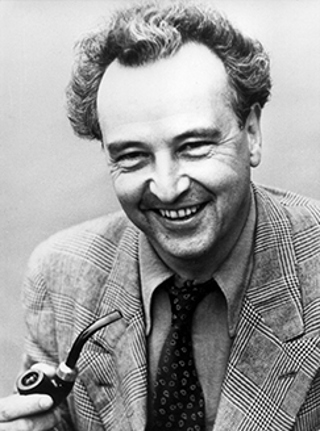
Arthur Honneger, Symphony No. 3, "Liturgique"

Arthur Honneger, Symphony No. 3, "Liturgique"

In the aftermath of World War II, the Swiss composer Arthur Honegger, who had been living in occupied Paris throughout the war, wrote a new symphony entitled "Liturgical." He wrote an extended comment...

25 Kesä 53min
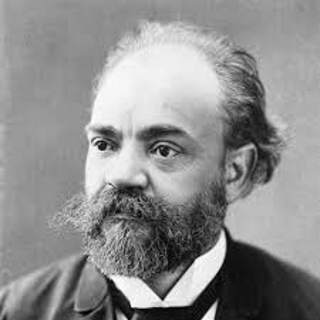
Dvorak Piano Quintet, Op. 81

Dvorak Piano Quintet, Op. 81

In 1872, at the age of 31, Dvořák wrote a Piano Quintet designated as Opus 5. Dvořák was not a prodigy like some other famous composers; instead, his development as a composer was slow and steady. Lat...

11 Kesä 49min
Mozart String Quartet, K. 465, "Dissonance"

Mozart String Quartet, K. 465, "Dissonance"

You might be wondering: why on earth would I choose a piece that is literally called "Dissonance" when I was looking for something a bit simpler or cleaner to talk about on the show today? Actually, M...

28 Touko 49min

Suosittua kategoriassa Viihde

aamuvuoro
anni-jaajo
tuplakaak
grekovit
hei-baby-3
terveisia-perheesta
hupiklubi
antin-palautepalvelu
dear-shirly
seitseman
bella-table
ellen-jari-tamakin-viela
everypodi
the-harlin-show
antin-elokuvakerho
nonsensepodi
dear-shirly-ja-arttu
tahtitehdas
verhon-takaa
trippileiri