Versailles Introduction Part 3/3

Versailles Introduction Part 3/3

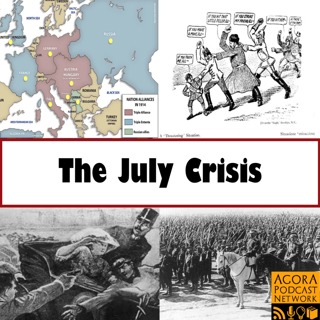
Another introduction episode - this one giving us a brief(ish) rundown on the origins of the Great War, for the benefit of those that have not listened to the July Crisis Anniversary Project of old. The world went to war in 1914, and the circumstances which surround that event are often held against Germany in the subsequent peace negotiations. Germany, it is said, started the whole wretched thing, so she should be punished once her gamble failed, and she clearly lost. In my view though, it isn't that simple.


Historians tend to take one side or the other when it comes to examining the July Crisis and Treaty of Versailles. By that I mean, either Germany started the war and deserved the Treaty, or she didn't start it or deserve it. I won't be this clear cut, because the situation and the debate aren't this clear cut. In my mind, Germany alone did not start the war - even though technically she did declare war on Russia first and begin the countdown - but she did deserve some kind of punishment for LOSING it.


Germany, as my thesis for this project will argue, was punished for losing the Great War, not for starting it.


Any statesman worth their salt in 1918-19 knew full well that there was more to the story than the straightforward tale of the belligerent Hun. Germany had to be punished and kept low so that she could not threaten the peace again, and because of her military loss, this meant that she was liable to be punished - just as Berlin had punished her enemies in Russia and Romania, and developed grand plans for punishing Britain and France before her war plans collapsed. The issue with Versailles wasn't so much the injustice of it, as we will learn, but the problem of making Germany accept its terms, when Germans came to believe that they hadn't been truly beaten, hadn't truly started the war, and had been unfairly blamed.


Yet, an important point to remember is that war guilt - another issue we will deal with in time - did not have to exist in Germany in order for the judgement of Germany's contemporaries to follow. It did not matter, in other words, who started the war, as much as it mattered who lost it, and what was to be done next. This episode will help us refocus our gaze on that critical issue, and also ensure that we're all on the same page when it comes to my thesis and ideas about the origins of the First World War. As always, I'd ask you guys keep an open mind - we'll be sticking together for the next eight months, so you better get used to my outside the box way of thinking!

*****************

The Versailles Anniversary Project is possible because of your support and interest - make sure to spread the word, engage with the debate, and look at the different ways you can help this project succeed!

Visit the homeland for this new project:

http://www.wdfpodcast.com/vap/

Support the podcast financially:

https://www.patreon.com/WhenDiplomacyFails

Follow WDF on Twitter!

https://twitter.com/wdfpodcast

Hosted on Acast. See acast.com/privacy for more information.

Jaksot(744)

#57: 3 August 1914 I - Illusions and Delusion

#57: 3 August 1914 I - Illusions and Delusion

The German army was firmly in control of German policy, but its next steps were obvious to any contemporary with even the slightest grasp of the situation. The detour into Belgium had been flagged lon...

28 Huhti 202533min

#56: 2 August 1914 IV - Let Loose World Madness

#56: 2 August 1914 IV - Let Loose World Madness

Even as Moltke examined Germany's strategic options, the world was turning against Germany. Berlin pressed its case by pointing out the Russian sins of dishonesty and pre-emption, but was anyone liste...

21 Huhti 202554min

#55: 2 August 1914 III - Lichnowsky's Last Stand

#55: 2 August 1914 III - Lichnowsky's Last Stand

While Germany covered itself in infamy, the German ambassador in London did his best to maintain the fragile Anglo-German relationship. His mission was ultimately doomed, but no one could accuse Princ...

14 Huhti 202546min
The State of America w/ Thom Daly - Part 2

The State of America w/ Thom Daly - Part 2

In this second part of my conversation with Thom, we discuss the unlawful way in which the Trump administration behaves at home, including its treatment of citizens who hold views which the President ...

10 Huhti 20251h 46min

The State of America w/ Thom Daly - Part 1

The State of America w/ Thom Daly - Part 1

In this first of two episodes with Thom Daly, we focus on the United States and its position in the world following the Trump administration's many blunders and betrayals in foreign policy, trade poli...

10 Huhti 20251h 20min

#54: 2 August 1914 II - Britain Decides On War

#54: 2 August 1914 II - Britain Decides On War

The traditional picture of British intervention in the First World War normally comes down to one issue - Belgium. On 4 August, Britain did declare war on Germany. However, before this monumental step...

7 Huhti 202547min

#53: 2 August 1914 I - Into Luxemburg

#53: 2 August 1914 I - Into Luxemburg

The Schleiffen Plan demanded an invasion of the small Grand Duchy of Luxemburg, where German forces would seize key railway installations, facilitating their march into Belgium, and then to France. Of...

31 Maalis 202540min

#52: 1 August 1914 IV - Desperate Diplomacy

#52: 1 August 1914 IV - Desperate Diplomacy

Now that it was clear Germany would have to face the Entente, and likely Britain's imminent intervention, Berlin became much more active in sending diplomatic feelers across Europe. Romania, Bulgaria,...

24 Maalis 202542min

Suosittua kategoriassa Historia

olipa-kerran-otsikko
gogin-ja-janin-maailmanhistoria
mayday-fi
huijarit
mystista
rss-ikiuni
tsunami
totuus-vai-salaliitto
konginkangas
sotaa-ja-historiaa-podi
rss-i-dont-like-mondays-2
rss-sattuu-sita-suomessakin
rouva-diktaattori
apinan-vuosi
rss-subjektiivinen-todistaja
rss-kirkon-ihmeellisimmat-tarinat
historian-nurkkapoyta
tiedetta-ja-sirkushuveja-vanhojen-aikojen-podcast
hippokrateen-vastaanotolla
rss-peter-peter