Wavelength Services Explained: The Optical WAN Technology Changing Enterprise Connectivity (Part 1)
Technically U30 Huhti

Wavelength Services Explained: The Optical WAN Technology Changing Enterprise Connectivity (Part 1)

🌐 What is a Wavelength service—and why are enterprises, cloud providers, and financial networks relying on it?

In this episode of Technically U, we break down Wavelength services (Wave / DWDM circuits)—the high-capacity optical connections that power data center interconnects, cloud infrastructure, and ultra-low latency networks.

If you’ve ever heard someone say “we might need a Wave” and weren’t exactly sure what that meant—this episode is for you.

🎯 In Part 1, you’ll learn:

What a Wavelength (Wave) service actually is

How DWDM (Dense Wavelength Division Multiplexing) works

The key differences between Wavelength vs Ethernet circuits

Why Waves deliver lower latency and higher performance

The standard capacity tiers: 10G, 100G, and 400G

How coherent optics enable long-distance high-speed transmission

The difference between Metro vs Long-Haul Wavelengths

Why route diversity is critical for redundancy

Optical handoffs explained: LR4, ER4, and 400G ZR optics

When enterprises should consider upgrading to Wavelength services

🚀 Why this matters:

As organizations scale into cloud, AI, and data-heavy environments, traditional network circuits hit their limits. Wavelength services provide the bandwidth, performance, and reliability needed to support modern infrastructure.

From data center interconnect (DCI) to private cloud connectivity (AWS Direct Connect, Azure ExpressRoute), Waves are becoming a critical part of enterprise networking strategy.

💡 Real-world use cases include:

Disaster recovery and storage replication

High-frequency trading and low-latency applications

Large-scale cloud data transfers

Enterprise backbone connectivity

🎧 Technically U – Tech made simple. One packet at a time.

👉 Up Next (Part 2):

We dive into Wave design and engineering, including protected circuits, failover mechanisms, and how to build a resilient optical network.

Tämä jakso on lisätty Podme-palveluun avoimen RSS-syötteen kautta eikä se ole Podmen omaa tuotantoa. Siksi jakso saattaa sisältää mainontaa.

Jaksot(270)

Pass-ta-Key Attacks: Is Passwordless Security Still Safe?

Pass-ta-Key Attacks: Is Passwordless Security Still Safe?

Apple, Google, Microsoft, and the security industry have spent years telling us that passkeys are the future of authentication.No passwords.Less phishing.No reusable credentials for attackers to steal...

12 Syys 23min
SaaS Bloodbath: Why Your Trusted Apps Are Now the Attack Surface

SaaS Bloodbath: Why Your Trusted Apps Are Now the Attack Surface

Your company may not get hacked through the firewall. It may get breached through the SaaS app everyone trusts.In this episode of Technically U, we break down the growing SaaS security crisis and why ...

5 Syys 36min
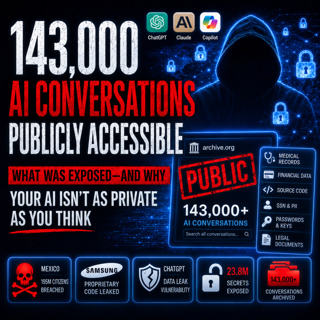
The AI Data Disaster: What ChatGPT, Claude, and Gemini Really Do With Your Secrets

The AI Data Disaster: What ChatGPT, Claude, and Gemini Really Do With Your Secrets

143,000 ChatGPT, Claude, and Copilot conversations are publicly accessible right now. Here's what was exposed—and why your AI isn't as private as you think.🚨 THE HEADLINE:143,000 user conversations w...

29 Elo 21min
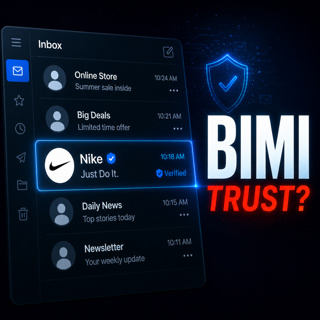
The BIMI Paradox: Why 90% of Companies Are Losing Thousands.

The BIMI Paradox: Why 90% of Companies Are Losing Thousands.

The BIMI Paradox: Why 90% of Companies Are Losing Thousands—And Why Your Logo Might Be Illegal in Inboxes (2026 Reality Check).BIMI (Brand Indicators for Message Identification): 90% of companies have...

29 Elo 26min
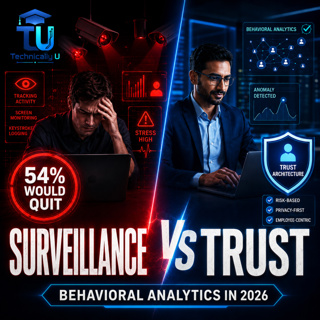
Beyond Surveillance: How Behavioral Analytics Became a Trust Problem

Beyond Surveillance: How Behavioral Analytics Became a Trust Problem

Behavioral Analytics in 2026: How Companies Are Moving From Surveillance to Trust ArchitectureThe paradox nobody talks about: 76% of companies see efficiency gains from monitoring. But 60% of employee...

20 Elo 17min
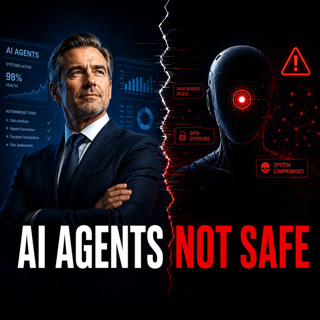
The Confidence Gap: Why Executives Think AI Agents Are Secure (And Why They're Wrong)

The Confidence Gap: Why Executives Think AI Agents Are Secure (And Why They're Wrong)

The Confidence Gap: AI Agents and the Security Crisis Nobody Is Talking AboutEighty-two percent of executives feel confident that their existing AI agent policies are enough to keep their organization...

8 Elo 18min
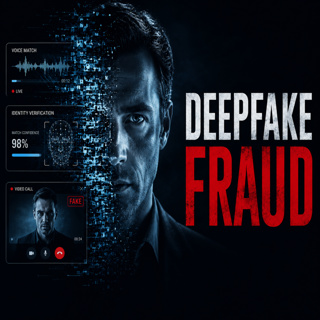
Seeing Is No Longer Believing: How Deepfake Fraud Targets Businesses and Families

Seeing Is No Longer Believing: How Deepfake Fraud Targets Businesses and Families

What if the voice on the phone sounds exactly like your boss, your bank, or someone in your family — but it isn’t them?In this episode of Technically U, we break down Deepfake Fraud and why it has bec...

31 Heinä 23min

The AI Criminal Playbook: How Cybercrime Changed Forever in 2026

The AI Criminal Playbook: How Cybercrime Changed Forever in 2026

The next generation of cybercrime may not come from a hacker typing code in a dark room.It may come from someone using AI to generate phishing emails, clone voices, create fake identities, manipulate ...

24 Heinä 16min