EU Rising? Defence, Ukraine & Populism
The Focus8 Marras 2025

EU Rising? Defence, Ukraine & Populism

🇪🇺 Is Europe finally rising as a defence power?
As the war in Ukraine grinds on and populist politics reshape Europe, the EU faces a historic test: defend the continent, support Kyiv, and hold the line against Moscow — while staying united.
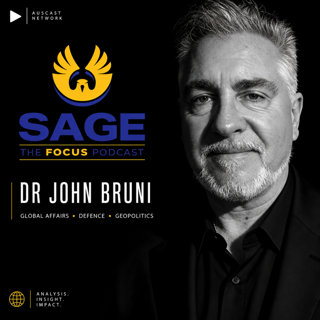
In this episode, Dr John Bruni speaks with EU analyst Piotr Maciej Kaczyński on Europe's defence transformation, Poland’s upcoming EU Presidency, and the populist forces reshaping Europe's future. 🔍⚔️

👉 Subscribe for more global strategy & geopolitics
🔔 New episodes weekly

Clarifications

The Austrian Empire (1804-1867), ruled by the Habsburg dynasty, evolved from the Holy Roman Empire (800-1806), where the Habsburg family dominated politics, providing almost every emperor from 1438 to 1806. In 1867, the Austrian Empire evolved into the Austro-Hungarian Empire as a direct consequence of Hungarian nationalist agitation. The Austro-Hungarian Empire came to an end at the conclusion of World War I in 1918. Overall, the Austrian/Austro-Hungarian Empire lasted 114 years.

The USSR came into being in 1922 and lasted until 1991, that’s 69 years in total.

Yugoslavia, as with the Austrian Empire, had two phases. There was the Kingdom of Yugoslavia (1918-1941) that emerged out of the collapse of the Austrian Empire. It lasted 22 years. After a period of time under NAZI occupation (1941-1945), the Socialist Federal Republic of Yugoslavia (modern Yugoslavia) was founded after World War II. Ruled by dictator Josip Broz Tito (Yugoslav leader from 1945 to 1980), Yugoslavia lasted till 1991. This phase of Yugoslavia lasted 46 years. In total, Yugoslavia, since its emergence, lasted 68 years.

In comparison, the European Economic Community (EEC) was founded through the Treaty of Rome in 1957, coming into existence the following year in 1958. It evolved into the European Union (EU) in 1993, after the Maastricht Treaty. The UK left the EU in 2016. At present, the European project for economic, currency and political integration has lasted 67 years.

Note: Josef Stalin, Soviet dictator during World War II, did not fight a two-front war because the bulk of the Soviet population lay west of the Ural mountain range, with much of it either threatened or occupied by NAZI forces. The vast expanse of Siberia was largely inhospitable and poorly serviced by transport routes stretching from the developed and most populous parts of the USSR. Therefore, there was no way the Soviets could conduct a sustained two-front war during World War II. For the Soviets, until the NAZI threat was defeated, they could not risk transporting large parts of the Soviet Army to confront the Japanese. This calculus changed upon Germany’s surrender in mid-1945.

SHOW NOTES:

Connect with Piotr

LinkedIn: https://www.linkedin.com/in/pkaczyn/

OpEds

“What to expect from Poland’s EU Council presidency in 2025” — by Real Instituto Elcano, 27/01/2025

“Europe after the elections: the centre holds out, but for how long?” — by Real Instituto Elcano, 20/11/2024

“Poland’s shifting positions on the future of the European Union: deepening and widening?” — by Casimir Pulaski Foundation, 30/10/2024

Books

The Ever‑Changing Union: An Introduction to the History, Institutions and Decision‑Making Processes of the European Union (2nd fully revised edition, ~2011) — co-authored.

Upgrading the EU’s Role as Global Actor: Institutions, Law and the Restructuring of European Diplomacy (~2011) — contribution among multiple authors.

Polish Council Presidency 2011: Ambitions and Limitations (~2011) — listed as one of his major works.

See omnystudio.com/listener for privacy information.

Tämä jakso on lisätty Podme-palveluun avoimen RSS-syötteen kautta eikä se ole Podmen omaa tuotantoa. Siksi jakso saattaa sisältää mainontaa.

Jaksot(100)

Strategy in the 21st Century

Strategy in the 21st Century

Can military superiority compensate for bad strategy? In this special episode of The Focus, Dr John Bruni speaks with Sir Lawrence Freedman—one of the world’s foremost authorities on strategy and war—...

24 Syys 56min

The Multicultural Myth

The Multicultural Myth

Australia is one of the world’s most ethnically diverse societies—but is it truly multicultural? In Episode 116 of The Focus, Dr John Bruni speaks with Associate Professor Salvatore Babones, political...

17 Syys 1h 8min

 25 YEARS AFTER 9/11

25 YEARS AFTER 9/11

On September 10, 2001, the United States stood at the height of its power. Twenty-five years later, what happened to the American moment? In this special 25th-anniversary episode of The Focus, Dr John...

10 Syys 1h 54min

RUSSIA’S REAL THREAT TO NATO: How Far Can Putin Go?

RUSSIA’S REAL THREAT TO NATO: How Far Can Putin Go?

What if Russia’s most dangerous weapon isn’t the one that starts a war — but the one that keeps us permanently on the edge of one? From drones over European airports and sabotage to cyberattacks, disi...

3 Syys 1h 13min

INDIA’S IRAN DILEMMA: Pakistan, Saudi Arabia & the New Strategic Order

INDIA’S IRAN DILEMMA: Pakistan, Saudi Arabia & the New Strategic Order

India has spent decades pursuing strategic autonomy. But what happens when the world around it begins choosing sides? In this episode of The Focus Podcast, Dr John Bruni is joined by LTGEN (Ret.) Ravi...

20 Elo 1h 16min

Seeing Around Corners - Why Strategic Surprises Keep Catching Us Off Guard

Seeing Around Corners - Why Strategic Surprises Keep Catching Us Off Guard

From pandemics and wars to artificial intelligence, geopolitical rivalry, and presidential candidates, the pace of change has never been faster. Yet governments, businesses and intelligence agencies c...

6 Elo 1h 43min

How Colombia defeated the FARC | Part 2

How Colombia defeated the FARC | Part 2

How did Colombia defeat the FARC—and what can other democracies learn from its experience? In Part 2 of my conversation with General Alberto José Mejía Ferrero, former Commander of the Colombian Armed...

24 Heinä 1h 15min

How Colombia Defeated the FARC

How Colombia Defeated the FARC

How does a democracy defeat one of the world's longest-running insurgencies? For more than fifty years, Colombia fought a brutal conflict against the Revolutionary Armed Forces of Colombia (FARC)—a wa...

17 Heinä 1h 9min

Suosittua kategoriassa Politiikka ja uutiset

uutiscast
vallattomat
aikalisa
politiikan-puskaradio
rss-viihde-media
ootsa-kuullut-tasta-2
rss-vaalirankkurit-podcast
rss-ootsa-kuullut-tasta
otetaan-yhdet
tervo-halme
et-sa-noin-voi-sanoo-esittaa
rss-voi-venaja
rss-podme-livebox
rss-ulkopoditiikkaa
rss-asiastudio
the-ulkopolitist
rss-raha-talous-ja-politiikka
rss-kaikki-uusiksi
rss-50100-podcast
rss-girls-finish-f1rst