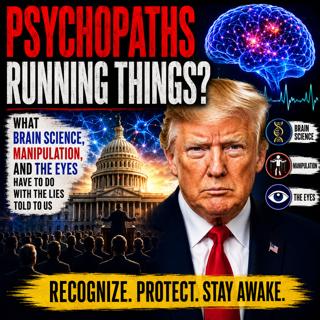

Psychopaths Running Things? What Brain Science, Manipulation, and "The Eyes" Might Be Telling Us

Psychopaths Running Things? What Brain Science, Manipulation, and "The Eyes" Might Be Telling Us

"Evil doesn't knock on your door and announce itself. It comes packaged as help, wrapped in charm, smiles, credentials, and promises."

"The most dangerous predator is not the one hiding in the shadows. It's the one hiding in plain sight and convincing you to trust them."

For years, discussions about psychopathy have been dominated by dramatic headlines, Hollywood stereotypes, and debates over whether psychopaths are born or made. In this episode of Psychopath In Your Life, Dianne Emerson revisits earlier research and interviews to examine what science actually says about psychopathy, brain scans, genetics, and manipulation. From the work of Robert Hare and Hervey Cleckley to controversial studies involving James Fallon and psychopathic traits, the show explores how public understanding of psychopathy has evolved over time.

The episode also explores the experiences of survivors who describe gaslighting, mirroring, emotional manipulation, impression management, and the unsettling feeling that the person they trusted was wearing a mask. Why do so many people later say, "I don't know what happened to me?" Can brain imaging predict dangerous behavior? Are "psychopath eyes" real, or are people recognizing changes in emotion and trauma responses? Through personal experience, historical research, and documented case studies, this episode examines the overlap between psychology, neuroscience, and real-world victim experiences while asking one important question: how do you protect yourself when someone harmful looks completely normal on the outside?

Clip Played: Dianne Emerson - Psychopaths in our Lives (youtube.com)

Music: Doctor My Eyes (Remastered)

Psychopaths are Running Things -FROM: JANUARY 2020 (youtube.com)

How NATO Created Tests for Psychopaths — From Hervey Cleckley's Mask of Sanity to Robert Hare's Psychopathy Checklist, creating diagnosic confusion -Trauma Victims get Misdiagnosed as Psychopaths.

Epstein and psychopaths: EFTA02015431.pdf

EP 215: How to Spot a Psychopath Before You Become a Victim (youtube.com)

James H. Fallon - Wikipedia

The Neuroscientist Who Discovered He Was a Psychopath (smithsonianmag.com)

[PDF] [EPUB] The Psychopath Inside: A Neuroscientist's Personal Journey into the Dark Side of the Brain Download (oceanofpdf.com) FREE BOOK

Inside A Psychopath's Brain: The Sentencing Debate : NPRbe

Psychopathy: An Important Forensic Concept for the 21st Century — LEB (fbi.gov)

Psychopathy and the law: the United States experience | Responsibility and psychopathy: Interfacing law, psychiatry and philosophy | Oxford Academic (oup.com)

FBI Law Enforcement Bulletin - July 2012 — LEB

Bloodlines_ Introduction.doc

WHO are the Royal Monsters running the World?

LaVoy Finicum and the Bundy Gang Edited

Robert Hare's Psychopathy List (2003) (youtube.com)

SpaceX IPO: The Greatest Rug Pull In History? - YouTube

Psychopath In Your Life – Dianne Emerson – YouTube

Tune in: Podcast Links – Psychopath In Your Life

BOOK *FREE* Download – Psychopath In Your Life

TOP PODS – Psychopath In Your Life

Google Maps My HOME Address: 309 E. Klug Avenue, Norfolk, NE 68701 SMART Meters & Timelines – Psychopath In Your Life

Epstein Files

The vivid term clinical psychopath brings to mind the berserk buzz-saw wielding investment banker played by Christian Bale in the film American Psycho. Since some 3.9 million people work in the financial services industry, a clinically-diagnosed horde of lunatics numbering almost 400,000 people would certainly be a matter of public concern, though it might only confirm some journalist s view of American capitalism. It is fair to ask what is the provenance of this incredible study.

The New York Times cites its source as a March 12, 2011 story in THIS WEEK, which attributes the psychopath data to an estimate made by free-lance writer Sherree DeCovny in CFA Magazine, in an article entitled T he Financial Psychopath Next Door. She wrote that studies conducted by Canadian forensic psychologist Robert Hare indicate that about 1 percent of the general population can be categorized as psychopathic, but the prevalence rate in the financial services industry is 10 percent.

The problem here is that Hare never conducted a clinical study of the financial service industry, and never did a research that 10 percent of its members were psychopaths. John Grohol, the editor of World of Psychology, after the publication of DeCovny s article, asked Hare about the putative study. Hare told him, I don t know who threw out the 10% but it certainly did not come from me or my colleagues.

The closest he came to such a claim was in a research paper he co-authored that analyzed the responses submitted by 203 corporate professionals from seven companies, none of which were on Wall Street. Nor were these 203 people randomly selected . He found that the answers of only eight people approximately 4 percent of the sample indicated psychopathic tendencies on a scale he had devised.

Even though this was not a clinical study, the responses of these eight people, who might have not even worked in financial services, were transformed via the blogospshere into a supposedly scientific finding noted in one of our most respected newspapers that one-tenth of those working on Wall Street are clinical psychopaths. As Ryan Holiday, author of Trust Me, I'm Lying: Confessions of a Media Manipulator, explained to me, "Headline-grabbing trend manufacturing such as this now dominates the pseudo-news cycle on the Web." Welcome to the Internet, which is not known for its source-checking. Unfortunately It is then only a short leap to the co-called newspaper of record, which is happy to serve up to the public this non-existing study, which like much else that demonizes financiers as a scientific finding. As a result, we now have mad men of Wall Street running amok in the public imagination Edward Jay Epstein is author of Myths of the Media

The New York Times published an article on May 14, 2012 concerning the question of whether the rich, from a moral standpoint, are good or bad. The story reported that A recent study found that 10 percent of people who work on Wall Street are clinical psychopaths and that they exhibit an unparalleled capacity for lying, fabrication, and manipulation. EFTA02015431.pdf

Understanding Psychopathy Through Self-Report and Expert Insight

Psychopaths in Their Own Words

A collection of interviews with self-identified or clinically diagnosed psychopaths reveals chilling insight into how they think and operate. Their statements reveal calculated manipulation, emotional detachment, and an ability to blend into society with chameleon-like precision. They speak with striking indifference about death, human suffering, and social norms.

Key Quotes from Interviewed Psychopaths:
  • "The person you need me to be… is the person I will become." — "Bill"
  • "I was 11 when I knew I was not like other people… I didn't see why [a death] was upsetting." — "Steve"
  • "You probably don't feel bored at a funeral. I do." — "Fred"

These statements illuminate core traits of psychopathy: superficial charm, lack of empathy, emotional shallowness, and antisocial behavior.

Recognizing Manipulation Tactics

The narratives highlight common tactics used by psychopathic individuals:

  • Gaslighting – Undermining the victim's perception of reality
  • The Victim Card – Pretending to be the one harmed to gain sympathy
  • Mirroring – Mimicking emotions and values to gain trust
  • Impression Management – Carefully crafting a persona for different situations

Understanding these behaviors is crucial for self-protection and for identifying harmful dynamics in relationships.

Brain Scans and Psychopathy: What Science Tells Us

Dr. James Fallon's Discovery

Neuroscientist James Fallon discovered he had brain scan patterns consistent with psychopathy — specifically, reduced activity in the orbitofrontal cortex and amygdala, areas responsible for empathy, impulse control, and morality. He also carried the MAO-A gene variant linked to aggression.

Despite these biological risk factors, Fallon describes himself as a "prosocial psychopath," attributing his moral behavior to a nurturing, trauma-free upbringing.

Conclusion: Biology is not destiny. Genetic and neurological markers can suggest risk but don't determine outcomes.

Legal and Forensic Use of Brain Imaging Applications in Justice and Mental Health

Criminal Justice:

  • Neurocriminology: Studies by Adrian Raine and Kent Kiehl show consistent patterns in violent offenders, such as underactive prefrontal cortex and overactive amygdala.
  • Court Use: Brain scans have been introduced in sentencing and competency hearings—not as proof of guilt or innocence, but to explain impaired judgment or impulse control.

Mental Health Diagnostics:

Imaging aids in identifying and understanding conditions like schizophrenia, bipolar disorder, depression, ADHD, autism, and PTSD.

Military and Intelligence Applications:

fMRI and EEG used for PTSD research, cognitive performance enhancement, and lie detection (e.g., DARPA's "N3" and "ReSource" programs).

Behavior Prediction:

Kiehl's research found low activity in the anterior cingulate cortex was linked to higher recidivism—but predictive accuracy is limited.

Case Studies and Legal Precedent

Documented Legal Cases Involving Brain Imaging:

Herbert Weinstein (1992):

  • Brain cyst affecting impulse control helped mitigate responsibility in a murder case.

Antonio Bustamante (2009):

  • Frontal lobe damage presented at sentencing for double homicide.

John Hinckley Jr. and John Wayne Gacy:

Defense raised mental illness, but not psychopathy. Outcomes varied widely.

Andrea Yates:

  • Diagnosed with postpartum psychosis, her conviction was overturned due to mental illness—not psychopathy.
  • Andre Thomas:
  • Severe mental illness and self-mutilation failed to spare him from a death sentence, raising ethical concerns.
The Limits of Brain Scans in Court Claim Supported by Science? Notes Brain scans reveal psychopathy patterns Supported in research, not conclusive Scans can be used in legal defenses Used in sentencing, mitigation Scans can predict future crime with certainty Correlations exist, but not guarantees Psychopathy qualifies for insanity defense Typically not sufficient alone Scans can determine future of children Ethically and scientifically flawed assumption

Insanity Defense and Psychopathy

Legal Standards

  • The insanity defense requires proof of inability to understand right/wrong due to severe mental disease.
  • Psychopathy, though a disorder, typically does not meet that threshold because most individuals retain moral knowledge.

Notable Tool: Hare Psychopathy Checklist (PCL-R)

  • Widely used to assess psychopathic traits in forensic settings.
  • High scores often lead to longer or harsher sentences, based on perceived future risk.

Ethical and Scientific Boundaries

  • Danger of Determinism: Brain imaging may tempt courts and society to over-rely on biological explanations, risking unjust outcomes or stigmatization.
  • Commercial Misuse: Some private companies exploit the hype around brain imaging for pseudoscientific personality or lie detection claims.
  • Research Ethics: Using brain scans to profile children's future morality is highly controversial and scientifically premature.

Final Takeaways

  • Psychopathy is a behavioral condition with biological correlations, but it does not predetermine criminality or moral incapacity.
  • Brain imaging offers valuable insights into behavior and risk, but its role in law remains supplementary and contested.
  • Legal systems draw clear lines between mental illness and personality disorders like psychopathy when it comes to assigning responsibility.
  • Early identification and awareness of psychopathic behavior in personal or professional relationships is key to protection and prevention.
  • Courtroom use of neuroscience must remain grounded in rigorous science, not pop psychology or sensational claims.
Can Brain Scans Determine Psychopathy?

Who is James Fallon?

Dr. James H. Fallon is a neuroscientist best known for his groundbreaking, and personal, discoveries in the field of psychopathy. He gained public attention when a brain scan of himself unexpectedly revealed traits typically associated with psychopathy.

Title and Academic Background

Dr. Fallon is a Professor of Psychiatry and Human Behavior at the University of California, Irvine. His academic focus lies in neuroscience, particularly in brain imaging, genetics, and the biology of behavior.

Area of Expertise

He is widely recognized for his research into the brains of psychopaths, especially violent criminals. His work explores how structural and functional differences in the brain relate to behavior, morality, and mental health.

The Surprising Discovery

While conducting a study comparing brain scans of diagnosed psychopaths with those of control subjects, Fallon decided to include scans of himself and his family members as a baseline. To his astonishment, his brain scan closely resembled those seen in psychopathic individuals. Specifically, it showed reduced activity in the orbitofrontal cortex and amygdala, regions associated with empathy, impulse control, and moral reasoning.

He further discovered that he carried several genetic markers linked to aggression and violence, including the MAO-A gene variant, often referred to as the "warrior gene."

Nature vs. Nurture

Despite having what he called a "psychopathic brain," Fallon described himself as a "prosocial psychopath." This term refers to someone who possesses the neurological and genetic characteristics of a psychopath but functions successfully and morally within society.

He credits his positive upbringing, marked by a loving and nurturing family and the absence of trauma, as the key factor preventing him from becoming violent. His case is frequently cited as a compelling example of how environmental influences can mitigate genetic and neurological risks.

The Psychopath Inside

In 2013, Fallon published a memoir and science book titled "The Psychopath Inside: A Neuroscientist's Personal Journey into the Dark Side of the Brain." In this work, he delves into his findings, personal reflections, and the broader implications for neuroscience, morality, and human behavior.

Applications of Brain Scanning Technology

Brain imaging techniques like fMRI (functional Magnetic Resonance Imaging) and PET (Positron Emission Tomography), used in Fallon's research, have broader applications across various fields.

Criminal Justice and Forensic Use

In the field of neuro criminology, researchers such as Adrian Raine have used brain scans to study violent criminals and individuals with antisocial personality disorder (ASPD) or psychopathy. These scans often reveal low activity in the prefrontal cortex and overactivity in the amygdala, correlating with poor impulse control and heightened emotional reactivity.

Although brain scans have occasionally been presented in court to argue for reduced responsibility or sentence mitigation, especially in death penalty cases, they remain controversial and are not accepted as definitive evidence of criminal intent.

Psychopathy and Personality Research

Researchers also use neuroimaging to study individuals with high scores on the Hare Psychopathy Checklist (PCL-R). This research typically focuses on emotional processing deficits, suppressed empathy, and moral decision-making. Fallon's case frequently appears in literature on behavioral genetics and the neuroscience of morality.

Mental Illness and Cognitive Disorders

Brain imaging has become instrumental in diagnosing and studying mental health conditions such as schizophrenia, bipolar disorder, major depression, ADHD, and autism spectrum disorders. These scans help identify structural abnormalities and atypical brain activity patterns associated with each condition.

Military and Intelligence Research

In military contexts, brain scans are often used to study traumatic brain injuries (TBI) and Post-Traumatic Stress Disorder (PTSD), especially among veterans. Some research, supported by DARPA and intelligence agencies, explores the potential for detecting deception using fMRI and enhancing cognitive performance through brain–computer interfaces. However, these applications raise ethical concerns about autonomy, surveillance, and potential misuse.

Predicting Behavior and Risk

Some neuroscientists have investigated the possibility of predicting recidivism (reoffending) using brain scans. For example, a study by Kent Kiehl and colleagues found that the amygdala function could be a better predictor of future criminal behavior than traditional risk assessment tools. Despite this, such methods are not yet in regular use due to ethical and legal challenges.

Commercial Use and Brain-Training Claims

An increasing number of startups claim to offer brain-based personality or risk profiling, often using neuroimaging technology. These services are marketed for purposes like hiring decisions, mental fitness enhancement, and even sales prediction. However, the scientific validity and ethical implications of these commercial applications remain under scrutiny.

Is Brain Scanning for Psychopathy and Crime Real or Hype? Yes, It's Real Science — But Limited in Power

Brain scanning technologies such as functional MRI (fMRI), PET scans, and EEG are real, scientifically validated tools used extensively in neuroscience. These techniques can reveal brain activity patterns and structural differences, contributing valuable insight into how the brain functions. However, applying them to diagnose moral behavior, predict criminal tendencies, or define psychopathy is still a developing and controversial area. These scans are not lie detectors or crystal balls, they offer clues, not certainties.

Real-World Examples of Brain Scans in Crime and Behavior Dr. James Fallon – The Psychopath Inside

One of the most widely known examples is Dr. James Fallon, a neuroscientist who discovered psychopathic traits in his own brain scan. His scan showed reduced activity in the orbitofrontal cortex and the limbic system, regions typically linked to empathy, impulse control, and emotion regulation. Despite these biological markers, Fallon has never engaged in violent behavior. His case illustrates that having a "psychopathic brain" does not guarantee criminal action, environmental and social factors play a powerful role.

The John Hinckley Jr. Case

In the early 1980s, John Hinckley Jr., who attempted to assassinate President Ronald Reagan, presented brain scan evidence as part of his defense. The scans indicated structural abnormalities, marking one of the earliest instances where neuroscience entered the courtroom. Although controversial, it set a precedent for the legal use of brain imaging.

The Herbert Weinstein Case

In 1992, Herbert Weinstein, a wealthy advertising executive, murdered his wife. His defense team presented brain scans revealing a large cyst pressing against his brain, arguing that it impaired his impulse control. This became one of the first successful uses of brain imaging in a murder defense, raising important questions about culpability and brain health.

Predicting Recidivism — The Kent Kiehl Study

Neuroscientist Kent Kiehl from the University of New Mexico conducted studies on prison inmates using fMRI. He found that individuals with lower activity in the anterior cingulate cortex were more likely to reoffend after release. While the correlation was statistically significant, it was far from perfect, nowhere near reliable enough for standalone decision-making in criminal justice.

Brain Scanning in Military and Intelligence Projects

The U.S. military, including agencies like DARPA, has funded various neuroscience-related projects. These include research into PTSD and traumatic brain injury (TBI) in veterans, experimental efforts to develop lie detection methods using fMRI (such as "No Lie MRI"), and inquiries into cognitive enhancement and potential neuroweapons. While these projects are based on real science, many remain experimental or classified, and their broader implications are still unknown.

Where It Goes Too Far — The Rise of Pseudoscience

As with many cutting-edge technologies, brain scanning has been co-opted by pseudoscientific and commercial ventures. Some companies now market brain scan services claiming they can assess your personality, predict job performance, or even detect infidelity. These claims are not scientifically validated and often oversimplify complex neurological data.

The notion that a single brain scan can diagnose psychopathy or determine someone's moral character is deeply misleading. Brain scans are one piece of a much larger puzzle that includes genetics, environment, personal history, and psychological evaluation.

Is It Real? Claim Real? Notes Brain scans can show psychopathy patterns Yes But not a definitive diagnosis on their own Brain scans used in courts Yes Rare but real (used in sentencing or mitigation) Scans predict criminal behavior with certainty No Some correlation exists, but there are no guarantees Fallon's case shows science is clear-cut No His case actually challenges deterministic interpretations Government/military research into this Yes Ongoing research exists, and some projects are classified or secretive You can scan a child and know their future No This is a dangerous oversimplification of complex human development Real Case Studies and Legal Cases Involving Brain Scans The Herbert Weinstein Case (1992, New York)

In one of the earliest and most notable uses of neuroimaging in a criminal defense, Herbert Weinstein was charged with murdering his wife. During the investigation, a CAT scan and MRI revealed a large cyst compressing his frontal lobe, a region associated with judgment and impulse control. Weinstein's defense successfully argued that this brain abnormality mitigated his responsibility, leading to a reduced charge. This was the first known U.S. murder case in which brain imaging was introduced as part of a legal defense. The case was discussed in detail in Roper, M. T. (1996), Brain Imaging and Criminal Responsibility, published in the American Journal of Law & Medicine.

The Antonio Bustamante Case (California, 2009)

Antonio Bustamante was convicted of a double homicide in California. During the sentencing phase, brain scans were presented as evidence of frontal lobe damage. His defense team used this information to argue for a life sentence rather than the death penalty. The case exemplifies the use of neuroimaging in death penalty mitigation. It was analyzed in Denno, D. W. (2015), The Myth of the Double-Edged Sword: Neuroimaging Evidence in Criminal Cases, published in the Boston College Law Review.

Kent Kiehl's Prison Studies (2000s–Present)

Neuroscientist Kent Kiehl conducted extensive research within the U.S. prison system, scanning over 4,000 inmates using a mobile fMRI laboratory. His studies found that reduced activity in the anterior cingulate cortex, an area involved in impulse control and decision-making, was correlated with an increased likelihood of recidivism. This research was not anecdotal; it included full data sets, control groups, and robust statistical models. A key publication from this work is Aharoni et al. (2013), Neuroprediction of Future Rearrest, published in PNAS, 110(15), 6223–6228.

James Fallon's Case (2013)

Dr. James Fallon, a neuroscientist, discovered through brain imaging that his own brain exhibited patterns typically associated with diagnosed psychopaths, including inactivity in the orbitofrontal cortex and amygdala. Genetic testing also revealed he carried the MAO-A gene mutation, sometimes linked to aggression. Despite these markers, Fallon lived a nonviolent life and identified himself as a "prosocial psychopath." He documented his personal experience and scientific findings in his book The Psychopath Inside (2013) and in peer-reviewed work, including Neuroanatomical Background to Understanding the Brain of the Young Psychopath, published in the Open Journal of Neuroscience.

DARPA and Military Use Cases

The U.S. Defense Advanced Research Projects Agency (DARPA) has funded several neuroscience-related initiatives. These include brain scan studies aimed at identifying and treating Post-Traumatic Stress Disorder (PTSD), cognitive performance testing for military personnel, and attempts to detect "maladaptive behavior risk" before deployment. Notable projects include "N3" (Next-Generation Nonsurgical Neurotechnology) and the "ReSource Project," both of which used EEG and fMRI technologies to assess mental resilience and fitness.

Ethical Concerns in Pediatric Neuroimaging: The "Moral Child" Studies

In a series of studies on empathy and moral cognition in children, neuroscientist Jean Decety used fMRI to explore how children's brains respond to moral situations. The research found that children with lower activity in empathy-related regions, such as the anterior insula, exhibited less moral sensitivity. While scientifically intriguing, the findings sparked ethical debates about early profiling and the potential misuse of brain data in assessing children's future behavior. The results were published in Decety et al. (2011), Neurodevelopment of Empathy in Children, in Developmental Cognitive Neuroscience.

Not Just "Their Word"

These case studies are not speculative or anecdotal; they are documented in legal filings and peer-reviewed scientific journals. They have been replicated and discussed in professional literature, and while often controversial, they are undeniably real.

Brain scans are not magical tools, nor are they always conclusive. However, in documented instances, they have been used in courtrooms and research settings to influence sentencing decisions, offer insight into mental health, and provide a more nuanced understanding of behavior. Importantly, being labeled a psychopath is not a legal defense. But in cases where brain scans reveal actual damage or dysfunction, courts have sometimes accepted this evidence as mitigating, particularly in capital cases involving the death penalty.

Why Psychopathy Itself Isn't a Legal Defense

In the legal system, guilt is determined not by a person's personality or diagnosis but by their capacity to understand right from wrong and their intent to commit a crime. A diagnosis of psychopathy or Antisocial Personality Disorder (ASPD) does not automatically mean that a person lacked mens rea, the criminal intent required for conviction, or the ability to distinguish between moral and immoral actions.

Someone with psychopathy may have impaired empathy or emotional regulation, but this does not excuse them from understanding that actions like murder are wrong or illegal. In other words, being a psychopath is not enough to avoid responsibility in the eyes of the law.

So Why Are Brain Scans Allowed in Court?

Brain scans are not used to argue that a person should be excused from a crime simply because they are a psychopath. Instead, they are typically introduced in court for specific, limited purposes. These include arguing diminished capacity, questioning competency, or seeking sentencing mitigation. Here's how:

Sentencing Mitigation

In capital cases, brain scans may be used to argue that, although the defendant committed the crime, brain abnormalities reduced their impulse control or ability to make rational judgments. The goal is not to excuse the crime, but to avoid the death penalty by requesting a life sentence instead.

Examples:

  • Herbert Weinstein Case – A frontal lobe cyst was found pressing on the brain, impairing judgment.
  • Antonio Bustamante Case – Brain damage was cited to argue against a death sentence.
Support for a Diminished Capacity Defense

In some cases, defense attorneys argue that their client was neurologically impaired to the point that they could not form intent or control their behavior. Brain scans can support this by providing visual evidence of:

  • Tumors or cysts
  • Traumatic brain injuries (TBI)
  • Neurodevelopmental disorders
  • Structural abnormalities in critical brain regions (such as the prefrontal cortex)

This approach shifts the narrative from "bad character" to "biological impairment," which can affect how a jury or judge evaluates the defendant's responsibility.

Competency to Stand Trial

Brain imaging is sometimes introduced to help demonstrate that a defendant is not mentally fit to stand trial. This means they are incapable of understanding the charges against them or assisting in their defense due to neurological or psychiatric issues. Scans are used alongside psychological evaluations to bolster this argument.

While psychopathy alone is not a defense in criminal court, brain scans have a role in specific legal contexts where neurological evidence is relevant. They do not exonerate a person from guilt but can provide critical insight into their mental state, potentially influencing sentencing or the court's determination of legal competency. The emphasis remains on the connection between brain function and the ability to form intent, exercise control, and participate in a fair trial—not merely on a personality label.

Example Distinction in Court: Argument Allowed? Why "He's a psychopath, so he's not guilty." No Psychopathy does not equal legal insanity or lack of intent "He has brain damage impairing control over behavior." Yes Neurological evidence can support claims of diminished control "He's not morally responsible because of his genes/brain scan." Rarely Still controversial and seldom successful in court

Fallon's Case vs. Criminal Defendants

Dr. James Fallon's brain scan revealed patterns consistent with criminal psychopaths—reduced activity in the orbitofrontal cortex and amygdala. However, despite these neurological markers, Fallon never exhibited criminal behavior. His case serves as a powerful example that biology alone does not dictate destiny. It underscores the need for courts to distinguish between biological risk markers and actual incapacity.

The Bottom Line for Courts

In the U.S. legal system, brain scans may be considered as evidence only under specific circumstances. Courts allow them when there is objective medical evidence of brain dysfunction, and when the scans are used to explain a defendant's behavior—not excuse it. Importantly, the evidence must align with established legal standards for mitigation or competency to stand trial.

Understanding Psychopathy in a Legal Context

In American law, psychopathy, marked by traits such as manipulativeness, emotional detachment, and antisocial behavior, is not generally accepted as a sufficient basis for an insanity defense. Psychopathy is often linked to Antisocial Personality Disorder (ASPD), a condition that typically does not impair a person's ability to know right from wrong.

Criteria for Insanity Defense

To succeed with an insanity defense, a defendant must prove that they were unable to understand the nature or wrongfulness of their actions due to a severe mental disease or defect. Because psychopathy does not usually meet this threshold, courts often reject it as a foundation for insanity claims.

Notable Legal Cases Involving Psychopathy or Insanity John Wayne Gacy

Convicted of murdering 33 young men and boys, Gacy's defense claimed he suffered from multiple personalities and was legally insane. The jury, however, found him competent and sane. He was executed in 1994.

Jeffrey Dahmer

Dahmer, charged with 17 murders, also raised an insanity defense. The jury concluded he was legally sane and sentenced him to life in prison.

Andrea Yates

Andrea Yates drowned her five children in 2001. Initially convicted of capital murder, her verdict was overturned. During the retrial, Yates was found not guilty by reason of insanity, but not due to psychopathy, instead, she was diagnosed with postpartum psychosis.

Postpartum Psychosis: Medical and Legal Implications

Postpartum psychosis is a rare but severe mental health emergency that can occur shortly after childbirth. It is marked by symptoms such as hallucinations, delusions, mania, confusion, and thoughts of harming oneself or the child. While it is distinct from postpartum depression, it may evolve from it.

The Andrea Yates Case

On June 20, 2001, Andrea Yates drowned her five children in the bathtub of her Houston, Texas home. She immediately called 911 and confessed. Yates had a documented history of mental illness, including severe postpartum depression and psychosis. She had multiple psychiatric hospitalizations, attempted suicide twice, and had been prescribed the antipsychotic Haldol.

Despite warnings from her doctors that another pregnancy could worsen her condition, Yates gave birth again and relapsed. During her trial, expert witnesses including forensic psychiatrist Dr. Phillip Resnick and treating psychiatrist Dr. Lucy Puryear confirmed she suffered from postpartum psychosis. They testified that she believed she was saving her children from eternal damnation.

Yates was initially convicted in 2002 and sentenced to life in prison. In 2005, the conviction was overturned due to false testimony from a prosecution expert. In the 2006 retrial, she was found not guilty by reason of insanity and was committed to a state mental hospital, where she remains.

Historical Recognition of Postpartum Psychosis

Postpartum psychosis has been recognized in medical literature for centuries. In the 1800s, French psychiatrist Jean-Étienne Esquirol described mental illness linked to childbirth. By the 20th century, psychiatry began formally distinguishing between postpartum depression, psychosis, and other related disorders. While the diagnosis was not new in Andrea Yates's case, her trial brought major public attention to it in the United States.

The Case of Andre Thomas

Andre Thomas committed a triple homicide and exhibited extreme behavior, including severe self-mutilation. Despite clear evidence of mental illness, including psychosis, his insanity defense was rejected, and he was sentenced to death. The case continues to raise serious ethical concerns about the execution of individuals with severe psychiatric disorders.

Psychopathy Assessment in Court

The Psychopathy Checklist-Revised (PCL-R), developed by Dr. Robert Hare, is the primary tool used to assess psychopathic traits in forensic settings. Although it does not support an insanity defense, high scores on the PCL-R can influence sentencing. Courts often view high psychopathy scores as indicators of greater risk for future violence or recidivism, which may justify harsher penalties.

Legal Trends and Public Attitudes State-Level Legal Shifts

Some U.S. states, such as Kansas, have modified or abolished the traditional insanity defense. These jurisdictions focus more on whether the defendant could form the necessary mens rea, criminal intent, at the time of the offense.

Changing Public Perception

High-profile cases involving violent crimes and failed insanity defenses have contributed to growing public skepticism. This, in turn, has influenced lawmakers to tighten criteria for claiming insanity, making it more difficult for such defenses to succeed.

The Misleading Research on Psychopaths

Studies about psychopaths have been VERY misleading to NON-Existent.

Robert Hare: The Modern Psychopathy "Expert"

Robert Hare, the world's leading "expert" on psychopaths, did a study using prison inmates over 30 years ago. That study is the focus of his book published in 1993 titled Without Conscience: The Disturbing World of the Psychopaths Among Us (reissued 1999).

NO studies since then. That study is likely very flawed at best.

Who Did Hare Base His Work On?

Hervey Milton Cleckley, M.D. (1903 –1984) was an American psychiatrist and pioneer in the field of psychopathy. His book, The Mask of Sanity, originally published in 1941 and revised in new editions until the 1980s, provided the most influential clinical description of psychopathy in the twentieth century.

Hervey Cleckley: The "Father" of Psychopathy What is Hervey Cleckley Best Known For?

On many occasions, Cleckley was asked to testify at important trials. An example was the 1979 trial of Ted Bundy who murdered more than thirty people. " Bundy received a mental health evaluation from Hervey Cleckley when he was on trial for the Florida murders.

Cleckley is considered to be the "father" of psychopathy. He diagnosed Bundy as a psychopath.

Cleckley testified that Bundy was a classic psychopath but was not criminally insane.

The Ted Bundy Trial: A Staged Event?

The Bundy trial was fake, what does this tell you about Cleckley? Bundy was the first televised trial in this country, any televised trials are FAKE.

The Ted Bundy trial is where the definition of psychopaths grew wings, thanks to Cleckley.

Cleckley's Other Contributions Vitamins

Virgil P. Sydenstricker was a professor of medicine and an internationally recognised specialist in hematology and nutrition. Articles published with Cleckley were among the first to describe an atypical form of pellagra (now known as "niacin deficiency"), which was then endemic in southern states. In 1939 and 1941, they published on the use of nicotinic acid (niacin or vitamin B3) as a treatment for abnormal mental states and psychiatric disorders. The studies have been erroneously used to justify the use of megavitamin therapy in psychiatric disorders such as schizophrenia.

Coma Shock Therapy

Cleckley practiced the controversial "coma therapy", where psychiatric patients would be repeatedly put into comas over several weeks through overdoses of insulin, metrazol or other drugs. In the wake of sometimes fatal complications, Cleckley published in 1939 and 1941 advising on theoretical grounds the prophylactic administration of various vitamins, salts and hormones.

In 1951, he also co-published case study research suggesting the use of electronarcosis for various conditions, a form of deep sleep therapy initiated by passing electric current through the brain, without causing seizures as in electroconvulsive therapy, which he also used.

Stunning with electricity is known as electronarcosis, and killing with electricity is known as electrocution.

Criminal Responsibility

In 1952 Cleckley, along with Walter Bromberg a senior psychiatrist and psychoanalyst, published an article on the insanity defense. They suggested changing the wording of it to: "In your opinion, was the defendant suffering from disease of the mind and if so, was it sufficient to render him unaccountable under the law for the crime charged?"

The concept of 'accountability' was intended as an alternative to a narrow definition of 'responsibility' under the M'Naghten rules, which requires an absence of moral knowledge of right and wrong, in effect only covering psychosis (delusions, hallucinations). They argued that mental illness can involve any part of the mind and that the insanity test should focus on the extent to which the accused's mind overall, due to some inner pathology 'whether obvious or masked', was unable to operate in accord with the law.

However, 10 years later, a chapter by Cleckley on "Psychiatry: Science, Art, and Scientism" cautioned others against a common exaggeration of the abilities of psychiatry to diagnose or treat, including in regard to criminal responsibility. In that regard, Cleckley expressed his agreement with a critique by Hakeem, yet Hakeem had quoted Cleckley's claims about psychopathy as an example of psychiatrists exaggerating how clear their diagnostic terms are to each other.

Cleckley was a psychiatrist for the prosecution in the 1979 trial of serial killer Ted Bundy, the first to be televised nationally in the United States. After interviewing Bundy and reviewing two prior reports, he diagnosed him as a psychopath. At the competency hearing a defense psychiatrist also argued that Bundy was a psychopath, however, he concluded that Bundy was not competent to stand trial or represent himself, while Cleckley argued that he was competent.

Multiple Personality

In 1956, Cleckley co-authored a book The Three Faces of Eve with Corbett H. Thigpen, his partner in private practice and colleague at the department of psychiatry in Georgia University. It was based on their patient Chris Costner Sizemore who Thigpen especially had treated over several years. They published a research article on the case in 1954, documenting the sessions and how they came to view it as a case of 'multiple personality', referencing Morton Prince's earlier controversial case study of Christine Beauchamp (pseudonym).

They also discussed what is meant by 'personality' and identity, noting how it can change even in everyday senses (becoming 'a new person' or 'not himself' etc.). Such a diagnosis had fallen into relative disuse in psychiatry but Thigpen and Cleckley felt they had identified a rare case, though others have questioned the use of hypnosis and suggestion in creating some if not all of the characterization, and the diagnosis of multiple personality disorder (now dissociative identity disorder) remains controversial despite, or because of, upsurges in diagnoses in America.

The book also served as the basis for a blockbuster 1957 film The Three Faces of Eve starring Joanne Woodward, in which Lee J. Cobb played the initial treating psychiatrist and Edwin Jerome the consultant. Both Thigpen and Cleckley received writing credits and reportedly over a million dollars. In the book and film 'Eve' is cured of her alternate personalities, but Sizemore states that she was not free of them until many years later. She also alleges that she was not aware the session reports would be published outside of medical circles, or that she was signing over rights to her life story forever (for $3 for the book rights to McGraw-Hill which sold 2 million copies and $5000 for the visual rights (relatives received $2000)). She fought unsuccessfully to stop the publication of videos of her treatment sessions, but in 1989 successfully sued the film studio 20th Century Fox when it wanted to make a parody remake of its film and tried to use a 1956 contract she had signed, without legal representation via Thigpen, to prevent Sissy Spacek optioning Sizemore's own published book on her life.

When Sizemore returned to Augusta for a speaking tour in 1982 neither Thigpen or Cleckley attended and she did not visit them, though in 2008 she described the diagnosis and treatment of her as courageous. In 1984 Thigpen and Cleckley published a brief communication in an international hypnosis journal cautioning against over-use of the diagnosis of multiple personality disorder.

**********************************************************

Who Is Robert Hare?

Robert D. Hare was born on January 1, 1934 in Calgary, Alberta. He was raised in a close-knit, working-class family. Hare's mother had French Canadian roots and her family dated back to Montreal in the 1600s. Hare's father was a roofing contractor who spent much of his time during the great depression riding the rails and looking for work.

Robert Hare is a Canadian psychologist who made major contributions to the fields of criminal psychology and forensic psychology. He is best known for his research on psychopathy. Hare is the creator of the Psychopathy Checklist and the Psychopathy Checklist-Revised.

Hare advises the FBI's Child Abduction and Serial Murder Investigative Resources Center (CASMIRC) and consults for various British and North American prison services.

Hare is currently a professor emeritus of the University of British Columbia. He is considered to be the world's foremost expert on psychopathy as he has spent more than 30 years studying the condition. Hare now works closely with law enforcement and sits on several law enforcement committees and boards in Canada, the United Kingdom, and the United States

He describes psychopaths as 'social predators while pointing out that most don't commit murder.

He has been nicknamed "Beagle Bob" by his close friends for his ability to follow a scent.

How Hare Got Started

Frustrated by a lack of agreed definitions or rating systems of psychopathy, including at a ten-day international North Atlantic Treaty Organization (NATO) conference in France in 1975, Hare began developing a Psychopathy Checklist.

Produced for initial circulation in 1980, the same year that the DSM changed its diagnosis of sociopathic personality to Antisocial Personality Disorder, it was based largely on the list of traits advanced by Cleckley, with whom Hare corresponded over the years. Hare redrafted the checklist in 1985 following Cleckley's death in 1984, renaming it the Hare Psychopathy Checklist Revised (PCL-R).

It was finalized as a first edition in 1991, when it was also made available to the criminal justice system, which Hare says he did despite concerns that it was not designed for use outside of controlled experimental research. It was updated with extra data in a 2nd edition in 2003.

The PCL-R was reviewed in Buros Mental Measurements Yearbook (1995), as being the "state of the art" both clinically and in research use. In 2005, the Buros Mental Measurements Yearbook review listed the PCL-R as "a reliable and effective instrument for the measurement of psychopathy" and is considered the 'gold standard' for measurement of psychopathy. However, it is also criticized.

Hare has accused the DSM's ASPD diagnosis of 'drifting' from clinical tradition, but his own checklist has been accused of in reality being closer to the concept of criminologists William and Joan McCord than that of Cleckley

Hare himself, while noting his promotion of Cleckley's work for four decades, has distanced himself somewhat from Cleckley's work.

Beyond Prison: The Real Psychopaths

Problem with the above statement is that studying psychopaths in prison is one issue, but what about the ones roaming around running things?

While the PCL-R has become the gold standard test for identifying psychopathy among prisoners, Hare has been warning about non-criminal psychopaths since he wrote his bestselling book Without Conscience in 1993.

What Bob Hare and the FBI say about psychopaths: FBI Law Enforcement Bulletin – July 2012 — LEB

Hmmm, warning people that non-criminals could be a thing doesn't quite cut it;)

UBC professor emeritus Robert Hare, an internationally renowned expert on psychopaths, has offered his side of the story in a heated dispute over the boundaries of academic freedom.

One of his adversaries is his former graduate student, SFU psychology professor Stephen Hart, who is also a highly regarded researcher in the area of psychopathology."

Who knows could have been a trick lawsuit to explain the FACT they never did any real studies.

Hare's Tools and Influence
  • Hare is also co-author of derivatives of the PCL:
  • The Psychopathy Checklist: Screening Version (PCL:SV) still requires a clinical interview and review of records by a trained clinician
  • The P-Scan (P for psychopathy, a screening questionnaire for non-clinicians to detect possible psychopathy
  • The Psychopathy Checklist: Youth Version (PCL:YV) to assess youth and children exhibiting early signs of psychopathy
  • The Antisocial Process Screening Device originally the Psychopathy Screening Device; a questionnaire for parents/staff to fill out on youth, or in a version developed by others, for youth to fill out as self-report.
  • Hare is also a co-author of the Guidelines for a Psychopathy Treatment Program.
  • Hare also co-developed the 'B-Scan' questionnaires for people to rate psychopathy traits in others in the workplace.

Hare is currently a professor emeritus of the University of British Columbia. He is considered to be the world's foremost expert on psychopathy as he has spent more than 30 years studying the condition.

Hare now works closely with law enforcement and sits on several law enforcement committees and boards in Canada, the United Kingdom, and the United States

He has been nicknamed "Beagle Bob" by his close friends for his ability to follow a scent.

The Bigger Picture: Psychopaths Among Us What is that old saying? The Fox guarding the Hen House?

Better to have us thinking dangerous psychopaths like Bundy are safely locked away. I doubt Bundy is even dead now. The world is staged to deceive.

That is how they got us surrounded.

My research has not been based on prisoners but on the actual psychopaths sitting next to us. Hiding in plain sight.

I suspect it is closer to 1 or 2 per FOUR people. A big difference. Look around; who is running things? Many people are modeling psychopathic behavior in the quest for more money. Money is even fake, yet people will go the extra mile to get more.

I would argue that psychopaths are in charge of every part of society that I have researched. NO Studies have been done outside of the prison population. wonder why? On purpose is the answer. How else could they get us so surrounded?

They are even lying about what sex they are. The women are all men wearing wigs.

Women truly run the world, but they do it hiding as men.

In Summary

Herve Cleckley was the original "researcher" into psychopaths who wrote The Mask of Sanity.

Ted Bundy was the first televised trial in the USA. ALL televised trials are fake.

Robert Hare based his early research on Cleckley for 40 years.

This is where the definition of psychopaths grew wings.

References Foundational Psychopathy Research

Cleckley, Hervey M. The Mask of Sanity: An Attempt to Clarify Some Issues about the So-Called Psychopathic Personality. 5th ed. St. Louis: Mosby, 1988.

Hare, Robert D. Without Conscience: The Disturbing World of the Psychopaths Among Us. New York: Guilford Press, 1999.

Hare, Robert D. Manual for the Revised Psychopathy Checklist (PCL-R). 2nd ed. Toronto: Multi-Health Systems, 2003.

Kiehl, Kent A. The Psychopath Whisperer: The Science of Those Without Conscience. New York: Crown Publishers, 2014.

American Psychiatric Association. Diagnostic and Statistical Manual of Mental Disorders (DSM-5-TR). 5th ed., text rev. Washington, DC: American Psychiatric Association Publishing, 2022.

Brain Imaging and Neuroscience

Fallon, James H. The Psychopath Inside: A Neuroscientist's Personal Journey into the Dark Side of the Brain. New York: Current Publishing, 2013.

Fallon, James H., et al. "Neuroanatomical Background to Understanding the Brain of the Young Psychopath." Open Journal of Medical Psychology 1, no. 3 (2012): 1–8.

Raine, Adrian. The Anatomy of Violence: The Biological Roots of Crime. New York: Pantheon Books, 2013.

Decety, Jean, Michal Michalska, and Kang Lee. "The Developmental Neuroscience of Moral Sensitivity." Developmental Cognitive Neuroscience 2, no. 1 (2012): 1–13.

Defense Advanced Research Projects Agency (DARPA). "Next-Generation Nonsurgical Neurotechnology (N3)." Arlington, VA: DARPA Program Documentation.

Law and Criminal Responsibility

Jones, Owen D., Jeffrey D. Schall, and Francis X. Shen. Law and Neuroscience. New York: Aspen Publishers, 2014.

Morse, Stephen J. "Brain Overclaim Syndrome and Criminal Responsibility." Ohio State Journal of Criminal Law 3, no. 2 (2006): 397–412.

Bromberg, Walter, and Hervey M. Cleckley. "The Medico-Legal Dilemma in the Evaluation of Criminal Responsibility." Journal of Criminal Law and Criminology 43, no. 6 (1952): 729–744.

Denno, Deborah W. "The Myth of the Double-Edged Sword: An Empirical Study of Neuroscience Evidence in Criminal Cases." Boston College Law Review 56, no. 2 (2015): 493–551.

Roper, Matthew T. "Brain Imaging and Criminal Responsibility." American Journal of Law and Medicine 22, no. 2–3 (1996): 351–379.

Psychopathy and Criminal Justice

Aharoni, Eyal, Vincent G. Yang, Kent A. Kiehl, R. A. Forster, and Walter Sinnott-Armstrong. "Neuroprediction of Future Rearrest." Proceedings of the National Academy of Sciences 110, no. 15 (2013): 6223–6228.

Raine, Adrian. The Psychopathology of Crime: Criminal Behavior as a Clinical Disorder. San Diego: Academic Press, 1993.

Hare, Robert D. Without Conscience: The Disturbing World of the Psychopaths Among Us. New York: Guilford Press, 1999.

Case Studies and Mental Health

Thigpen, Corbett H., and Hervey M. Cleckley. The Three Faces of Eve. New York: McGraw-Hill, 1957.

Resnick, Phillip J. "The Andrea Yates Case and Postpartum Psychosis." Journal of the American Academy of Psychiatry and the Law 35, no. 1 (2007): 123–126.

Fallon, James H. The Psychopath Inside: A Neuroscientist's Personal Journey into the Dark Side of the Brain. New York: Current Publishing, 2013.

Tämä jakso on lisätty Podme-palveluun avoimen RSS-syötteen kautta eikä se ole Podmen omaa tuotantoa. Siksi jakso saattaa sisältää mainontaa.

Jaksot(564)

Pederasty or Pedophilia? The Elite Tradition of Raping Children: Habsburg Vienna, Freud, Psychiatry & The Roots of Modern Mental Health

Pederasty or Pedophilia? The Elite Tradition of Raping Children: Habsburg Vienna, Freud, Psychiatry & The Roots of Modern Mental Health

"Across centuries, the costumes changed — robes, crowns, uniforms, suits, and titles — but the pattern remained the same: power protecting itself while the vulnerable were told to stay silent." The hi...

17 Touko 2h 34min

Jet Fuel Hoax: Jets don't use fuel to keep engines running - Fuel Disruptions: Trigger Drug Shortages, Food Price Surges, and Global Instability.  What is Aerotoxic Syndrome?

Jet Fuel Hoax: Jets don't use fuel to keep engines running - Fuel Disruptions: Trigger Drug Shortages, Food Price Surges, and Global Instability. What is Aerotoxic Syndrome?

"First the fuel spikes. Then the shelves thin out. Then the explanations begin. By then, it's already too late."   Clips:  Jet Fuel Hoax -- SPACEBUSTERS - YouTube Music:  War Pigs   *]:pointer-events-...

10 Touko 2h 49min

The Nuclear Scare SCAM. Russia Did NOT Develop Their Own Nuclear Atomic Weapon: FDR Sent Them USA Plans.  Was Chernobyl Chemical or Nuclear?

The Nuclear Scare SCAM. Russia Did NOT Develop Their Own Nuclear Atomic Weapon: FDR Sent Them USA Plans. Was Chernobyl Chemical or Nuclear?

Chernobyl Wasn't Just an Explosion—People Stayed, Ate Contaminated Food, and Kept Working While the Danger Spread, and Many Questions Still Aren't Fully Answered   Clip:  Galen Winsor - What stopped p...

26 Huhti 2h 40min

My Story: Is It Sulfur or Uranium in My Home MURDERING Me?  Alzheimer's: Uranium And Sulfur Gases -Can Produce the EXACT Same Symptoms.

My Story: Is It Sulfur or Uranium in My Home MURDERING Me? Alzheimer's: Uranium And Sulfur Gases -Can Produce the EXACT Same Symptoms.

"The warning signs are real—the silence around them is the cover." What's Causing the Damage? Gas Odors, Toxic Exposure, and Non-Healing Wounds—How Real Symptoms Get Dismissed, Reframed, and Blamed on...

19 Huhti 2h 47min

Elites and Rape: From Paris to Bacha Bazi -Who Built the System That Protects It?  Are powerful men who rape boys GAY or pedophiles?

Elites and Rape: From Paris to Bacha Bazi -Who Built the System That Protects It? Are powerful men who rape boys GAY or pedophiles?

"When power is immune and children are powerless, abuse doesn't hide in the shadows—it gets renamed as culture, art, or tradition, and sold back to the public as civilization."   Clips:  The Dark Hist...

12 Huhti 1h 50min

Madrassas: Islamic schools from Egypt to Pakistan accused of systemic abuse -rape, sexual assault, forced labor, and violence against boys.

Madrassas: Islamic schools from Egypt to Pakistan accused of systemic abuse -rape, sexual assault, forced labor, and violence against boys.

"They call it discipline. They call it education. But when children are trapped in closed systems without oversight, and abuse is repeated, hidden, and unpunished—what you're looking at isn't failure....

5 Huhti 2h 7min

Monarch Butterfly: Named for Kings, Born Without Mothers.  -CIA Project MK7 -WHY does Satan Hate Women?

Monarch Butterfly: Named for Kings, Born Without Mothers. -CIA Project MK7 -WHY does Satan Hate Women?

"Monarchy isn't family—it's a closed breeding system for power, where elites replicate control while the rest live with the consequences." From monarchy and inherited rule to institutional systems tha...

29 Maalis 2h 16min

Suosittua kategoriassa Koulutus

rss-murhan-anatomia
psykopodiaa-podcast
voi-hyvin-meditaatiot-2
kesken
rss-niinku-asia-on
psykologia
rss-valo-minussa-2
rss-narsisti
rss-vapaudu-voimaasi
adhd-podi
rss-rahamania
rss-liian-kuuma-peruna
rss-laadukasta-ensihoitoa
rss-arkea-ja-aurinkoa-podcast-espanjasta
rss-hereilla
rahapuhetta
aamukahvilla
dreamtalk
ihminen-tavattavissa-tommy-hellsten-instituutti
rss-mentalrace