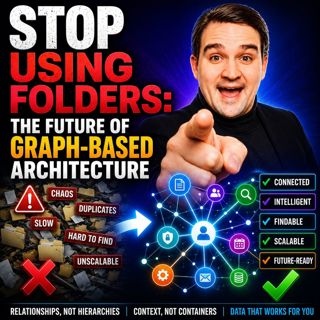

Stop Using Folders: The Future of Graph-Based Architecture

Stop Using Folders: The Future of Graph-Based Architecture

For decades, enterprises built their digital workplaces around folders, directories, and deeply nested hierarchies. The assumption was simple: if information was organized into the right structure, people would always be able to find it. But in 2026, that assumption is collapsing under the weight of modern data complexity. Work no longer starts with navigation. It starts with context. This episode explores why traditional folder structures are becoming obsolete and how graph-based architecture is redefining the future of Microsoft 365, SharePoint, and enterprise collaboration. Instead of organizing files by location, modern systems organize information by meaning, relationships, and intent. The result is a complete shift away from static hierarchies toward intelligent connected knowledge networks.

THE NAVIGATION MYTH

Most organizations still accept “folder hell” as a normal part of work. But the cost is enormous. Research shows employees spend nearly nineteen percent of their day simply searching for information across folders, drives, and disconnected repositories. That represents a massive productivity tax hidden inside everyday collaboration. The problem is not just speed. Folder structures force users to remember where another human decided to save something years earlier. That creates constant cognitive overload and turns collaboration into an exercise in digital archaeology.

WHY FOLDERS FAIL AT SCALE
  • Deep hierarchies overwhelm human memory
  • File duplication creates conflicting versions of truth
  • Teams waste time navigating instead of creating
  • Information becomes trapped inside organizational silos
The traditional directory model assumes data belongs in one place at one time. Modern enterprise information does not work that way anymore.

THE COLLAPSE OF STATIC HIERARCHIES

A single document today often serves multiple purposes simultaneously. A contract may represent a legal record, a revenue event, a project milestone, and a customer relationship artifact all at once. Traditional folders force organizations to choose one “correct” location, even though the data naturally exists across multiple business dimensions. That limitation creates one of the biggest enterprise problems in modern collaboration systems: duplication. When users cannot decide where a file belongs, they create copies. Those copies slowly diverge, producing conflicting versions of the truth across departments and workflows. What begins as organization eventually becomes fragmentation. The folder model was designed for physical filing cabinets. Enterprise data is no longer physical. It is relational.

THE RISE OF MICROSOFT GRAPH AND SEMANTIC ARCHITECTURE

This episode dives deep into the rise of Microsoft Graph and semantic indexing as the foundation of next-generation information architecture. Instead of treating files as isolated objects stored in containers, graph-based systems understand relationships between people, projects, meetings, conversations, documents, and workflows. The system no longer focuses on where information lives. It focuses on what the information means. The Microsoft Graph transforms enterprise content into an interconnected neural network of organizational knowledge. Through vector-based semantic indexing, systems can now understand concepts, intent, and contextual relationships instead of relying purely on keyword matching.

KEY GRAPH-BASED CONCEPTS DISCUSSED
  • Semantic indexing and vector similarity
  • Context-aware information discovery
  • Relationship-driven architecture
  • AI-powered organizational intelligence
In the graph model, the system proactively surfaces the right information based on meetings, conversations, tasks, and collaboration signals — often before users even begin searching.

SHAREPOINT PREMIUM AND THE METADATA ENGINE

One of the biggest architectural changes discussed in this episode is the evolution of SharePoint Premium from static document storage into an intelligent metadata processing engine. Modern SharePoint environments no longer depend on manual filing discipline. As documents enter the system, AI-powered metadata extraction automatically identifies vendors, invoice totals, contracts, project references, deadlines, and business context. This transforms documents from passive files into active data objects connected across the enterprise graph.

HOW METADATA CHANGES EVERYTHING
  • Documents become searchable by meaning
  • AI automatically extracts business context
  • Flat content architectures replace nested drives
  • Information becomes dynamically connected
The future is not about storing files better. It is about making information computationally understandable.

THE FUTURE OF GRAPH-BASED USER INTERFACES

The episode also explores how graph architecture changes the user experience itself. Traditional interfaces present information as lists and folders, forcing users into serial navigation patterns that increase cognitive load. Graph-based interfaces instead visualize relationships between projects, people, meetings, tasks, and documents as interconnected nodes. This mirrors how the human brain naturally processes patterns and associations. Instead of navigating rigid trees, users interact with contextual maps of organizational knowledge. The result is faster discovery, reduced mental friction, and dramatically improved visibility into project relationships and collaboration patterns.

THE CULTURAL SHIFT AWAY FROM FOLDER THINKING

One of the most important themes in this episode is that graph-based architecture is not just a technology shift — it is a cultural transformation. Most organizations still train employees where to save files instead of teaching them how to interact with intelligent systems. Folder structures create a false sense of control because they mimic physical storage models people have used for decades. Moving to graph-based systems requires organizations to embrace transparency, metadata, discoverability, and relationship-driven collaboration.

THE BIGGEST ADOPTION CHALLENGES
  • Folder nostalgia and legacy habits
  • Fear of losing “ownership” over information
  • Resistance to transparent collaboration
  • Dependence on old navigation workflows
The organizations that successfully transition will stop treating information like isolated documents and start treating it like a living organizational intelligence network.

THE END OF THE DIRECTORY ERA

This episode argues that the traditional directory is reaching its endpoint. Folders solved a problem for the computing limitations of the 1970s. But modern enterprise AI systems no longer need humans to manually organize information into static containers. Semantic understanding, graph relationships, metadata extraction, and AI-powered context are replacing navigation entirely. The future competitive advantage is not how much data your organization stores. It is how quickly your systems can connect people to the right information at the right moment.

FINAL THOUGHTS

The transition from folder hierarchies to graph-based architecture represents one of the most important shifts happening across Microsoft 365 and enterprise collaboration today. The future belongs to systems that understand relationships, context, and meaning instead of relying on humans to manually maintain directory structures. If your organization still depends on deeply nested folders to manage knowledge, you may already be operating on an outdated architectural model. Stop navigating. Start connecting. Follow M365FM for deeper conversations on Microsoft Graph, SharePoint Premium, AI-powered collaboration, semantic indexing, metadata architecture, and the future of enterprise knowledge systems.

Become a supporter of this podcast: https://www.spreaker.com/podcast/m365-fm-modern-work-security-and-productivity-with-microsoft-365--6704921/support.

Tämä jakso on lisätty Podme-palveluun avoimen RSS-syötteen kautta eikä se ole Podmen omaa tuotantoa. Siksi jakso saattaa sisältää mainontaa.

Jaksot(706)

Your AI Agents Are Orphaned- The Structural Shift to Agent ID

Your AI Agents Are Orphaned- The Structural Shift to Agent ID

Artificial intelligence is changing enterprise identity faster than most organizations realize. Every week, new AI agents are being deployed across Microsoft 365 tenants, accessing SharePoint, Microso...

11 Heinä 1h 4min

The Architecture of Agility: Bicep at Scale

The Architecture of Agility: Bicep at Scale

Modern cloud platforms don't fail because Azure isn't powerful enough—they fail because governance, automation, and developer experience weren't designed to scale together. In this episode of the M365...

11 Heinä 1h 25min

Designing the Future. AI, UX, and the Next Generation of Microsoft Power Platform with Tchesco Ayih [MVP-MCT]

Designing the Future. AI, UX, and the Next Generation of Microsoft Power Platform with Tchesco Ayih [MVP-MCT]

In this episode of the M365 Podcast, Mirko Peters sits down with Tchesco Ayih, Microsoft MVP, Microsoft Certified Trainer (MCT), international speaker, mentor, and Power Platform expert. Tchesco share...

10 Heinä 50min

Azure Bicep Fundamentals for Real Projects

Azure Bicep Fundamentals for Real Projects

Learning Azure Bicep is easy. Building infrastructure that survives real-world enterprise environments is something entirely different. In this episode of the M365 FM Podcast, host Mirko Peters explor...

10 Heinä 1h 17min

Beyond Prompt a Page: Building Enterprise-Ready AI Experiences in Power Apps with Sara Lagerquist [MVP]

Beyond Prompt a Page: Building Enterprise-Ready AI Experiences in Power Apps with Sara Lagerquist [MVP]

Artificial Intelligence is changing how organizations build business applications, but moving beyond simple demos requires much more than adding a chatbot or generating code with AI. In this episode o...

9 Heinä 45min
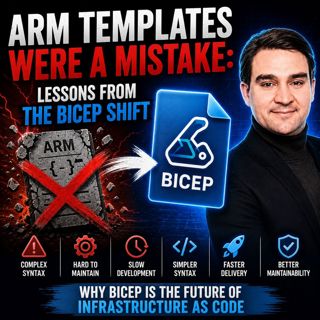
ARM Templates Were a Mistake: Lessons from the Bicep Shift

ARM Templates Were a Mistake: Lessons from the Bicep Shift

Infrastructure as Code transformed cloud computing by replacing manual portal clicks with version-controlled, repeatable deployments. But while Azure Resource Manager (ARM) templates represented a maj...

9 Heinä 1h 19min
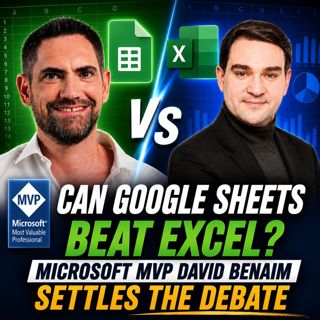
Can Google Sheets Beat Excel: Microsoft MVP David Benaim Settles the Debate

Can Google Sheets Beat Excel: Microsoft MVP David Benaim Settles the Debate

For decades, Microsoft Excel has been the undisputed king of spreadsheets. It powers everything from personal budgets to enterprise reporting, financial modeling, and business intelligence. But Google...

8 Heinä 52min

LinkedIn + Dynamics 365: The Architecture of Modern Selling

LinkedIn + Dynamics 365: The Architecture of Modern Selling

Modern B2B sales is undergoing a fundamental transformation. For years, organizations have treated LinkedIn and Dynamics 365 as separate systems. One platform managed relationships and professional ne...

8 Heinä 1h 14min

Suosittua kategoriassa Politiikka ja uutiset

aikalisa
uutiscast
ootsa-kuullut-tasta-2
rss-ootsa-kuullut-tasta
rss-podme-livebox
rss-seksicast
otetaan-yhdet
tervo-halme
politiikan-puskaradio
aihe
rss-vaalirankkurit-podcast
rss-girls-finish-f1rst
rss-mina-ukkola
rss-aijat-hopottaa-podcast
rss-mita-tapahtuu
rss-kaikki-uusiksi
rss-merja-mahkan-rahat
rss-tekoalyfoorumi
rss-asiastudio
rss-pinnalla