Disembodied human brains, immortal bits of sea cucumber, and fame in Galileo’s time

Disembodied human brains, immortal bits of sea cucumber, and fame in Galileo’s time

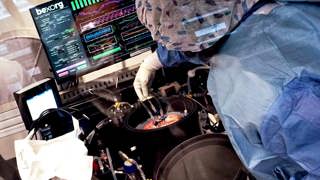
First up on the podcast, a company is using whole brains—maintained with specialized life support—to study new drugs. Freelance science journalist Sara Reardon joins host Sarah Crespi to talk about the advantages and ethical considerations of keeping brains intact but inactive. Next on the show, when some lizards lose their tails, they might regenerate new ones. But what happens to the old tail? Whereas a castoff lizard tail quickly decomposes, this isn’t the case for the castoff tube feet of the sea cucumber, Psolus fabricii. Sara Miller Jobson, a Ph.D. student at the Memorial University of Newfoundland, describes how these “living” limbs healed after amputation and then survived for more than 3 years in just seawater. Their survival in such simple conditions, while maintaining a complex tissue with a functioning immune response, could make amputated tube feet a useful model system for studying regeneration. Finally this week, the first in our book series on science biographies. Books host Angela Saini talks with historian Anna-Luna Post about her recent book, Galileo’s Fame: Science, Credibility, and Memory in the Seventeenth Century, which explores how fame shaped the scientific fortunes of Galileo Galilei. This week’s episode was produced with help from Podigy. About the Science Podcast Learn more about your ad choices. Visit megaphone.fm/adchoices

Tämä jakso on lisätty Podme-palveluun avoimen RSS-syötteen kautta eikä se ole Podmen omaa tuotantoa. Siksi jakso saattaa sisältää mainontaa.

Jaksot(644)

USAID cuts linked to violence, unexpected parallels between humans and bacteria, and how to rule the world

USAID cuts linked to violence, unexpected parallels between humans and bacteria, and how to rule the world

First up on the podcast, Senior International Correspondent Richard Stone joins host Sarah Crespi to discuss the surprising commonalities between our immune systems and the tools bacteria use to defen...

21 Touko 41min

Fighting deepfakes, and using bacteria to deliver medicine inside the body

Fighting deepfakes, and using bacteria to deliver medicine inside the body

First up on the podcast, Meagan Cantwell produced a segment with Contributing Correspondent Kai Kupferschmidt on the fight against deepfakes. Kupferschmidt talks with Hany Farid, professor at the Univ...

14 Touko 31min

A team effort to save a giant fish, the power of moonlight, and how scientists can navigate a tough political environment

A team effort to save a giant fish, the power of moonlight, and how scientists can navigate a tough political environment

First up on the podcast, along Brazil’s Juruá River, local residents have been working with scientists to manage a giant fish called the arapaima—affecting the land, the people, and the economy. Contr...

7 Touko 53min

Watching a spiders’ heart beat, epigenetic ethics, and what science biographies reveal about fame

Watching a spiders’ heart beat, epigenetic ethics, and what science biographies reveal about fame

First up on the podcast, Online News Editor David Grimm shares a batch of fun stories with podcast host Sarah Crespi—from spider hearts racing when traffic gets loud to a disease-preventing house. Sta...

30 Huhti 46min

Cleaning up uranium mining, and how the heart avoids cancer

Cleaning up uranium mining, and how the heart avoids cancer

First up on the podcast, freelance science and environmental journalist Quentin Septer joins host Sarah Crespi to talk about a controversial uranium mine getting fast-tracked in South Dakota. Septer c...

23 Huhti 30min

The normals | Episode 3

The normals | Episode 3

The final of a three-part limited Science Podcast series that looks at the history of normal human subjects in research In episode two, we heard what happened to the normals program after church volu...

21 Huhti 33min

How to keep quantum computers cool, whether prediction markets harm public health, and podcasting on podcasting

How to keep quantum computers cool, whether prediction markets harm public health, and podcasting on podcasting

First up on the podcast, quantum computers require extremely low temperatures—less than 1°C away from absolute zero. But getting down to those temperatures has usually required dilution fridges using ...

16 Huhti 50min

Suosittua kategoriassa Politiikka ja uutiset

uutiscast
aikalisa
politiikan-puskaradio
ootsa-kuullut-tasta-2
rss-ootsa-kuullut-tasta
rss-podme-livebox
tervo-halme
otetaan-yhdet
rss-vaalirankkurit-podcast
et-sa-noin-voi-sanoo-esittaa
rss-asiastudio
the-ulkopolitist
rss-kaikki-uusiksi
rss-ulkopoditiikkaa
rss-pinnalla
rss-sinivalkoinen-islam
rss-hyvaa-huomenta-bryssel