Fun Facts About Manga

Fun Facts About Manga

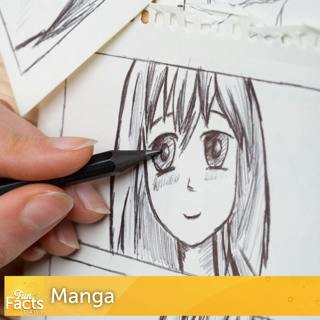
Manga, the distinctive Japanese medium of comics and graphic novels, roots its historical lineage in the 12th century with sequential monochrome drawings like the Choju-Jinbutsu-Giga (Scrolls of Frolicking Animals). Translating literally to "whimsical pictures" from its original kanji, the term was popularized in the late 18th and early 19th centuries by prominent artists like Santo Kyoden and Katsushika Hokusai. Developed into its modern industry structure by the late 19th century, manga spans dozens of genres that capture readers across every age demographic. Unlike Western comic formats, traditional manga follows Japanese vertical textual formatting, moving sequentially from right to left and top to bottom. To accommodate this widespread reading culture, Japan pioneered Manga Kissa (manga cafes) in Nagoya during the late 1970s, which have evolved into 24-hour spaces offering massive comic libraries, private booths, and basic overnight amenities for patrons. The creative and structural evolution of modern manga can be largely attributed to pioneers like Osamu Tezuka, a medical doctor known as the "God of Manga" who introduced cinematic visual language, signature expressive character eyes, and long-form narrative arcs through works like Astro Boy. On a global commercial scale, Eiichiro Oda's pirate epic One Piece has achieved historic milestones since its 1997 debut, reaching over 600 million copies in worldwide circulation across more than 100 volumes, placing it on par with Western comic titans like Superman. While its immense publishing footprint spawned a persistent urban legend claiming manga production outpaces Japan's national toilet paper manufacturing, industrial data confirms this is false; the myth merely stems from the cheap, unbleached groundwood paper historically nicknamed Babagami (toilet paper quality). Because these high-volume printing methods rely on paper with high lignin content that is prone to yellowing and foxing, archival longevity requires specialized preservation techniques, including protection from UV light, storage in acid-free polypropylene bags, and keeping ambient humidity strictly between 40% and 50%. ⁠Listen Ad-Free on Patreon. ⁠ For just $3 per month, you can get ad-free versions of Fun Facts Daily, Who ARTed and Art Smart. Head over to ⁠https://www.patreon.com/cw/FunFactsDailyPod⁠ if you are interested. Want to learn more? Head over to my website www.funfactsdailypod.com and be sure to listen to my other podcasts Who ARTed: Weekly Art History for All Ages or Art Smart. For family fun, check out my son's podcast Rainbow Puppy Science Lab The image used in the episode cover art came from Adobe's stock photos. Fun Facts Daily is an Airwave Media Podcast. If you are interested in advertising on this or any other Airwave Media show, email: advertising@airwavemedia.com Learn more about your ad choices. Visit megaphone.fm/adchoices

Tämä jakso on lisätty Podme-palveluun avoimen RSS-syötteen kautta eikä se ole Podmen omaa tuotantoa. Siksi jakso saattaa sisältää mainontaa.

Jaksot(365)

Fun Facts About DayGlo Colors

Fun Facts About DayGlo Colors

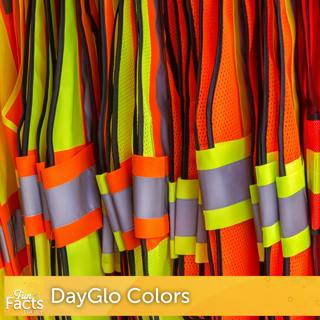
Day-Glo colors owe their existence to an accidental discovery made by brothers Bob and Joe Switzer in the 1930s while Bob was recovering from an injury in a dark basement. Unlike standard pigments, wh...

11 Syys 16min

Fun Facts About Carrots

Fun Facts About Carrots

Carrots are nutrient-dense root vegetables rich in carotenoids, natural pigments synthesized by plants, most notably beta-carotene. Once digested, beta-carotene converts to vitamin A, supporting cellu...

10 Syys 13min

Fun Facts About the Solar System

Fun Facts About the Solar System

The solar system operates on immense scales governed by extreme physical environments, orbital mechanics, and surprising planetary characteristics. At its center, the Sun contains approximately 99.86%...

9 Syys 15min

Fun Facts About the Sistine Chapel

Fun Facts About the Sistine Chapel

The Sistine Chapel, commissioned in 1473 by Pope Sixtus IV and built to echo the biblical proportions of Solomon’s Temple, is one of the pinnacle achievements of Renaissance architecture and art. Span...

8 Syys 14min

Fun Facts About Unusual Jobs

Fun Facts About Unusual Jobs

While many careers follow traditional paths, several vital professions operate far outside conventional office environments. From certified water slide inspectors using multi-axis accelerometers and f...

7 Syys 16min
Fun Facts About Pizza

Fun Facts About Pizza

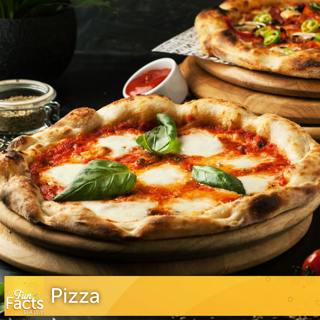
Pizza has evolved from a traditional Mediterranean staple into one of the most commercially significant foods on the planet, with origins tracing back to ancient flatbreads and medieval Italian manusc...

4 Syys 16min

Fun Facts About Your Olfactory System (Sense of Smell)

Fun Facts About Your Olfactory System (Sense of Smell)

The human olfactory system is an intricate sensory network capable of distinguishing an estimated one trillion distinct odor combinations through combinatorial receptor codes. Positioned high within t...

3 Syys 13min

Fun Facts About Duct Tape

Fun Facts About Duct Tape

Duct tape originated during World War II when ordnance worker Vesta Strout designed a durable, waterproof cloth-backed adhesive tape to keep moisture out of ammunition cases. It was originally manufac...

2 Syys 15min

Suosittua kategoriassa Koulutus

rss-murhan-anatomia
aamukahvilla
psykopodiaa-podcast
voi-hyvin-meditaatiot-2
rss-luonnollinen-synnytys-podcast
adhd-podi
rss-rahamania
rss-liian-kuuma-peruna
ihminen-tavattavissa-tommy-hellsten-instituutti
psykologia
rss-arkea-ja-aurinkoa-podcast-espanjasta
koulu-podcast-2
kesken
rss-uskonto-on-tylsaa
rss-niinku-asia-on
rss-duodecim-lehti
rss-spessu
rss-valo-minussa-2
rss-psykalab
taytta-tavaraa