S01E36 EN Partner or subcontractor. How to build real partnerships in R&D projects
In many R&D projects today, there is one question that is rarely asked directly, but has a huge impact on the outcome. Are you working with a supplier, or with a real partner? At first, the difference...
8 Loka 5min
Transformation You Don’t Need to Fear
When many managers hear the phrase “digital transformation,” they immediately imagine something big, expensive, and risky. They think about new production lines, large investments, long implementation...
5 Elo 6min
What should you know about LC Elektronik
What should you know about LC Elektronik
17 Heinä 1min
From MVP to Production – How to Scale a Printed Electronics Project Without Losing Control
A guide for Project Managers who want to innovate without chaos MVP is just the beginning – not a time to celebrate Imagine you just finished a sprint where your team built the first working prototype...
10 Heinä 7min
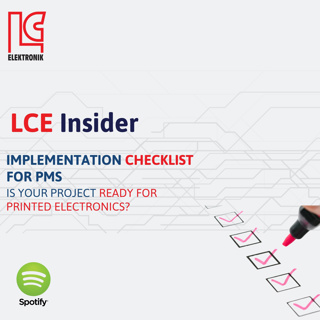
Implementation checklist for PMs: is your project ready for printed electronics?
Imagine you're in the middle of a sprint. Your team is finishing the design of a new user interface for a medical device. The client wants it light, modern, with touch and lighting in one panel. Someo...
24 Kesä 6min
Integration Without Cables – How to Combine HMI, Sensors and Housing in One Layer
In IoT device design, every decision is a trade-off between size, function, and speed. Imagine Michał, an experienced engineer working on a new version of a diagnostic wristband. The client wants it l...
18 Kesä 8min
Top 5 Concerns Project Managers Have About Printed Electronics – And How to Solve Them
Project managers usually like innovation—until it brings extra risk, extra meetings, and extra uncertainty. And printed electronics can trigger exactly that reaction, especially if your team has built...
9 Kesä 5min
Printing instead of a PCB – how to simplify IoT device design
When you design an IoT device, you often fight the same battle every time: you need more functions in less space, the product must stay light and cost-effective, and assembly should be fast and repeat...
20 Touko 8min
