Climate resilience is not optional: what people in fragile, urban settings should expect from WASH

Climate resilience is not optional: what people in fragile, urban settings should expect from WASH

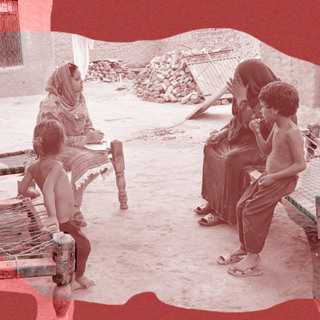
Climate change is intensifying water insecurity in fragile urban settings, where ageing infrastructure, rapid urbanization, and inequality already strain access to essential services. In Peshawar, Pakistan, a city hosting generations of Afghan refugees and facing growing water scarcity, climate pressures have reduced river flow, damaged infrastructure for water, sanitation and hygiene (WASH), and increased waterborne disease. These impacts fall most heavily on refugees, informal settlement residents, and other marginalized communities with limited access to safe and reliable water and sanitation services. In this post, part of our new series “Delivering for people in an evolving humanitarian landscape”, Sundus Tehreem Shahzad Khattak draws on qualitative research with government officials, residents and humanitarian practitioners in Pakistan to argue that effective, climate-resilient WASH projects do more than deliver services; they safeguard a spectrum of human rights, including dignity, safety from violence, and economic opportunity. She contends that meeting legitimate community expectations requires moving beyond siloed, short-term interventions toward formalized, multi-stakeholder collaboration that places local knowledge, gender responsiveness, and long-term sustainability at the centre of humanitarian action in an era of climate uncertainty and urban fragility.

Tämä jakso on lisätty Podme-palveluun avoimen RSS-syötteen kautta eikä se ole Podmen omaa tuotantoa. Siksi jakso saattaa sisältää mainontaa.

Jaksot(303)

Civilian protection has a dependency-chain problem

Civilian protection has a dependency-chain problem

Civilian protection is often assessed by whether a person has been warned, evacuated, registered, sheltered or reached with relief. For many persons with disabilities, each measure depends on a wider ...

20 Elo 21min
The machines must not choose who dies: a humanitarian case for disarming AI

The machines must not choose who dies: a humanitarian case for disarming AI

As states race to develop autonomous weapons systems, the effort to agree binding international rules on machine decisions over life and death has reached a critical moment. In this post, Eberechukwu...

13 Elo 18min
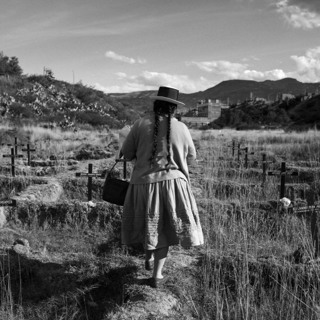
Memorializing IHL violations in the age of AI: opportunities and risks for transitional justice

Memorializing IHL violations in the age of AI: opportunities and risks for transitional justice

Memorialization, one of the five pillars of transitional justice, plays a vital role in preserving the memory of international humanitarian law (IHL) violations and gross human rights violations, supp...

23 Heinä 17min
“A number that learned how not to scream”: the case for community-led metrics on protection

“A number that learned how not to scream”: the case for community-led metrics on protection

The international humanitarian system has built a sophisticated architecture for the protection of civilians, namely political resolutions, cluster coordination mechanisms, reporting frameworks, and a...

7 Heinä 15min
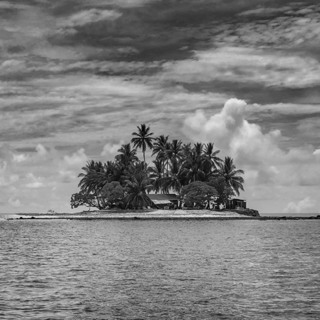
Amplifying Pacific voices: the region’s crucial role in advancing IHL

Amplifying Pacific voices: the region’s crucial role in advancing IHL

Pacific Island states have long demonstrated leadership in promoting peace, disarmament, and humanitarian values. From traditional customs that reflect principles contained in contemporary internation...

2 Heinä 15min
The shelter that shone in the distance | Written and Performed by Mamuch Bey

The shelter that shone in the distance | Written and Performed by Mamuch Bey

For the world's more than 120 million forcibly displaced people, the idea of refuge is not an abstraction – it is a horizon, an act of imagination, and sometimes the only thing that keeps hope alive. ...

18 Kesä 4min
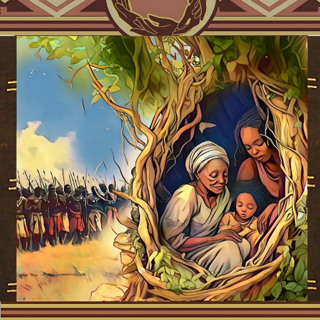
African traditions and the protection of children in armed conflict

African traditions and the protection of children in armed conflict

Across Africa, norms regulating the conduct of hostilities long predate the codification of modern international humanitarian law (IHL). The ICRC Tool on African traditions and the preservation of hum...

16 Kesä 12min
We helped individuals while harming persons: what conflict-affected communities deserve beyond beneficiary status

We helped individuals while harming persons: what conflict-affected communities deserve beyond beneficiary status

Conflict and displacement do more than destroy homes, livelihoods, and infrastructure. They also fracture the social relationships through which people sustain dignity, identity, and collective life. ...

11 Kesä 14min

Suosittua kategoriassa Politiikka ja uutiset

uutiscast
aikalisa
politiikan-puskaradio
ootsa-kuullut-tasta-2
rss-ootsa-kuullut-tasta
otetaan-yhdet
rss-podme-livebox
rss-seksicast
rss-vaalirankkurit-podcast
rss-voi-venaja
tervo-halme
rss-asiastudio
rss-girls-finish-f1rst
rss-pinnalla
rss-kaikki-uusiksi
nakokulma-oikealta-jussi-halla-ahon-blogin-kommentaarit
rss-mina-ukkola
linda-maria
rss-raha-talous-ja-politiikka