How to design AI agent loops: schedules, goals, and subagents in Claude Code and Codex
How I AI17 Kesä

How to design AI agent loops: schedules, goals, and subagents in Claude Code and Codex

I break down every loop type from scratch—what a heartbeat, cron, hook, and goal loop actually are, when each one fits, and the five things any effective loop needs before it touches production. Then I build two live loops: a daily aging-PR reviewer in Claude Code that schedules itself at 10:15 a.m. and spins off its own subagents, and a weekly skills-identification loop in Codex that spawns goal-based subagents to validate its own output in real time.


What you’ll learn:

  1. The plain-English definition of a loop—and why it’s just an automated prompt, not a scary new paradigm
  2. The four loop types (heartbeat, cron, hook, and goal) and when each one actually fits your workflow
  3. How to think about loop design using the “onboarding an employee” mental model
  4. The five things every effective loop needs: work trees, skills, plugins/connectors, subagents, and state tracking
  5. How to build a scheduled PR-review routine in Claude Code that babysits aging PRs and alerts your team
  6. How to set up a weekly skills-identification automation in Codex that spawns its own validating subagents
  7. Why goal-based loops are the hardest to write well—and where most people burn tokens for nothing
  8. The two warning signs that your loop is going to get expensive before it gets useful

Brought to you by:

WorkOS—Make your app enterprise-ready today

Runway—The creative AI platform for images, video, and more

In this episode, we cover:

(00:00) Prompts are out and loops are in

(02:30) Defining a loop

(03:03) The four ways to automate a prompt: heartbeat, cron, hooks, and goals

(06:03) Five things every effective loop needs

(09:26) The “onboarding an employee” framework for designing loops

(11:58) Live build #1: Daily aging PR loop in Claude Code

(17:08) Subagents inside loops

(19:00) Live build #2: Weekly skills identification loop in Codex

(22:57) Watching subagents spin up in real time

(25:28) Warning signals around loops

(27:31) What listeners are doing with loops

Tools referenced:

• Claude Code: https://claude.ai/code

• Codex: https://chatgpt.com/codex

• OpenClaw: https://openclaw.ai/

Other references:

• Claire’s article “Why OpenClaw Feels Alive Even Though It’s Not”: https://x.com/clairevo/article/2017741569521271175

• Addy Osmani’s article on loop engineering: https://addyosmani.com/blog/loop-engineering/

• Using Goals in Codex: https://developers.openai.com/cookbook/examples/codex/using_goals_in_codex

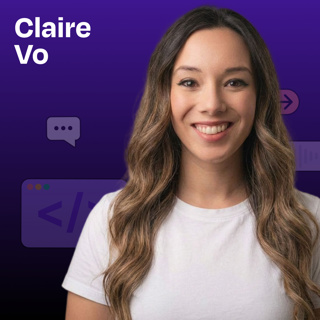
Where to find Claire Vo:

ChatPRD: https://www.chatprd.ai/

Website: https://clairevo.com/

LinkedIn: https://www.linkedin.com/in/clairevo/

X: https://x.com/clairevo

Production and marketing by https://penname.co/. For inquiries about sponsoring the podcast, email jordan@penname.co.

Tämä jakso on lisätty Podme-palveluun avoimen RSS-syötteen kautta eikä se ole Podmen omaa tuotantoa. Siksi jakso saattaa sisältää mainontaa.

Jaksot(93)

This solo builder runs 24/7 local AI on his own hardware | Alex Finn

This solo builder runs 24/7 local AI on his own hardware | Alex Finn

Alex Finn is an AI builder, YouTuber, and the creator of Vibe Code Academy, a community for people learning to build with AI tools. He runs one of the most ambitious local AI setups I’ve come across: ...

13 Heinä 35min

GPT-5.6 Sol vs. Claude Fable: Why OpenAI’s new model crushes my benchmark

GPT-5.6 Sol vs. Claude Fable: Why OpenAI’s new model crushes my benchmark

GPT-5.6 Sol is back, and I ran it through my full How I AI vibe benchmark against GPT-5.6 Terra, Luna, Claude Fable 5, and Sonnet 5 across five categories: PRDs, prototypes, wireframes, debugging, and...

9 Heinä 36min

What a harness is and how to build one with Claude Agent SDK

What a harness is and how to build one with Claude Agent SDK

Everybody is saying, “It’s not the model, it’s the harness,” but almost nobody stops to explain what a harness actually is. So I did. I built one live on the show: a Sentry bug-debugging harness for m...

8 Heinä 24min

How I run autonomous coding agents from my phone with OpenAI Symphony + Linear | Alessio Fanelli (Kernel Labs)

How I run autonomous coding agents from my phone with OpenAI Symphony + Linear | Alessio Fanelli (Kernel Labs)

Alessio Fanelli, founder of Kernel Labs and co-host of Latent Space podcast, walks us through two very different AI workflows: (1) a fully autonomous coding setup using OpenAI Symphony + Linear, where...

6 Heinä 35min

Sonnet 5 review: I ran 64 generations to find out if it's worth it

Sonnet 5 review: I ran 64 generations to find out if it's worth it

I’ve been testing every major frontier model release since the start of the year, and when Anthropic dropped Sonnet 5, I wanted more than a vibe check. I got tired of one-off tests I couldn’t repeat o...

30 Kesä 25min

No Figma. No Jira. No docs. How Gusto built a new product line with Claude Code | Eddie Kim (CTO)

No Figma. No Jira. No docs. How Gusto built a new product line with Claude Code | Eddie Kim (CTO)

Eddie Kim is the co-founder and CTO of the payroll and HR platform Gusto, which just crossed $1 billion in revenue and serves more than 500,000 small businesses. Recently he did something most CTOs do...

29 Kesä 51min

GLM 5.2: why I’m replacing Opus in Claude Code with this new model

GLM 5.2: why I’m replacing Opus in Claude Code with this new model

I put GLM 5.2, the open-weight coding model from Z.AI, through four real tasks inside my actual codebase: a codebase architecture audit, a UI redesign, and a 45-minute autonomous bug-hunting session p...

24 Kesä 27min

How Claude Mythos found a 15-year-old bug in Mozilla Firefox | Brian Grinstead

How Claude Mythos found a 15-year-old bug in Mozilla Firefox | Brian Grinstead

Brian Grinstead is a distinguished engineer at Mozilla, where he’s worked on Firefox and the web platform since 2013 (he joined to help launch Firefox DevTools). Recently he and his team pointed an ag...

22 Kesä 48min