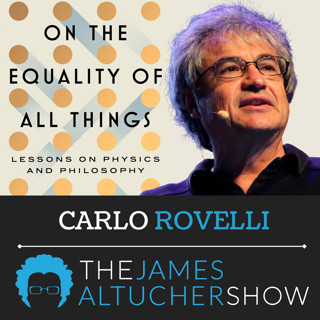
From the Archive: The 7 Techniques to Influence Anyone of Anything | Robert Cialdini

From the Archive: The 7 Techniques to Influence Anyone of Anything | Robert Cialdini

A Note from James:

If I could tell my children to read one post of mine, it would be this post.

Influence is how they will navigate a world of uncertainty.

Robert Cialdini is the most influential person in the world. And by that I mean, he wrote the book Influence, which sold 3 million copies and defines the six critical aspects of all influence.

Now he has a new book, Pre-Suasion, going 10x deeper into the concepts of persuasion. I got him on my podcast so I could ask the 1,000 questions I have.

Small story from the book:

If you name a restaurant “Studio 97” instead of “Studio 17,” people are more likely to tip higher.

If you ask a girl for her phone number outside a flower store, triggering feelings of romance, she is more likely to give it to you than if you ask her outside a motorcycle store.

And 500 other stories.

The environment is just as important as what you say.

Before the podcast began, I gave him a book as a gift: The Anxiety of Influence, a history of poetry.

What would poetry have to do with influence and marketing?

In all art, since the beginning of time, artists have built on the work of the artists of the generation before them.

Beethoven depended on a Mozart to be a Beethoven. Picasso depended on a Cézanne. Without Michelson, there would be no Einstein.

But poets, for some reason, would deny being influenced.

“I never even read Ezra Pound,” shouted one poet at a critic.

Poets want to be seen as original.

Nobody is 100% original.

This is the anxiety of influence.

Almost all of our decisions, and even our creativity, are outsourced to the people around us who influence us: peers, teachers, religion, parents, bosses, etc.

Our personality is our own particular mishmash of influences.

How we deal with that anxiety, how we recognize the influences, learn from them, and build from them, is the birth of all of our creativity.

Let me summarize the seven aspects of influence:

  • Reciprocity: If you give someone a Christmas card, they will want to return the favor.
  • Likability: Make yourself trustworthy. For instance, outline the negatives of dealing with you.
  • Consistency: Ask someone for a favor. Now they will say to themselves, “I am the type of person who does James a favor.”
  • Social Proof: If you are trying to get someone to do X, show them that “a lot of your peers do X.” For instance, if you are at a bar and you are a guy trying to meet women, bring your women friends and not your guy friends with you.
  • Authority: “Four out of five dentists say…”
  • Scarcity: “Only 100 iPhones left at this store!”
  • Unity: You and I are the same because of location, values, religion, etc.


I’ve used each of the above in business.

They work.

They will make you money.

The entire purpose of language is to influence.

We are not strong animals. We are weak.

The language of influence saved us.

Probably a word like “Run!” was the first word spoken.

A word of influence.

And it worked.

I’m still running from the things I fear.

So speak to influence.

Don’t speak to call a flower yellow.

Speak to breathe spirit into an idea, to be enthusiastic, to convey emotion, to influence.

This is the only way to have an impact with your unique creativity.

I gave Robert the book as a gift — reciprocity — assuming we would have a great podcast.

And we did.

But then I thought later, I can’t even remember how Robert got on my podcast.

I highly recommend his book in the podcast and even in this post.

As he got into his car after the podcast in order to go to his next interview, I started thinking:

“Hmmm, who influenced who?”


Episode Description:

Robert Cialdini wrote the book on persuasion — literally. His classic Influence became one of the defining books on why people say yes, how decisions get shaped, and why the smallest cue in the room can change the outcome of a conversation.

In this episode from the archive, James talks with Cialdini about Pre-Suasion, the idea that persuasion starts before the actual pitch. It begins with what people notice, what they feel, what is in the environment, and what frame has already been set before the first real ask is made.

They talk about flower shops, restaurant names, voting booths, Warren Buffett’s shareholder letters, Anwar Sadat’s negotiation instincts, and the rabbi who helped save thousands of lives with one sentence. But the episode is not just about marketing. It is about how people make decisions under uncertainty — and how to use influence ethically, whether you are asking for a job, building a business, negotiating a deal, writing a sales letter, or trying to become more trusted.


What You’ll Learn:

  • Why persuasion often begins before the message — and how small cues in the environment can make people more receptive.
  • How Cialdini’s original six principles of influence work: reciprocity, consistency, social proof, scarcity, authority, and liking.
  • Why Cialdini added a seventh principle, unity — the feeling that “we are the same” — and why it can be even stronger than liking.
  • When to use social proof versus authority, and how to decide which kind of evidence matters most in a given situation.
  • Why admitting weakness first can build trust, and how Warren Buffett uses honesty as a persuasion tool instead of a liability.


Timestamped Chapters:

  • [00:00] Introduction and episode preview
  • [01:25] Interview begins — James introduces Robert Cialdini and Pre-Suasion
  • [03:12] The flower shop study: why context changes the answer before the question is asked
  • [05:48] Valentine Street and the hidden power of unrelated cues
  • [06:42] Wine stores, voting booths, and fluffy cloud mattresses
  • [08:10] Are humans irrational, or are shortcuts necessary?
  • [10:17] How the pictures on your wall can change what you write
  • [11:36] The six — now seven — principles of influence
  • [12:00] Reciprocity: the Hare Krishna flower example and the power of personalized gifts
  • [16:40] Consistency: Anwar Sadat, Henry Kissinger, and giving people a reputation to live up to
  • [19:30] Cialdini’s undercover research with sales organizations
  • [23:30] Social proof: medical no-shows, restaurant menus, and what happens when a message backfires
  • [26:43] Social proof as feasibility: “people like me can do this”
  • [29:07] Authority: when expert endorsement beats crowd validation
  • [33:55] Why companies lose with better products when they fail to frame the decision properly
  • [35:10] Building authority from zero by using honesty and scarcity
  • [37:05] The Avis “We’re number two” campaign and the trust value of admitting weakness
  • [38:24] Warren Buffett’s shareholder letters and the persuasive power of leading with mistakes
  • [41:30] Unity: Cialdini’s seventh principle of influence
  • [44:24] The rabbi, the Japanese tribunal, and the sentence that saved a community
  • [48:30] Applying unity in job interviews, dating, and negotiations
  • [51:10] Loss aversion and how uncertainty changes persuasion
  • [55:00] Why long sales letters can outperform short ones
  • [55:30] Cialdini’s practical framework: find what is true, direct attention to it, then make the case
  • [59:00] Fake scarcity and why false urgency destroys trust
  • [65:00] Closing thoughts on ethical influence and genuine specificity


Additional Resources:


See Privacy Policy at https://art19.com/privacy and California Privacy Notice at https://art19.com/privacy#do-not-sell-my-info.

Tämä jakso on lisätty Podme-palveluun avoimen RSS-syötteen kautta eikä se ole Podmen omaa tuotantoa. Siksi jakso saattaa sisältää mainontaa.

Jaksot(1418)

From the Archive: Your Money Blueprint: Why You Keep Earning and Losing the Same Amount | T. Harv Eker

From the Archive: Your Money Blueprint: Why You Keep Earning and Losing the Same Amount | T. Harv Eker

Episode Description:In this episode from the early days of The James Altucher Show, James sits down with T. Harv Eker, author of Secrets of the Millionaire Mind, to examine why earning money, keeping ...

13 Kesä 58min

The Viral Chess Cheating Scandal with Anal Beads: Ben Mezrich Reveals the Full Story

The Viral Chess Cheating Scandal with Anal Beads: Ben Mezrich Reveals the Full Story

A Note from James:Oh my gosh, one of my favorite guests ever: Ben Mezrich.Ben wrote Bringing Down the House, which became the movie 21. He wrote The Accidental Billionaires, which became The Social Ne...

2 Kesä 59min

Opus Dei: The Cult of Dark Money, Human Trafficking, and Right-Wing Conspiracy inside the Catholic Church | Gareth Gore

Opus Dei: The Cult of Dark Money, Human Trafficking, and Right-Wing Conspiracy inside the Catholic Church | Gareth Gore

A Note from James:Have you ever read The Da Vinci Code?That book was definitely a page-turner. Before I read it, I had never really heard of Opus Dei. And after today’s conversation with Gareth Gore, ...

26 Touko 58min

Navy SEAL Dad Reveals How to Raise Confident Kids After Divorce | Brandon Webb

Navy SEAL Dad Reveals How to Raise Confident Kids After Divorce | Brandon Webb

A Note from James:Today on the show, I have a very special guest and a good friend of mine, Brandon Webb.Brandon has been on the show many times before. He’s a former Navy SEAL, and he also ran the Na...

21 Touko 59min

David Epstein: Why Constraints Make You More Creative (Not Freedom)

David Epstein: Why Constraints Make You More Creative (Not Freedom)

A Note from James:Today on The James Altucher Show, I’m excited to welcome back one of my favorite guests, David Epstein.David is the bestselling author of Range, which completely changed how I think ...

13 Touko 55min

Israel & US Just Wiped Out Iran’s Leadership – What Happens Next? with Brandon Webb

Israel & US Just Wiped Out Iran’s Leadership – What Happens Next? with Brandon Webb

A Note from James:What is actually going on in Iran?I have Brandon Webb on the show today. He’s a former Navy SEAL, he’s written a ton of books about the military and life in the military, then he wro...

8 Touko 16min

Jamie Siminoff: From Shark Tank Rejection to $1 Billion Ring Sale to Amazon

Jamie Siminoff: From Shark Tank Rejection to $1 Billion Ring Sale to Amazon

A Note from James:Imagine going on Shark Tank in front of Mark Cuban, Mr. Wonderful, Lori Greiner, Robert Herjavec, and the rest of the Sharks. You’re offering 10% of your business for $700,000, which...

7 Touko 51min

Suosittua kategoriassa Liike-elämä ja talous

sijotuskasti
mimmit-sijoittaa
rss-rahapodi
psykopodiaa-podcast
rss-oivalluksia-rahasta-elamasta
leadcast
herrasmieshakkerit
hyva-paha-johtaminen
vapauta-supervoimasi-podcast
asuntoasiaa-paivakirjat
rss-set-for-life-sijoita-ja-vaurastu
rss-viisas-raha-podi
ostan-asuntoja-podcast
rss-rahamania
rss-porssipuhetta
rss-kaupan-tila
rss-perho-rajoilla
rss-inderes-femme
rss-ainin-sekatoimisto
rss-verkosta-vapauteen-podcast-paikka-ja-aikariippumattomia-asiantuntijayrittajahaastatteluita-sinulle