The Benchmark With No Instructions — ARC-AGI-3 (winning team!)

The Benchmark With No Instructions — ARC-AGI-3 (winning team!)

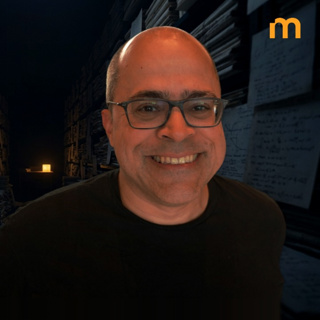
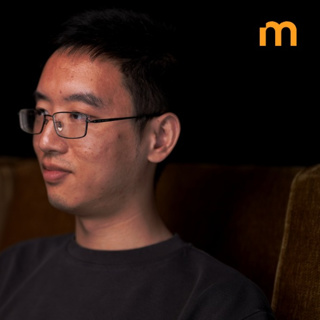
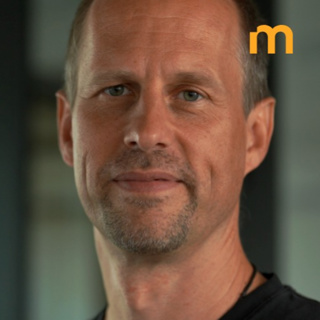
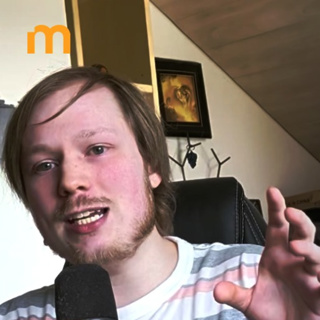
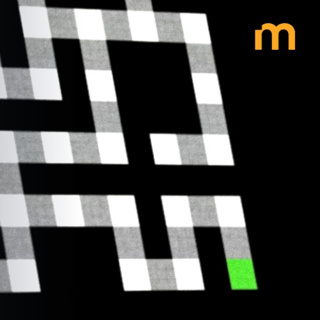
Tim Scarfe travels to Zurich to sit down with the Tufa Labs ARC-AGI-3 team — founder Benjamin Crouzier, with Jeroen Cottaar, Dries Smit, Stefano Viel and Michal Tesnar — to work out what their leaderboard-topping system does and what the benchmark is really testing.The cut opens on the games: a walkthrough of the Locksmith game, where you read the rules of an unfamiliar world straight from raw frames. ARC-AGI-3 makes ARC interactive and agentic, so the model has to *discover* the goal rather than transduce a static grid. It stays easy for humans and breaks LLMs, and it runs through everything that follows. Dries traces his StochasticGoose preview win — brute force that only searched actions which changed the frame — and why it collapsed once the organisers added action-efficiency scoring and unseen games.Induction and transduction run through the middle of the conversation — how much of an answer is really priors leaking back the moment a model recognises a maze. The abstraction mountain, and Tim's case that LLMs reach the right answer through fractured, entangled representations — performance, not competence. Whether transformers plan at all or just fake it well enough. Why the score really measures action efficiency, not games solved, and why agents lock onto the wrong goal and cannot climb back out.Crouzier closes on the Tufa Labs thesis — a small lab against the giants, the bitter lesson against hand-built harnesses, and safety — and Tim ties it back to Kenneth Stanley, deep constraints, and creativity as competence.


Disclosure: Tufa Labs sponsors MLST. ---TIMESTAMPS:00:00:00 Meet the Tufa team and what makes ARC-AGI-3 hard00:02:11 Locksmith game: reading the rules from raw frames00:03:10 Why build an independent research lab00:04:11 StochasticGoose: a preview win, then the hardened games00:07:58 Induction, transduction, and priors inside LLMs00:10:31 Curiosity, world models, and exploring by frame change00:14:32 Understanding debt and losing sight of your own code00:15:53 Requirements-based agents and human-AI co-creativity00:19:22 Why auto-research misses the big picture00:21:54 The abstraction mountain and fractured representations00:27:36 Constraints and making LLMs act as if they understand00:34:51 Human difficulty calibration, esports priors, and emergence00:41:35 Agency, goal acquisition, and two kinds of planning00:47:31 Harnesses, the 36% number, and wrong-goal loops00:52:33 Rewards, goals, and why ARC-AGI-3 resists brute force01:00:46 Would solving ARC-AGI-3 prove AGI?01:07:53 Stripping language away, then priors leak back01:14:06 Representation and whether language is necessary01:18:04 The bitter lesson versus specialised harnesses01:22:20 Capability research, safety, and the software singularity---REFERENCES:organization:[00:02:11] ARC-AGI-3https://arcprize.org/arc-agi/3[00:03:10] Tufa Labshttps://tufalabs.ai/team/[00:04:20] ARC-AGI-3 Preview Agent Competitionhttps://arcprize.org/competitions/arc-agi-3-preview-agentstool:[00:04:55] StochasticGoose ARC-AGI-3 solutionhttps://github.com/DriesSmit/ARC3-solution[00:07:42] ArcGenticahttps://github.com/symbolica-ai/arcgentica[00:07:49] RGB-Agenthttps://github.com/alexisfox7/RGB-Agent[00:14:38] Claude Codehttps://www.anthropic.com/claude-code[01:03:42] Qwen 3.6 27Bhttps://huggingface.co/Qwen/Qwen3.6-27Bpaper:[00:13:03] On the Measure of Intelligencehttps://arxiv.org/abs/1911.01547[00:27:42] DreamCoderhttps://arxiv.org/abs/2006.08381[00:43:55] On the Biology of a Large Language Modelhttps://transformer-circuits.pub/2025/attribution-graphs/biology.html[01:18:46] ImageNet Classification with Deep CNNs (AlexNet)https://proceedings.neurips.cc/paper_files/paper/2012/file/c399862d3b9d6b76c8436e924a68c45b-Paper.pdfother:[01:18:16] The Bitter Lessonhttp://www.incompleteideas.net/IncIdeas/BitterLesson.html---https://app.rescript.info/share/463d7f031349b4b9db428553eed88230

Tämä jakso on lisätty Podme-palveluun avoimen RSS-syötteen kautta eikä se ole Podmen omaa tuotantoa. Siksi jakso saattaa sisältää mainontaa.

Jaksot(260)

Stealing Reasoning Traces from Proprietary LLM APIs — Ilia Shumailov & Alexander Panfilov

Stealing Reasoning Traces from Proprietary LLM APIs — Ilia Shumailov & Alexander Panfilov

Tim Scarfe speaks with Ilia Shumailov and Alexander Panfilov about their paper, Stealing Reasoning Traces from Proprietary LLM APIs.The core bug sounds deceptively simple: providers return encrypted r...

22 Elo 49min

Every Exponential Ends — Silicon Valley Forgot — Adam Becker

Every Exponential Ends — Silicon Valley Forgot — Adam Becker

Astrophysicist Adam Becker, author of "What Is Real?", joins Tim Scarfe to take apart the futures Silicon Valley keeps selling: the 2045 singularity, mind uploading, Mars colonies, and the AI apocalyp...

20 Elo 1h 18min

AI Is Learning at the Wrong Level of Abstraction — Matthieu Wyart

AI Is Learning at the Wrong Level of Abstraction — Matthieu Wyart

This episode is sponsored by Notion. Learn more about Notion's Developer Platform today at https://notion.com/mlstWhy can deep networks discover abstractions that shallow models miss? Statistical phys...

10 Elo 1h 18min

How Researchers Test AI for Hidden Goals — Apollo Research

How Researchers Test AI for Hidden Goals — Apollo Research

Can an AI do the right thing for the wrong reason? Tim Scarfe speaks with Apollo Research’s Alexander Meinke, Axel Højmark and Jérémy Scheurer about Measuring Reward-Seeking via Contrastive Belief Upd...

31 Heinä 1h 18min

Why a Nation Can't Outsource Its Frontier AI - Alistair Pullen (Cosine AI)

Why a Nation Can't Outsource Its Frontier AI - Alistair Pullen (Cosine AI)

This episode is sponsored by Notion. Learn more about Notion's Developer Platform today at https://notion.com/mlstBritain's most capable coding model can't be exported, and that ban is the whole reaso...

13 Heinä 55min

The Thermodynamic AI Computing Chip - Thomas Ahle

The Thermodynamic AI Computing Chip - Thomas Ahle

Thomas Ahle wants Normal Computing to be the Lovable for chip design: type your intent, and a swarm of agents carries it from design through optimisation, formalisation and verification to tape-out. T...

28 Kesä 1h 2min

He won a Nobel here for AlphaFold. Then he left. - John Jumper

He won a Nobel here for AlphaFold. Then he left. - John Jumper

This episode is sponsored by Notion. Learn more about Notion's Developer Platform today at https://notion.com/mlstProtein folding stalled biology for fifty years. A sequence of amino acids dictates a ...

22 Kesä 53min