When History Goes on Trial: Demjanjuk, Eichmann, and Justice After Atrocity

When History Goes on Trial: Demjanjuk, Eichmann, and Justice After Atrocity

John Demjanjuk lived for decades as a retired autoworker in suburban Cleveland. Then investigators accused him of being "Ivan the Terrible," one of the most notorious guards at Treblinka. What followed was one of the strangest and most troubling Nazi war-crimes cases of the postwar era: extradition, eyewitness testimony, a death sentence, a reversal, and a final prosecution many years later.

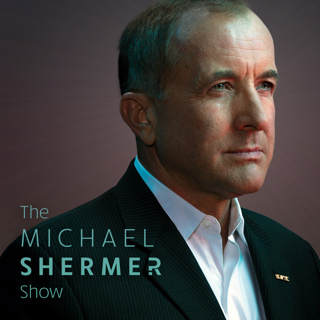
In this episode, Michael Shermer talks with Lawrence Douglas, professor at Amherst College and author of The Criminal State: War Atrocity and the Dream of International Justice, about Demjanjuk, Eichmann, Nuremberg, Holocaust denial, and the problem of proving atrocities decades after they happened.

How reliable is eyewitness memory after 40 or 50 years? What did Nuremberg actually establish? Was Eichmann really just a bureaucrat? And can a courtroom ever deliver justice for crimes almost too large to comprehend?

Lawrence Douglas is the James J. Grosfeld Professor of Law, Jurisprudence, and Social Thought at Amherst College and a Guggenheim fellow. His many books include The Right Wrong Man and The Memory of Judgment. His writing has appeared in leading publications such as Harper's, The Wall Street Journal, and The Economist. His new book is The Criminal State: War Atrocity and the Dream of International Justice.

Tämä jakso on lisätty Podme-palveluun avoimen RSS-syötteen kautta eikä se ole Podmen omaa tuotantoa. Siksi jakso saattaa sisältää mainontaa.

Jaksot(636)

Is There a Second Arrow of Time? A New Law of Evolution, Information, and Complexity

Is There a Second Arrow of Time? A New Law of Evolution, Information, and Complexity

Why does the universe produce ever more elaborate forms, from atoms and minerals to cells, organisms, brains, technology, and civilization? The familiar laws of physics can explain much of what happen...

18 Elo 1h 18min

Why Good People Disagree About Right and Wrong

Why Good People Disagree About Right and Wrong

Why do reasonable people disagree so strongly about right and wrong? And why are we so quick to assume that people on the other side of a moral or political issue are irrational, selfish, ignorant, or...

11 Elo 1h 57min

Are We Building a God? AI, Superintelligence, and the Coming Singularity

Are We Building a God? AI, Superintelligence, and the Coming Singularity

Robert Wright joins Michael Shermer to discuss his new book, The God Test: Artificial Intelligence and Our Coming Cosmic Reckoning, and why he thinks the AI revolution may be moving much faster than m...

5 Elo 1h 22min

Can You Trust Wikipedia? Co-Founder Larry Sanger on Wikipedia's Bias and Why He Was Banned

Can You Trust Wikipedia? Co-Founder Larry Sanger on Wikipedia's Bias and Why He Was Banned

Michael Shermer speaks with Wikipedia co-founder Larry Sanger shortly after Sanger was permanently banned from editing the site he helped create. Sanger tells the story of Wikipedia's founding, how it...

30 Heinä 2h 3min

How to Think Clearly About a World in Crisis: Iran, China, Russia, and the West's Economic Pessimism

How to Think Clearly About a World in Crisis: Iran, China, Russia, and the West's Economic Pessimism

Michael Shermer speaks with political scientist Marlene Laruelle about Russia's turbulent transformation during the 1990s and the rise of Vladimir Putin, why the Kremlin so badly misjudged Ukraine, Ch...

18 Heinä 1h 4min

The Truth About Sex Differences (Steve Stewart-Williams)

The Truth About Sex Differences (Steve Stewart-Williams)

How do men and women differ? Where do the differences come from? And how do they shape modern life? Drawing on a century of research and a billion years of evolution, Steve Stewart-Williams explains w...

11 Heinä 55min

America at 250: What Did the Founders Get Right?

America at 250: What Did the Founders Get Right?

Michael Shermer makes the case that the U.S. Founding Fathers were not only steeped in Enlightenment values on which the Declaration of Independence was based, but they were also scientists searching ...

6 Heinä 17min

Suosittua kategoriassa Tiede

rss-poliisin-mieli
tiedekulma-podcast
utelias-mieli
rss-mita-tulisi-tietaa
rss-astetta-parempi-elama-podcast
rss-tiedetta-vai-tarinaa
rss-duodecim-lehti
rss-hereilla
rss-tervetta-skeptisyytta
rss-ammamafia
rss-luontopodi-samuel-glassar-tutkii-luonnon-ihmeita
rss-ylistys-elaimille
rss-bios-podcast
ihanat-ipanat
rss-kasvikutsut
mielipaivakirja
sotataidon-ytimessa
rss-radplus