Bigger turbines, bigger consequences: how wind is rethinking risk, insurance, and predictive maintenance

Bigger turbines, bigger consequences: how wind is rethinking risk, insurance, and predictive maintenance

Wind remains fundamentally healthy: electricity demand is rising, decarbonised power is still needed, and both Europe and the US continue to pull new projects forward, albeit for different reasons. But the industry’s center of gravity is shifting. The conversation is no longer just about building faster or installing more megawatts. As turbines get larger, OEM competition broadens, and project economics tighten, the consequences of failure are becoming much harder to ignore.

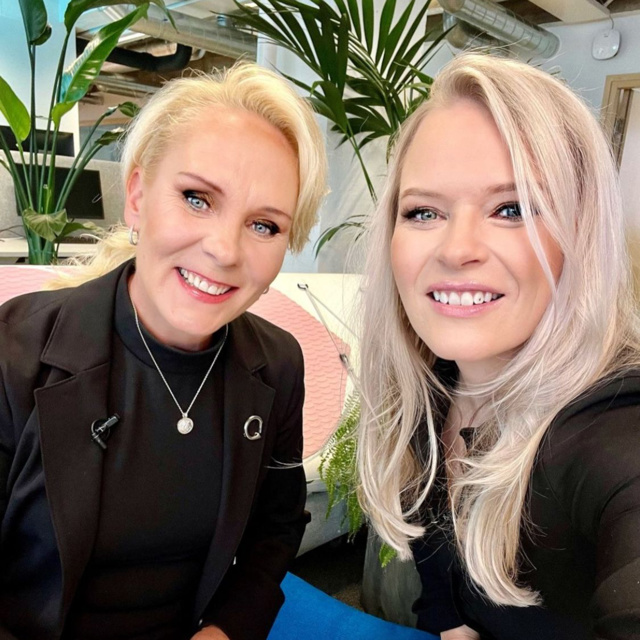
Host Sylvia Leyva Martinez is joined by Alexis Grenon, CEO of Onyx Insight, and Olly Litterick of Tokio Marine GX to examine what that shift means in practice. Their core argument is that the wind sector is moving from a development-at-speed mindset toward operational efficiency, where every dollar of ROI matters and risk has to be quantified far more precisely. They unpack why insurers still struggle with newer turbine classes despite two decades of renewables underwriting: the machines are scaling faster than the loss history, the supply chain maturity is lagging to price them confidently, and in wind, bigger hardware often means not more failures, but far costlier ones when they do occur.

A large part of the discussion focuses on blades, where exposure and difficult inspection regimes make early detection especially valuable. Grenon argues that the industry has relied too heavily on periodic inspection and not enough on continuous monitoring, contrasting the lack of standardised turbine monitoring with the smoke detector logic used elsewhere in insurance. The promise of better instrumentation, integrated SCADA and condition data, and physics-informed AI is not simply smarter dashboards. It is the ability to detect structural issues earlier, prevent minor damage from escalating into six-figure or seven-figure failures, and make better-informed decisions about maintenance, underwriting, and asset life.

The episode also looks ahead to the next set of decisions facing wind owners: how to handle aging fleets, when to extend life versus repower, and how much independent real-time data can change the balance of power between owners, OEMs, and insurers. The takeaway is that better data and earlier visibility can help the industry move from reactive maintenance and blunt underwriting toward a more preventative, risk-based model, one that should improve insurability, reduce downtime, and make the next phase of wind deployment more durable.


This episode is brought to you by twentytwo & brand -- a marketing and PR agency built specifically for energy leaders.

Lots of agencies say they work with energy companies, twentytwo & brand was built for them. They've partnered with more than 120 companies driving the energy transition — from growth-stage startups to globally recognized industry leaders. Media relations, brand design, video, paid advertising, and community engagement — they cover it all under one roof. No onboarding lag, no industry crash course -- they speak your language on day one.

If you're ready to sharpen your story and supercharge your marketing, find them at twentytwoandbrand.com/woodmac.

See Privacy Policy at https://art19.com/privacy and California Privacy Notice at https://art19.com/privacy#do-not-sell-my-info.

Tämä jakso on lisätty Podme-palveluun avoimen RSS-syötteen kautta eikä se ole Podmen omaa tuotantoa. Siksi jakso saattaa sisältää mainontaa.

Jaksot(349)

As racks scale, power must change: The AC-to-DC rethink inside AI factories

As racks scale, power must change: The AC-to-DC rethink inside AI factories

As AI systems scale, the infrastructure challenge is no longer just about chips, models, and software performance. It is increasingly about the physical systems that allow computation to happen at all...

30 Kesä 33min

Handing back the mic: Six months of data center reality, from Bragawatts to behind-the-meter, and the questions still open

Handing back the mic: Six months of data center reality, from Bragawatts to behind-the-meter, and the questions still open

A year ago the data centre conversation was about scale. Increasingly it is about what happens when the announcements meet the physical grid. New capacity is being announced at roughly 435 megawatts a...

16 Kesä 43min

The grid's missing operating system: Why a $100,000 AI controller could defer trillions in hardware and why utilities won't buy it

The grid's missing operating system: Why a $100,000 AI controller could defer trillions in hardware and why utilities won't buy it

The energy transition conversation focuses on what connects to the grid. Far less attention goes to whether anyone is coordinating what those assets do once connected. AI training runs swing hundreds ...

2 Kesä 43min

The grid's immune system is retiring: Synchronous condensers, AI data centers and the physics gap that software alone can't close

The grid's immune system is retiring: Synchronous condensers, AI data centers and the physics gap that software alone can't close

As coal and gas plants retire, the energy transition conversation focuses on replacing their generation capacity. What gets far less attention is the loss of the physical properties those machines pro...

19 Touko 1h 2min

Beyond combustion: Long Island's first hydrogen-powered linear generator and the fuel-flexible answer to the dispatchable emissions-free resource problem

Beyond combustion: Long Island's first hydrogen-powered linear generator and the fuel-flexible answer to the dispatchable emissions-free resource problem

Utilities are under pressure to deliver generation that is dispatchable, affordable, and clean enough to satisfy increasingly stringent environmental rules, notoriously hard to do in one asset. As ren...

5 Touko 39min

The electrolyzer reckoning: Can disciplined product development deliver on green hydrogen's promise before the survivors run out of runway?

The electrolyzer reckoning: Can disciplined product development deliver on green hydrogen's promise before the survivors run out of runway?

Empty gigawatt factories, product recalls, participation rates that never materialised, and a policy environment that has now stripped the green premium entirely. The electrolyzer industry has had a b...

21 Huhti 1h

Flexibility as a service: Can Octopus's acquisition of Uplight finally make US residential VPPs work?

Flexibility as a service: Can Octopus's acquisition of Uplight finally make US residential VPPs work?

Millions of enrolled devices, 60 utilities, and the participation rate gap that's been embarrassing the US market for a decade. US residential virtual power plants have been a promising idea that's co...

7 Huhti 45min

Suosittua kategoriassa Liike-elämä ja talous

sijotuskasti
mimmit-sijoittaa
psykopodiaa-podcast
rss-rahapodi
oppimisen-psykologia
rss-sami-miettinen-neuvottelija
hyva-paha-johtaminen
rss-karon-grilli
rss-oivalluksia-rahasta-elamasta
ostan-asuntoja-podcast
rahapuhetta
rss-perho-rajoilla
rss-inderes
rss-rahataito-podcast
asuntoasiaa-paivakirjat
rss-ysin-muijat
rss-pinnan-alla-kiehuu
rss-tarkeista-asioista-2
rss-plan-international-suomen-podcast
rss-johtajuuden-jaljilla