Azure Load Balancer — Simply Explained

Azure Load Balancer — Simply Explained

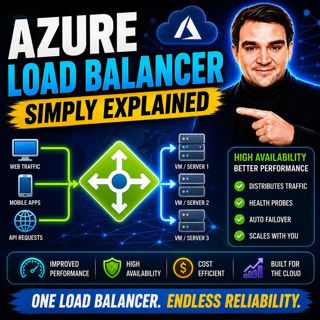
Every application starts small. A single virtual machine serves your website, processes customer requests, and handles all incoming traffic. At first, everything works perfectly. But as your user base grows, traffic spikes, maintenance windows, or unexpected server failures quickly expose a major weakness—your entire application depends on one machine. In this episode of m365.fm, we explain Azure Load Balancer in plain English and show how Microsoft distributes network traffic across multiple servers to improve availability, scalability, and reliability. You'll learn why Azure Load Balancer acts like a smart reception desk for your infrastructure, ensuring users are always connected to healthy servers without even realizing anything has changed. Whether you're preparing for Azure certifications or building production cloud applications, this episode gives you a practical understanding of one of Azure's core networking services.

WHY EVERY MODERN APPLICATION NEEDS LOAD BALANCING
Running applications on a single server creates three major risks: downtime, poor performance during traffic spikes, and maintenance interruptions. We explain why adding more servers alone doesn't solve the problem and why a load balancer is needed to intelligently distribute requests across multiple backend systems. Through simple real-world analogies—including a busy restaurant and a reception desk—you'll discover how Azure Load Balancer automatically directs incoming traffic to available virtual machines while protecting users from outages and keeping applications responsive under heavy workloads.

FRONTEND IPS, BACKEND POOLS, HEALTH PROBES, AND RULES
Azure Load Balancer consists of four core building blocks that work together to deliver high availability. This episode explains Frontend IP addresses, Backend Pools, Health Probes, Load Balancing Rules, and Inbound NAT Rules using practical examples that make Azure networking easy to understand. You'll learn how health probes continuously monitor server availability, why unhealthy virtual machines are automatically removed from rotation, and how Azure Load Balancer distributes TCP and UDP traffic using its hash-based load balancing algorithm. We also cover session persistence, client IP affinity, public versus internal load balancers, and why Azure Load Balancer operates at Layer 4 of the OSI networking model.

STANDARD LOAD BALANCER, HIGH AVAILABILITY, AND BEST PRACTICES
Modern Azure deployments almost always use the Standard Load Balancer, which provides zone redundancy, advanced diagnostics, support for up to 1,000 backend instances, and significantly improved resilience compared to the retired Basic SKU. We explain when to use Standard Load Balancer, Gateway Load Balancer, and internal versus internet-facing deployments. You'll also discover common configuration mistakes—including blocked health probes, incorrect Network Security Group rules, SKU mismatches, routing issues, and unnecessary session persistence—and learn how to troubleshoot them before they impact production environments.

AZURE LOAD BALANCER VS. APPLICATION GATEWAY, FRONT DOOR, AND TRAFFIC MANAGER
One of the most common Azure networking questions is choosing the right traffic distribution service. This episode concludes by comparing Azure Load Balancer, Azure Application Gateway, Azure Front Door, and Azure Traffic Manager, explaining where each service fits within a modern Azure architecture. You'll learn why Azure Load Balancer is optimized for Layer 4 TCP/UDP traffic, when Application Gateway becomes the better choice for web applications, and how Front Door and Traffic Manager extend traffic management across multiple Azure regions worldwide. Whether you're designing highly available business applications, building cloud-native services, or preparing for Microsoft Azure certifications, this episode provides the practical foundation needed to confidently deploy Azure Load Balancer and create resilient, scalable cloud infrastructure.

Become a supporter of this podcast: https://www.spreaker.com/podcast/m365-fm-modern-work-security-and-productivity-with-microsoft-365--6704921/support.

Tämä jakso on lisätty Podme-palveluun avoimen RSS-syötteen kautta eikä se ole Podmen omaa tuotantoa. Siksi jakso saattaa sisältää mainontaa.

Jaksot(765)

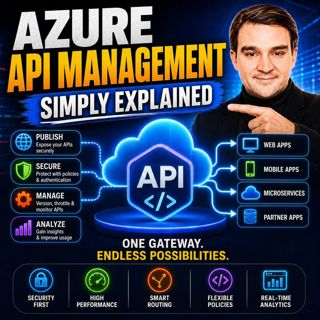
Azure API Management - Simply Explained

Azure API Management - Simply Explained

Azure API Management (APIM) is one of the most important services in Microsoft Azure for organizations building modern cloud applications, microservices, and enterprise integrations. While APIs make i...

16 Heinä 14min
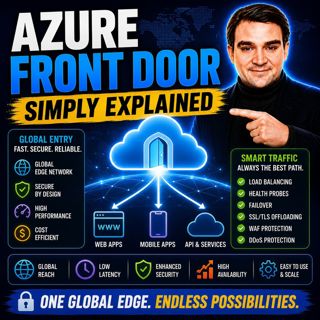
Azure Front Door - Simply Explained

Azure Front Door - Simply Explained

Building a website that performs well for users around the world is far more challenging than simply deploying a web application to Azure. A server hosted in North America may respond quickly for user...

16 Heinä 17min
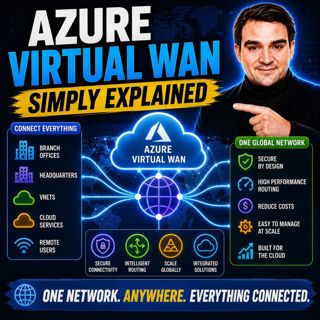
Azure Virtual WAN - Simply Explained

Azure Virtual WAN - Simply Explained

Building a global Azure network manually becomes increasingly difficult as your organization grows. What starts as a simple hub-and-spoke deployment quickly turns into a maze of virtual network peerin...

16 Heinä 14min
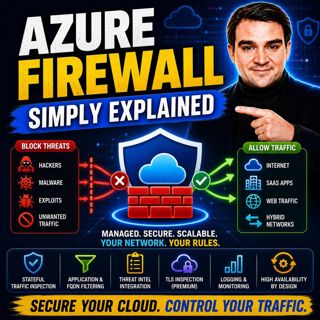
Azure Firewall - Simply Explained

Azure Firewall - Simply Explained

Securing a traditional office network was relatively straightforward—you installed a physical firewall at the edge of your network and inspected everything entering or leaving your building. But cloud...

16 Heinä 13min
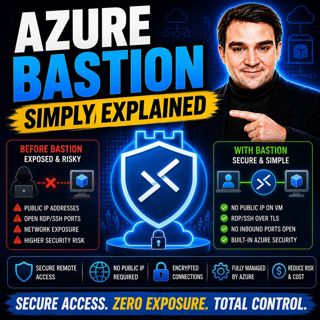
Azure Bastion - Simply Explained

Azure Bastion - Simply Explained

Secure remote access is one of the biggest challenges in cloud infrastructure. For years, administrators connected to Azure virtual machines by assigning public IP addresses and opening RDP or SSH por...

16 Heinä 11min
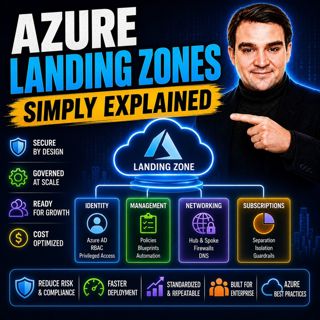
Azure Landing Zones - Simply Explained

Azure Landing Zones - Simply Explained

Building workloads in Azure is easy. Building an Azure environment that remains secure, scalable, compliant, and manageable for years is much harder. Without a solid foundation, organizations quickly ...

16 Heinä 16min
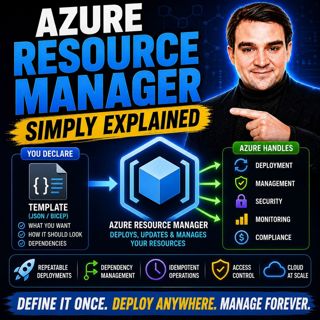
Azure Resource Manager - Simply Explained

Azure Resource Manager - Simply Explained

Every action you perform in Azure—whether you create a virtual machine, deploy a storage account, configure networking, or automate infrastructure with Bicep or ARM templates—passes through the same s...

16 Heinä 16min

Suosittua kategoriassa Politiikka ja uutiset

aikalisa
uutiscast
ootsa-kuullut-tasta-2
rss-ootsa-kuullut-tasta
rss-vaalirankkurit-podcast
rss-podme-livebox
rss-seksicast
politiikan-puskaradio
otetaan-yhdet
tervo-halme
aihe
linda-maria
rss-raha-talous-ja-politiikka
rikosmyytit
mtv-uutiset-polloraati
rss-mina-ukkola
rss-fingo-podcast
rss-merja-mahkan-rahat
rss-tekoalyfoorumi
rss-girls-finish-f1rst