The Iran War Oil Shock That Wasn’t...(Yet?)
ChinaTalk26 Heinä

The Iran War Oil Shock That Wasn’t...(Yet?)

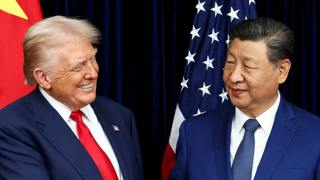
The biggest oil shock in modern history came and went without the catastrophe everyone expected. When Iran closed the Strait of Hormuz, analysts warned that oil could hit $200 a barrel, but the global economy avoided that fate. The Trump administration has argued that the crisis was contained thanks to their aggressive action, but they may be taking the wrong lessons from the avoidance of that apocalyptic scenario. What happened was the largest unexpected swing in global oil balances: China quietly cut crude oil imports by more than five million barrels a day. Yet there was no corresponding collapse in economic activity, no obvious drop in mobility, and no official explanation from Beijing. Somehow, China stopped buying oil from the rest of the world and started drawing from stockpiles we can’t fully observe. That single decision may have done more to prevent a global energy crisis than anything Washington or OPEC accomplished. This matters because it demonstrates that China likely has a stronger discretionary policy lever than the West does. The West is really good at market-driven, private-sector oil production. But through this crisis, we’ve seen that Washington does not have the scale of discretionary policy control that China or OPEC does. This time, China cooperated and did the good thing, at least for the broad economic picture — but we cannot rely on that in the future, and that tool can be used against the West as easily as for it. Western governments must grapple with that discretionary gap and not rest on their private-sector bona fides to get through the next crisis. Arnab Datta, managing director of policy implementation at Employ America, and Rory Johnston, oil analyst and founder of Commodity Context, join ChinaTalk to discuss: Why Rory’s own prediction of $200 oil never happened and why J.D. Vance is thanking the wrong people. How China quietly cut crude imports by five million barrels a day with zero visible impact on domestic mobility, and the detective work analysts use to peer into Beijing’s black-box inventories. Competing theories for why Beijing backstopped the global oil market — self-interested altruism, a backroom deal during the state visit, or a dry run for a Malacca blockade in the event of a Taiwan contingency. What India, the Gulf states, and the rest of the world learned from the Iran War and why strategic reserves are suddenly back in fashion. Learn more about your ad choices. Visit megaphone.fm/adchoices

Tämä jakso on lisätty Podme-palveluun avoimen RSS-syötteen kautta eikä se ole Podmen omaa tuotantoa. Siksi jakso saattaa sisältää mainontaa.

Jaksot(550)

WarTalk: Iran War Back On, Rogue AI, Ukraine Civ-Mil

WarTalk: Iran War Back On, Rogue AI, Ukraine Civ-Mil

Five months into the Iran campaign, the US has two carrier strike groups parked in the Arabian Sea, a blockade that may take months to bite, and a daisy chain of tankers stretching thousands of miles ...

24 Heinä 0s

Kimi K3, Xi's Speech, and China's Mythos Moment

Kimi K3, Xi's Speech, and China's Mythos Moment

The whole ChinaTalk gang gets together to discuss a big week in China AI with the release of Kimi K3 and Xi talking open source and safety at WAIC. We also discuss our latest article exploring the thr...

22 Heinä 0s

WarTalk: Ancient Greece Edition!

WarTalk: Ancient Greece Edition!

What do actual historians think about the Thucydides Trap? Does our 'low T' discourse all just come back to the movie 300? How the did ancient Greeks fight and why does Homer still keep us coming bac...

21 Heinä 0s

China's Mythos Moment

China's Mythos Moment

Claude Mythos scrambled American AI policy, leaving us with what Dean Ball calls a de facto involuntary licensing regime from the administration that promised us the opposite. Zhipu's cofounder says C...

15 Heinä 1h 10min

WarTalk: Iran + Randy Schriver on Asian Defense

WarTalk: Iran + Randy Schriver on Asian Defense

Beijing just announced a persistent Coast Guard patrol east of Taiwan, the administration is calling arms sales a "bargaining chip," and the NDS doesn't mention Taiwan at all. Is deterrence in the Str...

10 Heinä 1h 2min

The Chemicals Powering the Chip Industry

The Chemicals Powering the Chip Industry

We cover: How the Iran War has exposed vulnerabilities in the semiconductor industry’s chemical supply chains. The chemistry behind chip manufacturing — why advanced semiconductors depend o...

7 Heinä 1h 18min

Unitree and the Humanoid Robot Revolution

Unitree and the Humanoid Robot Revolution

Robots are here, and they’re going to change the world, with Unitree currently in pole position. Joining me to discuss are Niko Ciminelli, longtime SemiAnalysis advisor, robot kid and VC along with Re...

4 Heinä 52min

Suosittua kategoriassa Politiikka ja uutiset

aikalisa
uutiscast
ootsa-kuullut-tasta-2
rss-ootsa-kuullut-tasta
rss-seksicast
otetaan-yhdet
rss-podme-livebox
rss-vaalirankkurit-podcast
aihe
politiikan-puskaradio
rikosmyytit
rss-girls-finish-f1rst
rss-mina-ukkola
rss-raha-talous-ja-politiikka
rss-asiastudio
rss-varsinaista-puhetta