160: Long reads meet single-cell omics
Base by Base7 Loka 2025

160: Long reads meet single-cell omics

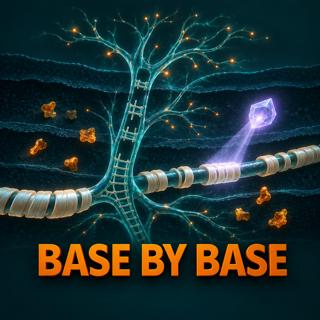
Wen L et al., Trends in Genetics - This review surveys the integration of single-molecule long-read sequencing (SMS) with single-cell genomics, epigenomics and transcriptomics, describing platforms, methods and the new biological 'dark matter' now accessible at single-cell resolution. Key terms: single-cell sequencing, long-read sequencing, alternative splicing, structural variation, transposable elements.

Study Highlights:
SMS platforms (PacBio HiFi and Oxford Nanopore) have improved accuracy and enable direct full-length cDNA sequencing to resolve alternative splicing and isoforms in individual cells. Long reads substantially improve detection of repetitive elements, structural variants, ecDNAs and enable chromosome-scale haplotype phasing from small cell numbers. SMS-based single-cell epigenome methods capture allele-specific DNA methylation, histone marks, TF binding and higher-order 3D chromatin interactions, including within repetitive regions. New single-cell long-read methods (for transcriptome, genome and multiple epigenomic layers) are expanding capabilities but remain constrained by capture efficiency, cost and amplification artifacts.

Conclusion:
SMS-based long-read single-cell omics opens access to genomic and epigenomic 'dark matter'—full-length isoforms, repeats, SVs and allele-specific regulation—and points toward future single-cell de novo assemblies, multi-omics and spatial long-read applications.

Music:
Enjoy the music based on this article at the end of the episode.

Article title:
Single-cell omics sequencing technologies: the long-read generation

First author:
Wen L

Journal:
Trends in Genetics

DOI:
10.1016/j.tig.2025.07.012

Reference:
Wen L. and Tang F. Single-cell omics sequencing technologies: the long-read generation. Trends in Genetics. 2025. https://doi.org/10.1016/j.tig.2025.07.012

License:
This episode is based on an open-access article published under the Creative Commons Attribution 4.0 International License (CC BY 4.0) – https://creativecommons.org/licenses/by/4.0/

Support:
Base by Base is independent and ad-free — no sponsors, no paywall. If an episode was worth your time, chip in and keep the papers audited and the original songs coming:
❤️ Support monthly: https://buy.stripe.com/cNifZhclVebvagk2JDgEg01
☕ One-time donation: https://donate.stripe.com/7sY4gz71B2sN3RWac5gEg00
More at basebybase.com

On PaperCast Base by Base you'll discover the latest in genomics, functional genomics, structural genomics, and proteomics.

Episode link: https://basebybase.com/episodes/the-longread-leap-in-singlecell-omics

Tämä jakso on lisätty Podme-palveluun avoimen RSS-syötteen kautta eikä se ole Podmen omaa tuotantoa. Siksi jakso saattaa sisältää mainontaa.

Jaksot(441)

439: Coembedding Sequence and Structure: CLSS Maps the Protein Universe

439: Coembedding Sequence and Structure: CLSS Maps the Protein Universe

Longo LM et al., PNAS - This episode summarizes a PNAS study introducing CLSS, a contrastive two-tower protein language model that coembeds domain sequences, structures, and subsequences into a shared...

11 Elo 23min

438: Mapping AIRE: a proactive atlas of 9,790 missense variants

438: Mapping AIRE: a proactive atlas of 9,790 missense variants

Axakova A et al., The American Journal of Human Genetics - Axakova et al. generated a variant effect map for AIRE using an insulin‑promoter GFP reporter in HEK293 cells to measure the functional impac...

10 Elo 24min

437: Cell villages and Dirichlet modeling map human cell fitness genetics

437: Cell villages and Dirichlet modeling map human cell fitness genetics

Hanson C et al., The American Journal of Human Genetics - Hanson et al. combine pooled multi-donor human neural progenitor cell "villages" with Townlet, a hierarchical Dirichlet regression model, to e...

9 Elo 28min

436: KIAP4 and the ARND family: building the Leishmania adhesion plaque

436: KIAP4 and the ARND family: building the Leishmania adhesion plaque

Owino BO et al., PNAS - Using TurboID proximity proteomics and microscopy, researchers identify KIAP4 as the canonical member of a conserved Adhesion Related NTPase-like Domain (ARND) family that loca...

8 Elo 24min

435: E. coli TGT binds two tRNAs — cryo-EM reveals dual engagement

435: E. coli TGT binds two tRNAs — cryo-EM reveals dual engagement

Ember M et al., PNAS - This episode examines a cryo-EM study of Escherichia coli tRNA-guanine transglycosylase (TGT) that solves the enzyme structure and its covalent intermediate with tRNATyr. Unexpe...

7 Elo 19min

434: High‑coverage genomes recast Japan's prehistoric demography

434: High‑coverage genomes recast Japan's prehistoric demography

Ishiya K et al., PNAS - This episode examines a PNAS study that reports two high-coverage ancient human genomes from mainland Japan (an Initial Jomon >67× and a Middle Yayoi >46×). The genomes enable ...

6 Elo 27min

433: Lactate, HSP90α and the Mitochondrial Switch

433: Lactate, HSP90α and the Mitochondrial Switch

Wu G et al., Proceedings of the National Academy of Sciences - This episode examines a PNAS study that identifies site-specific lactylation of HSP90α as a metabolic signal linking glycolysis to mitoch...

23 Heinä 23min

432: Echovirus 18: Capsid opening releases the genome

432: Echovirus 18: Capsid opening releases the genome

Mukhamedova L et al., Proceedings of the National Academy of Sciences - Using cryo-electron tomography and single-particle cryo-EM of infected Cos-7 cells, the authors show that echovirus 18 (E18) rel...

23 Heinä 18min

Suosittua kategoriassa Tiede

rss-poliisin-mieli
tiedekulma-podcast
rss-mita-tulisi-tietaa
docemilia
rss-hereilla
rss-bios-podcast
utelias-mieli
hippokrateen-vastaanotolla
rss-metsanomistaja-podcast
rss-lapsuuden-rakentajat-podcast
rss-sosiopodi
filocast-filosofian-perusteet
rss-tiedetta-vai-tarinaa
rss-duodecim-lehti
radio-antro
rss-totuuden-liepeilla