A Treacherous Land: Cyberstalking and Harassment on Dating Apps

A Treacherous Land: Cyberstalking and Harassment on Dating Apps

Notes:

  • Ms. Ayerza studied criminology, forensic behavioural sciences and psychology. Her early research examined eyewitness memory and the re-entry of exonerees before she became interested in cybercrime and cyberstalking.
  • She was drawn to cybercrime because it is not limited to hacking, malware and phishing. Technology is part of everyday life through social media, email, dating apps and other commonly used services.
  • Dating apps allow users to create profiles, specify the people and relationships in which they are interested and indicate interest in other users. When two users express an interest in one another, they can normally begin communicating through the app.
  • Some dating apps are intended for broad audiences, while others serve particular lifestyles, interests or sexual orientations. Profiles are often presented as individual photographs or grids of photographs from which users make selections.
  • Ms. Ayerza explains that dating apps are designed to make dating convenient and can feel like games. The superficial and rapid nature of matching can encourage users to make decisions based primarily on photographs.
  • Harassment can arise when users send repeated messages in an effort to gain someone’s attention. Some people may not recognize these repeated or unwanted communications as harassment.
  • Users may also deliberately match with someone because they disagree with something in that person’s profile and want an opportunity to criticize or harass them.
  • Ms. Ayerza conducted an online survey of adult dating app users living in the United States. The study examined the information people included in their profiles, the photographs they shared and characteristics of the applications they used.
  • The study considered whether users disclosed their relationship preferences, sexual orientation, workplace or occupation. It also examined whether they used their full name or an alternative name and whether their photographs included friends or family.
  • Verification on dating apps can be a relatively superficial process in which a live photograph is compared with the photographs on a profile. Premium features may also allow users to change the location in which their profiles appear.
  • Users often adopt their own protective measures, such as using pseudonyms or withholding photographs of their faces. However, designing effective technical safeguards is difficult because repeated messages can be part of both ordinary conversations and harassment.
  • Most dating app users do not experience harassment, but Ms. Ayerza says that around a quarter of the users in the study experienced these forms of harm.
  • The study did not compare victimisation across individual dating apps. Ms. Ayerza suggests that larger platforms may have more resources and face greater public pressure to introduce safeguards, while smaller platforms may have fewer resources.
  • Sharing relationship or sexual orientation preferences was not found to increase risk. Ms. Ayerza suggests that these preferences help platforms present users with people who have similar interests without necessarily revealing where someone can be found.
  • Including information about where a person works or studies increased risk. Photographs featuring friends or family also had an influence because they can reveal social connections and additional information about the user.
  • Uploading photographs of one’s face was not found to increase risk, possibly because facial photographs are a normal and often required part of using dating apps.
  • Matching with someone under the age of 18 increased risk. Ms. Ayerza connects this finding to the limited measures used by dating apps to confirm that users are old enough to participate.
  • One of the most surprising findings was that using a pseudonym or nickname increased risk. Ms. Ayerza discusses the possibility that an alternative name creates a false sense of security and encourages people to disclose more information.
  • Ms. Ayerza advises users to think carefully about what they disclose. Preferences may be appropriate to share, while details about occupations, workplaces, friends and family may be better withheld until someone is known more closely.
  • She emphasizes that responsibility should not be placed entirely on victims. People should understand that harassment is unacceptable and platform operators should do more to prevent and respond to harmful behaviour.
  • Possible platform interventions include better reporting mechanisms and educational or training modules that users complete before creating a profile.
  • Schools could help prepare young people to communicate appropriately on dating apps once they are old enough to use them. Ms. Ayerza also argues that governments should treat conduct on dating apps more seriously because every profile represents a real person.
  • Future researchers need measures that reflect the activities people actually perform on dating apps. Greater consistency would also make it easier to compare findings across studies.
  • Ms. Ayerza plans to examine offending as well as victimisation. Her future research will consider unwanted sexual messages, sexual violence and the experience of multiple forms of harm on dating apps.

About our guest:

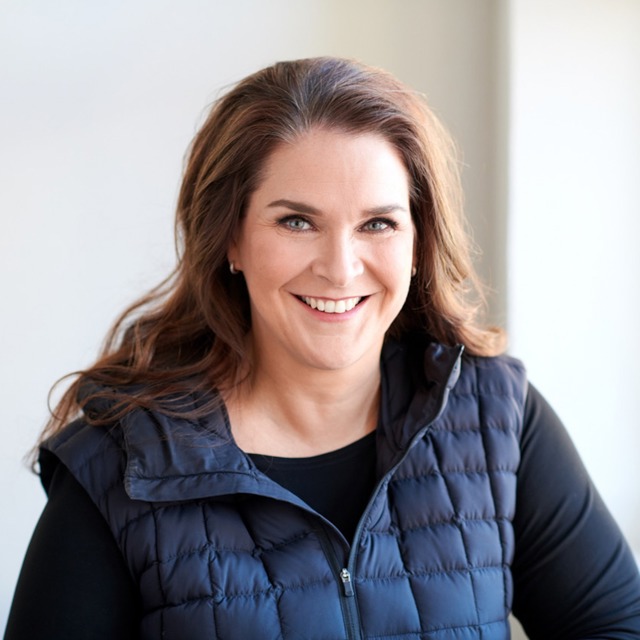
Jennifer M. Ayerza, M.A.

https://cls.gmu.edu/people/jayerza

https://cebcp.org/team/jennifer-ayerza/

https://www.linkedin.com/in/jennifer-ayerza-38353a233

Papers or resources mentioned in this episode:

Ayerza, J. M., Lee, J. R., O’Malley, R. L., & Lee, C. S. (2026). Cyberstalking and online dating: Examining cyberstalking victimization among dating app users. Asian Journal of Criminology, 21, Article 5.

https://doi.org/10.1007/s11417-025-09480-2

Tämä jakso on lisätty Podme-palveluun avoimen RSS-syötteen kautta eikä se ole Podmen omaa tuotantoa. Siksi jakso saattaa sisältää mainontaa.

Jaksot(132)

Snapshots of Society: Studying Cybercrime Every Here

Snapshots of Society: Studying Cybercrime Every Here

Notes: Irnasya Hadi explains how growing up with the internet, and being frustrated by the limited connection between critical criminology and cybercrime, drew her toward the study of cyber insecuri...

1 Heinä 29min
No News is Bad News: AI Agents, Information Value, Accountability & Democracy

No News is Bad News: AI Agents, Information Value, Accountability & Democracy

Notes: Dr. Bridgman discusses his path from Winnipeg to McGill and how he became involved with the Media Ecosystem Observatory while still a PhD student. The conversation turns to the origins of th...

1 Kesä 34min
Public Interest Technology: Making Sense of Security in an AI World

Public Interest Technology: Making Sense of Security in an AI World

Notes: The conversation begins with his path into teaching public policy, despite never having planned a conventional academic career, and why translating technical subjects for non-technical studen...

1 Touko 34min
Who You Gonna Call?: Cybercrime Types and Expectations of Police Response

Who You Gonna Call?: Cybercrime Types and Expectations of Police Response

Notes: Cybercrime is often treated as a distinct phenomenon, but there are strong continuities with offline crime that are frequently overlooked. Digital technologies change behaviour and scale, bu...

1 Huhti 30min
Disordered Sense-Making: Conflict Narratives in the Digital Era

Disordered Sense-Making: Conflict Narratives in the Digital Era

Notes: Dr Samuel Tanner began his doctoral research examining war crimes and armed militias involved in mass violence in the Balkans, conducting extensive fieldwork and interviews with participants ...

1 Maalis 36min

Beyond “The Cybercriminal”: Understanding Diversity in Cyber Offenders

Beyond “The Cybercriminal”: Understanding Diversity in Cyber Offenders

Notes:Dr Bekkers describes his academic pathway from psychology to criminology and explains why his research focus has consistently been on offenders and their behaviour rather than on offences or tec...

1 Helmi 25min

Systematically Improving Cybersecurity Training

Systematically Improving Cybersecurity Training

Notes:Julia Prümmer describes her transition from legal psychology into cybersecurity research and how psychological methods shape her approach to cybersecurity training.The discussion explores the ro...

1 Tammi 49min

Suosittua kategoriassa Koulutus

rss-murhan-anatomia
psykopodiaa-podcast
voi-hyvin-meditaatiot-2
rss-arkea-ja-aurinkoa-podcast-espanjasta
rss-vapaudu-voimaasi
kesken
adhd-podi
ilona-rauhala
rss-liian-kuuma-peruna
aamupore
jari-sarasvuo-podcast
rss-koira-haudattuna
psykologia
rss-hereilla
leikitaanko-laakaria
rss-tietoinen-yhteys-podcast-2
rahapuhetta
rss-niinku-asia-on
aamukahvilla
rss-metropolia-ammattikorkeakoulu