
Why Doesn't Batman Kill the Joker? A Philosopher Explains the Morality of Batman

Why Doesn't Batman Kill the Joker? A Philosopher Explains the Morality of Batman

Should Batman kill the Joker? The answer reveals everything about how we think about morality.

The Joker has killed thousands. Batman could stop him permanently — but won't. Is that moral courage or moral failure? And what does a comic book superhero have to do with the most important debates in ethical philosophy?

More than you might think.

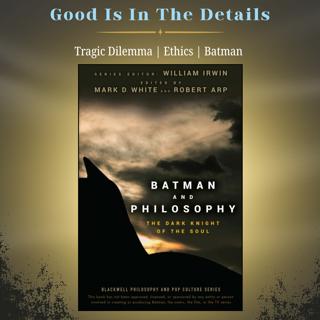
In this episode of Good Is In The Details, hosts Gwendolyn Dolske, Rudy Salo and guest co-host Konstantin Hatcher sit down with philosopher and author Mark D. White to dig into his book Batman and Ethics (Wiley Blackwell) — a rigorous, accessible examination of the Dark Knight's moral code through the lens of Western ethical theory.

What we explore in this episode:

  • Why Batman's refusal to kill the Joker is one of the most compelling case studies in deontological ethics in popular culture
  • How Batman's overall mission, sworn to protect Gotham from crime, is essentially utilitarian, asking us whether his actions produce the greatest good for the greatest number.
  • How Batman's actions and words reveal a deeply conflicted hero whose moral behavior reflects a mix of utilitarianism and deontology, demonstrating the value of each while showing how difficult it is to pursue them simultaneously.
  • The trolley problem, Batman-style: if you could save hundreds of lives by taking one, are you morally obligated to do it?
  • Whether Batman's refusal to kill the Joker, rooted in the deontological conviction that killing is wrong regardless of consequences, is really about moral integrity, or whether it puts his own virtue above the lives he could save.
  • What virtue ethics adds to the conversation, and why Batman's character matters as much as his rules
  • The ethics of vigilantism, torture in pursuit of justice, and what it means to operate outside the law in service of a higher moral mission.
  • Is Batman actually happy? What Aristotelian eudaimonia (flourishing and the good life) looks like for a man who has dedicated his existence to fighting crime

This is public philosophy at its most engaging: real ethical frameworks (utilitarianism, deontology, virtue ethics) made vivid and debatable through one of the most iconic characters in fiction. Whether you're a philosophy student trying to understand Kant and Mill, a comics fan who has always wondered about Batman's "One Rule," or simply someone who wants to think more clearly about right and wrong, this episode is for you.

Guest: Mark D. White, philosopher, professor, and author of Batman and Ethics, The Virtues of Captain America, and numerous works at the intersection of ethics, economics, and pop culture. Visit profmdwhite.com.

Good Is In The Details is hosted by Gwendolyn Dolske, Ph.D. and Rudy Salo: a philosophy and books podcast exploring big ideas in the spirit of Socrates, with the aim of a more knowledgeable, curious, and examined life.

Philosophy Resources, Book Recommendations, and more, click here.

💛 Support the show: patreon.com/GoodIsInTheDetails

📱 @GoodIsInTheDetailsPod

Keywords: Batman ethics, should Batman kill the Joker, utilitarianism explained, deontology explained, virtue ethics, trolley problem, Batman philosophy, moral philosophy podcast, consequentialism, Kant ethics, Mill utilitarianism, greatest good greatest number, ends justify the means, superhero ethics, vigilante justice, Mark D White, Batman and Ethics book, public philosophy, philosophy podcast, applied ethics, good vs evil philosophy, moral dilemmas, Batman Joker moral, comic book philosophy, Good Is In The Details

Tämä jakso on lisätty Podme-palveluun avoimen RSS-syötteen kautta eikä se ole Podmen omaa tuotantoa. Siksi jakso saattaa sisältää mainontaa.

Jaksot(203)

Why Women Chose the Bear (and What It Reveals About Everyday Safety)

Why Women Chose the Bear (and What It Reveals About Everyday Safety)

A year ago, a simple question took over TikTok: if you were alone in the forest, would you rather encounter a bear or a man? Women overwhelmingly chose the bear. Some found it funny, some found it off...

15 Loka 46min
What is Censorship: What Isn't and Why Self Censorship May Sometimes Be A Good Thing

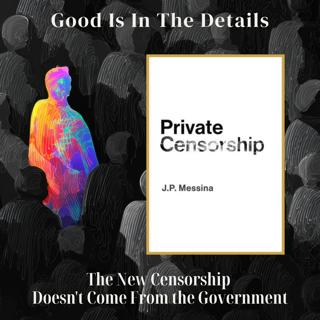
What is Censorship: What Isn't and Why Self Censorship May Sometimes Be A Good Thing

The First Amendment protects you from the government, not from your boss, your university, or a social media platform. J.P. Messina, philosophy professor at Purdue and author of Private Censorship (Ox...

30 Syys 48min

How To See The World Through Your Child's Eyes

How To See The World Through Your Child's Eyes

How do we build stronger relationships with our children, especially when we're tired, overwhelmed, or simply seeing a situation through adult eyes? In this special Podapalooza mini-episode, Gwendolyn...

15 Syys 21min
To Chill or Not To Chill: When Does Perseverance Become Toxic?

To Chill or Not To Chill: When Does Perseverance Become Toxic?

We're taught that perseverance is always a virtue, but what if the very trait we celebrate is quietly costing us our sense of meaning? Michael Scarano, a healthcare veteran turned speaker and coach, j...

1 Syys 50min
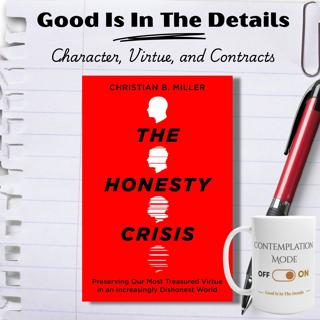
Honest, True, or Authentic? (They're Not the Same Thing)

Honest, True, or Authentic? (They're Not the Same Thing)

Honesty might be the character trait we claim to value most, but what does it actually mean to be honest, and how is that different from simply telling the truth, or "being authentic"? Philosopher Chr...

19 Elo 48min

Cults, Conspiracy Theories & Critical Thinking: The History America Didn't Teach You

Cults, Conspiracy Theories & Critical Thinking: The History America Didn't Teach You

What if the United States was never immune to cult thinking, but was built on it? Journalist Jane Borden joins Gwendolyn and Rudy to unpack her book Cults Like Us: Why Doomsday Thinking Drives America...

31 Heinä 41min

Are You Living in an Echo Chamber? The Psychology of Misinformation & Critical Thinking | Matthew Facciani

Are You Living in an Echo Chamber? The Psychology of Misinformation & Critical Thinking | Matthew Facciani

How do echo chambers influence our beliefs? How do you know what is true on the internet? Why does misinformation spread so quickly online? What is an echo chamber, and how does confirmation bias infl...

16 Heinä 50min

Rewind, Play, Repeat: Nicole Morrison on Music, Memory, Coming Out, and Memoir

Rewind, Play, Repeat: Nicole Morrison on Music, Memory, Coming Out, and Memoir

The mixtape structural metaphor ushers in a philosophical lens. Because a mixtape (as every Gen X person who ever made one knows) is a curated act of autobiography. It's how you tell someone the truth...

1 Heinä 40min

Suosittua kategoriassa Koulutus

rss-murhan-anatomia
aamukahvilla
psykopodiaa-podcast
voi-hyvin-meditaatiot-2
rss-duodecim-lehti
rss-hereilla
rss-uskonto-on-tylsaa
psykologia
rss-rahamania
aloita-meditaatio
kesken
rss-liian-kuuma-peruna
rss-arkea-ja-aurinkoa-podcast-espanjasta
rahapuhetta
ihminen-tavattavissa-tommy-hellsten-instituutti
jari-sarasvuo-podcast
rss-narsisti
rss-suomen-aa-podcast
dear-ladies
esa-saarinen-filosofia-ja-systeemiajattelu