Why Post-Punk Is the Most Philosophical Music Ever Made: Two Philosophy Professors Explain

Why Post-Punk Is the Most Philosophical Music Ever Made: Two Philosophy Professors Explain

Is nihilism compatible with love? Does being "cool" require authenticity, or is trying to be cool already a losing battle? How much should we care about the moral failings of artists whose music we can't stop listening to? And what exactly is post-punk, anyway?

These are not just good questions. They are, it turns out, some of philosophy's oldest and most unresolved questions, dressed in black, surrounded by synthesizers, and released on an independent label in 1979.

In this episode of Good Is In The Details, Gwendolyn Dolske and Rudy Salo welcome back two returning favorites: Professor Joshua Heter (Assistant Professor of Philosophy, Jefferson College) and Professor Richard Greene(Professor of Philosophy and Director of the Richards Richards Institute for Ethics, Weber State University) — co-editors of Post-Punk and Philosophy: Rip It Up and Think Again (Open Universe, 2024) and its predecessor Punk Rock and Philosophy: Research and Destroy (2022), hailed as "a really fascinating book reflecting diverse points of view: thought-provoking, intelligent, and controversial" by John Holmstrom, founding Editor-in-Chief of PUNK magazine.

The previous episode on punk was so popular, and so many listeners wrote in asking for more, that Gwendolyn and Rudy made it up to everyone by going longer and deeper this time. The result is one of the most genuinely fun and intellectually alive conversations this show has produced.

What we explore in this episode:

  • What post-punk actually is — and why defining it turns out to be a serious philosophical problem about genre, authenticity, and artistic identity
  • Why the human brain connects to music so differently than to other art forms — and what that reveals about consciousness, emotion, and the nature of aesthetic experience
  • The ethics of fandom: how much should an artist's moral failures affect our relationship to their work — and what does philosophy say about separating art from artist?
  • Nihilism, authenticity, and the examined life: how post-punk bands from Joy Division to The Cure grappled with existentialist questions that academic philosophers were wrestling with at the same time
  • Whether technological innovation in music guarantees artistic innovation — or whether the reverse is sometimes true
  • The DIY ethic and its philosophical roots: what punk and post-punk share with Kantian autonomy, Marxist class consciousness, and ancient Greek ideas about self-governance
  • What it means to be cool — and why the philosophy of coolness is a surprisingly rich field of inquiry
  • Whether counterculture requires a commitment to social change, or whether a movement can be radical purely through its art
  • Why post-punk may be punk's "more brainy offspring" — and why that intellectual DNA makes it unusually fertile ground for philosophical analysis
  • What music tells us about what it means to be human — and why the connection we feel to musicians is philosophically distinct from our connection to other artists

This is the episode that will make you listen to your favorite post-punk record differently. And possibly pick up a philosophy book while you're at it.

Guests: Professor Joshua Heter — Assistant Professor of Philosophy, Jefferson College; co-editor of Post-Punk and Philosophy and Punk Rock and Philosophy (Open Universe); co-host of the podcast I Think, Therefore I Fan. Professor Richard Greene — Professor of Philosophy and Director of the Richards Richards Institute for Ethics, Weber State University; past Director of the Intercollegiate Ethics Bowl; author of Spoiler Alert: It's a Book About the Philosophy of Spoilers; co-editor of more than twenty books on pop culture and philosophy; co-host of I Think, Therefore I Fan.

Get your copy of this wonderful collection of essays: Post Punk and Philosophy.

Get more content and support the pod: https://www.patreon.com/GoodIsInTheDetails

Take Gwendolyn's course: How To Create Your Podcast.

https://www.goodisinthedetails.com

Thank you to our partner for this episode: https://studioqueenhair.com

Tämä jakso on lisätty Podme-palveluun avoimen RSS-syötteen kautta eikä se ole Podmen omaa tuotantoa. Siksi jakso saattaa sisältää mainontaa.

Jaksot(203)

Why Women Chose the Bear (and What It Reveals About Everyday Safety)

Why Women Chose the Bear (and What It Reveals About Everyday Safety)

A year ago, a simple question took over TikTok: if you were alone in the forest, would you rather encounter a bear or a man? Women overwhelmingly chose the bear. Some found it funny, some found it off...

15 Loka 46min
What is Censorship: What Isn't and Why Self Censorship May Sometimes Be A Good Thing

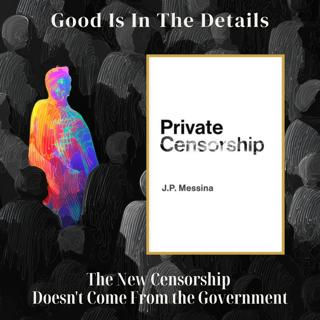
What is Censorship: What Isn't and Why Self Censorship May Sometimes Be A Good Thing

The First Amendment protects you from the government, not from your boss, your university, or a social media platform. J.P. Messina, philosophy professor at Purdue and author of Private Censorship (Ox...

30 Syys 48min
How To See The World Through Your Child's Eyes

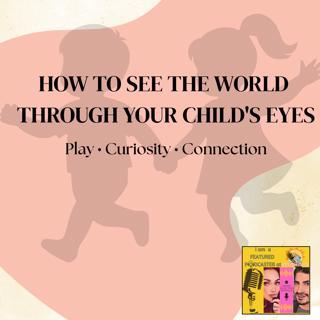
How To See The World Through Your Child's Eyes

How do we build stronger relationships with our children, especially when we're tired, overwhelmed, or simply seeing a situation through adult eyes? In this special Podapalooza mini-episode, Gwendolyn...

15 Syys 21min
To Chill or Not To Chill: When Does Perseverance Become Toxic?

To Chill or Not To Chill: When Does Perseverance Become Toxic?

We're taught that perseverance is always a virtue, but what if the very trait we celebrate is quietly costing us our sense of meaning? Michael Scarano, a healthcare veteran turned speaker and coach, j...

1 Syys 50min
Honest, True, or Authentic? (They're Not the Same Thing)

Honest, True, or Authentic? (They're Not the Same Thing)

Honesty might be the character trait we claim to value most, but what does it actually mean to be honest, and how is that different from simply telling the truth, or "being authentic"? Philosopher Chr...

19 Elo 48min

Cults, Conspiracy Theories & Critical Thinking: The History America Didn't Teach You

Cults, Conspiracy Theories & Critical Thinking: The History America Didn't Teach You

What if the United States was never immune to cult thinking, but was built on it? Journalist Jane Borden joins Gwendolyn and Rudy to unpack her book Cults Like Us: Why Doomsday Thinking Drives America...

31 Heinä 41min

Are You Living in an Echo Chamber? The Psychology of Misinformation & Critical Thinking | Matthew Facciani

Are You Living in an Echo Chamber? The Psychology of Misinformation & Critical Thinking | Matthew Facciani

How do echo chambers influence our beliefs? How do you know what is true on the internet? Why does misinformation spread so quickly online? What is an echo chamber, and how does confirmation bias infl...

16 Heinä 50min

Rewind, Play, Repeat: Nicole Morrison on Music, Memory, Coming Out, and Memoir

Rewind, Play, Repeat: Nicole Morrison on Music, Memory, Coming Out, and Memoir

The mixtape structural metaphor ushers in a philosophical lens. Because a mixtape (as every Gen X person who ever made one knows) is a curated act of autobiography. It's how you tell someone the truth...

1 Heinä 40min
Suosittua kategoriassa Koulutus

rss-murhan-anatomia
aamukahvilla
psykopodiaa-podcast
psykologia
rss-hereilla
rss-duodecim-lehti
voi-hyvin-meditaatiot-2
rss-uskonto-on-tylsaa
rss-arkea-ja-aurinkoa-podcast-espanjasta
aloita-meditaatio
rss-liian-kuuma-peruna
rss-rahamania
rahapuhetta
kesken
rss-niinku-asia-on
jari-sarasvuo-podcast
ihminen-tavattavissa-tommy-hellsten-instituutti
rss-narsisti
rss-luonnollinen-synnytys-podcast
dear-ladies