How Quantum Computing Actually Works (Part 1) (EP 54)

How Quantum Computing Actually Works (Part 1) (EP 54)

Quantum computers do not simply “try every answer at once.” So what do they actually do—and why have governments and technology companies spent billions trying to build them?

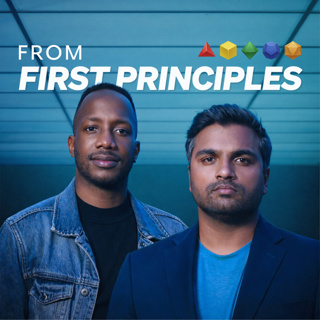
In Part 1 of our two-part quantum computing deep dive, Lester Nare and Krishna Choudhary build the field from first principles.

The series was prompted by a new Nature cover paper, A digitally controlled silicon quantum processing unit, co-authored by Krishna and members of the HRL Quantum Team and collaborators. Before getting into that hardware in Part 2, we first need to understand why anyone wanted to build a quantum computer in the first place.

We begin with Bell’s theorem and the failure of local hidden-variable explanations of quantum mechanics. From there, we follow the realization that information is fundamentally physical through Rolf Landauer, reversible computation, Charles Bennett, Tommaso Toffoli, Paul Benioff, and the origins of quantum information science.

Then Richard Feynman changes the question. Straightforward classical simulation of an interacting quantum system requires tracking a state space that grows exponentially with the number of particles. If nature itself is quantum mechanical, Feynman asks, why not build a computer that is quantum mechanical too?

David Deutsch formalizes the universal quantum computer and introduces the first quantum algorithm. Using the Deutsch–Jozsa problem, the double-slit experiment, and Feynman’s path-integral intuition, we explain what a quantum algorithm is actually exploiting: carefully engineered constructive and destructive interference.

Finally, we reach the discoveries that turned quantum computing from an academic curiosity into a strategic technology. Daniel Simon develops an early exponential quantum speedup. Peter Shor recognizes how the underlying mathematics can be used to attack problems central to public-key cryptography. Lov Grover follows with a quantum search algorithm—and suddenly governments have a very different reason to care about quantum machines.

We also explore quantum money, quantum cryptography, the many-worlds interpretation, Google Willow and parallel-universe headlines, post-quantum security, and what useful quantum computers may ultimately be good for.


Part 2: How do you actually build one?


Nature paper:A digitally controlled silicon quantum processing unitDOI: 10.1038/s41586-026-10754-7

Link: https://www.nature.com/articles/s41586-026-10754-7


Explore the FFP science funding tracker:ffppod.com/funding


Support the show:ffppod.com.com/donate


Follow:@FFPPod on X / Instagram / TikTok / Facebook

Tämä jakso on lisätty Podme-palveluun avoimen RSS-syötteen kautta eikä se ole Podmen omaa tuotantoa. Siksi jakso saattaa sisältää mainontaa.

Jaksot(58)

What OpenAI Actually Did to Navier-Stokes (EP 58)

What OpenAI Actually Did to Navier-Stokes (EP 58)

What does it mean to solve an equation that describes almost every fluid around us, from the air over a wing to the water swirling down a drain?In Episode 58 of From First Principles, Lester Nare and ...

24 Syys 4h 9min

What’s Next in Science? Nobel Prizes, Space Missions & More (EP 57)

What’s Next in Science? Nobel Prizes, Space Missions & More (EP 57)

What science should you be watching this fall? From Nobel Prize season to NASA’s Roman Space Telescope, Mars’ moons and Mercury, Lester Nare and Krishna Choudhary take a relaxed tour of the discoverie...

14 Syys 1h 3min

The Yak Mutation That Could Help Repair the Brain (EP 56)

The Yak Mutation That Could Help Repair the Brain (EP 56)

What can a yak living thousands of meters above sea level teach us about repairing the human brain?In Episode 56 of From First Principles, Lester Nare and Krishna Choudhary break down a new Neuron pap...

7 Syys 1h 35min

Why Spin Qubits Will Win the Quantum Race (Part 2) (EP 55)

Why Spin Qubits Will Win the Quantum Race (Part 2) (EP 55)

Which quantum computer will actually scale?In Part 2 of our quantum computing deep dive, Lester Nare and Krishna Choudhary move from theory to hardware—comparing superconducting qubits, trapped ions, ...

31 Elo 3h 46min

What Claude Actually Did to the Riemann Hypothesis (EP 53)

What Claude Actually Did to the Riemann Hypothesis (EP 53)

Claude did not solve the Riemann Hypothesis. But what it actually did may be one of the clearest examples yet of how rapidly AI systems are changing the way difficult mathematics can be attacked.In Ep...

14 Elo 1h 47min

The Amazon’s Hidden Civilization (One Year Anniversary) (EP 52)

The Amazon’s Hidden Civilization (One Year Anniversary) (EP 52)

In this anniversary episode, Lester Nare and Krishna Choudhary look back at how two longtime friends turned their regular conversations about science into a show now shared by millions of people aroun...

6 Elo 1h 47min

The Tech Elon Has Been Waiting For (EP 51)

The Tech Elon Has Been Waiting For (EP 51)

What happens when electronics can operate at temperatures hot enough to melt aluminum?In this deep-dive episode, Lester Nare and Krishna Choudhary examine a new high-temperature memory device develope...

31 Heinä 1h 44min

Suosittua kategoriassa Tiede

rss-mita-tulisi-tietaa
rss-poliisin-mieli
rss-hereilla
tiedekulma-podcast
utelias-mieli
rss-luontopodi-samuel-glassar-tutkii-luonnon-ihmeita
rss-tiedetta-vai-tarinaa
docemilia
rss-duodecim-lehti
rss-bios-podcast
hippokrateen-vastaanotolla
rss-ranskaa-raakana
radio-antro
rss-politiikasta-podcast
university-of-eastern-finland
rss-radplus
rss-lihavuudesta-podcast