Why We Want to Believe in Aliens and Why We Still Haven't Found Them

Why We Want to Believe in Aliens and Why We Still Haven't Found Them

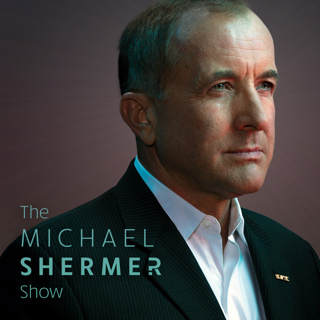
UFOs were once the stuff of tabloids and conspiracy theories. Today they're the subject of congressional hearings, Pentagon investigations, mainstream news coverage, and a new wave of claims about government cover-ups and alien technology. Adam Kirsch, senior editor at The Atlantic and author of We Want to Believe: How Aliens Went Mainstream and Why It Matters, joins Michael Shermer to ask what changed—and why the idea of extraterrestrial visitors has such a powerful hold on us.

They discuss Roswell, UFO "disclosure," eyewitness testimony, government secrecy, alien abductions, Carl Sagan and Contact, the religious impulse behind UFO belief, and the difference between testimony and scientific evidence. The conversation also turns to the serious scientific search for extraterrestrial intelligence: the Fermi paradox, why decades of SETI have found nothing, how rare intelligent life might be, and whether our ideas about aliens ultimately tell us more about ourselves than about anything actually out there.

Adam Kirsch is the author of several books of poetry and criticism and a senior editor at The Atlantic. A 2016 Guggenheim Fellow, Kirsch has written for publications including The New Yorker, Slate, The Times Literary Supplement, The New York Times Book Review, Poetry, and Tablet. His new book is We Want to Believe: How Aliens Went Mainstream and Why It Matters.

Tämä jakso on lisätty Podme-palveluun avoimen RSS-syötteen kautta eikä se ole Podmen omaa tuotantoa. Siksi jakso saattaa sisältää mainontaa.

Jaksot(637)

Is There a Second Arrow of Time? A New Law of Evolution, Information, and Complexity

Is There a Second Arrow of Time? A New Law of Evolution, Information, and Complexity

Why does the universe produce ever more elaborate forms, from atoms and minerals to cells, organisms, brains, technology, and civilization? The familiar laws of physics can explain much of what happen...

18 Elo 1h 18min

Why Good People Disagree About Right and Wrong

Why Good People Disagree About Right and Wrong

Why do reasonable people disagree so strongly about right and wrong? And why are we so quick to assume that people on the other side of a moral or political issue are irrational, selfish, ignorant, or...

11 Elo 1h 57min

Are We Building a God? AI, Superintelligence, and the Coming Singularity

Are We Building a God? AI, Superintelligence, and the Coming Singularity

Robert Wright joins Michael Shermer to discuss his new book, The God Test: Artificial Intelligence and Our Coming Cosmic Reckoning, and why he thinks the AI revolution may be moving much faster than m...

5 Elo 1h 22min

Can You Trust Wikipedia? Co-Founder Larry Sanger on Wikipedia's Bias and Why He Was Banned

Can You Trust Wikipedia? Co-Founder Larry Sanger on Wikipedia's Bias and Why He Was Banned

Michael Shermer speaks with Wikipedia co-founder Larry Sanger shortly after Sanger was permanently banned from editing the site he helped create. Sanger tells the story of Wikipedia's founding, how it...

30 Heinä 2h 3min

How to Think Clearly About a World in Crisis: Iran, China, Russia, and the West's Economic Pessimism

How to Think Clearly About a World in Crisis: Iran, China, Russia, and the West's Economic Pessimism

Michael Shermer speaks with political scientist Marlene Laruelle about Russia's turbulent transformation during the 1990s and the rise of Vladimir Putin, why the Kremlin so badly misjudged Ukraine, Ch...

18 Heinä 1h 4min

The Truth About Sex Differences (Steve Stewart-Williams)

The Truth About Sex Differences (Steve Stewart-Williams)

How do men and women differ? Where do the differences come from? And how do they shape modern life? Drawing on a century of research and a billion years of evolution, Steve Stewart-Williams explains w...

11 Heinä 55min

America at 250: What Did the Founders Get Right?

America at 250: What Did the Founders Get Right?

Michael Shermer makes the case that the U.S. Founding Fathers were not only steeped in Enlightenment values on which the Declaration of Independence was based, but they were also scientists searching ...

6 Heinä 17min

Suosittua kategoriassa Tiede

rss-poliisin-mieli
tiedekulma-podcast
utelias-mieli
docemilia
rss-mita-tulisi-tietaa
rss-hereilla
rss-luontopodi-samuel-glassar-tutkii-luonnon-ihmeita
rss-ylistys-elaimille
rss-tiedetta-vai-tarinaa
hippokrateen-vastaanotolla
mielipaivakirja
rss-ammamafia
rss-astetta-parempi-elama-podcast
sotataidon-ytimessa
ihanat-ipanat
rss-bios-podcast
rss-kasvikutsut
rss-duodecim-lehti
rss-sotepodi-ratkaisuja-hyvinvointiin
filocast-filosofian-perusteet