
Everything You’ve Heard About the National Debt Is Wrong (E217)
El Podcast8 Syys

Everything You’ve Heard About the National Debt Is Wrong (E217)

Former banking CEO Richard Vague explains why America’s $40 trillion federal debt may be less dangerous than private debt, how banks actually create money, what really causes financial crises, and why an AI bubble probably won’t crash the broader economy. GUEST BIO Richard Vague is a former banking CEO, entrepreneur, author, and former Pennsylvania Secretary of Banking and Securities. He co-founded two major credit-card banks and has spent decades studying how private debt, bank lending, and financial crises shape the economy. His books include The Paradox of Debt, A Brief History of Doom, The Next Economic Disaster, and The Banker Who Made America. TOPICS DISCUSSED • Why the $40 trillion U.S. federal debt may be less alarming than it sounds • Why private debt matters more for financial crises • How commercial banks create roughly 90% of the money supply • Debt, asset prices, inequality, and the K-shaped economy • Why housing affordability is fundamentally a supply problem • The myth that China “owns” America’s debt • Gold standards, fiat money, Bitcoin, and debt-based money • What actually caused the 2008 financial crisis • Shadow banking, private equity, and private credit • Why economists largely missed the 2008 crash • Whether today’s AI boom is a bubble • Why an AI crash could resemble the dot-com bust rather than 2008 • Whether AI will ultimately destroy or create jobs • Thomas Willing and the origins of American banking • America’s centuries-old divide between coastal elites and the interior MAIN POINTS • Federal debt needs context: Vague points to roughly $180 trillion in household net worth compared with $40 trillion in federal debt. • Private debt may be more dangerous: U.S. private debt is roughly $45 trillion, and Vague argues private lending booms are much more closely connected to financial crises. • Banks create money: Roughly 90% of money creation occurs through commercial-bank lending. When a bank makes a loan, it simultaneously creates a new deposit. • Debt can increase inequality: Expanding credit pushes up stocks and real estate, disproportionately benefiting people who already own those assets. • The K-shaped economy is real: Vague argues middle- and lower-income Americans are increasingly being left behind, particularly men with only a high school education. • Housing needs more supply: The U.S. has roughly 1.5 million homes for sale versus the approximately 2 million Vague believes are needed for a balanced market. • China does not “own” America: China holds only a small fraction of total U.S. federal debt. • Lending booms cause banking crises: Vague’s research into 43 banking crises across six major economies found excessive lending at the center of every major crisis studied. • Economists missed the warning signs before 2008: Mortgage debt roughly doubled from $5 trillion to $10 trillion between 2002 and 2007 while conventional economic models largely ignored private debt. • An AI crash does not necessarily mean an economic crash: Vague compares today’s AI boom more closely to the dot-com era, when the Nasdaq collapsed but the broader economy continued growing. • AI may ultimately create more jobs than it eliminates: Vague expects major disruption but believes lower costs, higher demand, and entirely new industries will ultimately expand employment. TOP QUOTES “Don't freak out. If you're gonna freak out, find something else to freak out about.” “My answer is human nature.” “People tend to overestimate how much change will occur in the short run and underestimate how much change will occur in the long run.” BOOKS DISCUSSED • The Paradox of Debt • A Brief History of Doom • The Next Economic Disaster • The Banker Who Made America: Thomas Willing and the Rise of the American Financial Aristocracy EPISODE INFO Guest: Richard Vague Podcast: El Podcast Topics: Economics, Banking, Federal Debt, Private Debt, Financial Crises, Money Creation, Inequality, Housing, Bitcoin, AI, Economic History 🎙 The Pod is hosted by Jesse Wright 💬 For guest suggestions, questions, or media inquiries, reach out at https://elpodcast.media/ 📬 Never miss an episode – subscribe and follow wherever you get your podcasts. ⭐️ If you enjoyed this episode, please rate and review the show. It helps others find us. Thanks for listening!

Tämä jakso on lisätty Podme-palveluun avoimen RSS-syötteen kautta eikä se ole Podmen omaa tuotantoa. Siksi jakso saattaa sisältää mainontaa.

Jaksot(225)

The AI Bubble Is Already Bursting — Dr. Jeffrey Funk

The AI Bubble Is Already Bursting — Dr. Jeffrey Funk

Dr. Jeff Funk is a former professor at the National University of Singapore and an independent technology consultant specializing in the economics of new technologies. Funk believes the AI bubble is ...

5 Marras 1h 34min
The System Is Rigged Against Men

The System Is Rigged Against Men

George from TheTinMen is a content creator, pro-men’s advocate, and researcher. In this conversation, he explores the challenges facing men and boys—from child custody and paternity fraud to education...

3 Marras 1h 24min
Status Over Intelligence

Status Over Intelligence

Has the college degree become less about knowledge and more about social status? And are America's elite universities still rewarding intelligence and ability, or simply reproducing an increasingly cr...

27 Loka 1h 14min

Are We Now Discriminating Against Men?

Are We Now Discriminating Against Men?

Evolutionary psychologist and psychology professor Steve Stewart-Williams joins Jesse to discuss sex differences, discrimination against men, and the double standards shaping how we treat men and wome...

20 Loka 1h 14min
College Professor: We’ve Oversold the College Dream

College Professor: We’ve Oversold the College Dream

Is college still worth it? Political science professor Kevin Wallsten examines the gap between what students pay, what universities promise, and what a degree actually delivers. From student debt and...

13 Loka 1h 25min
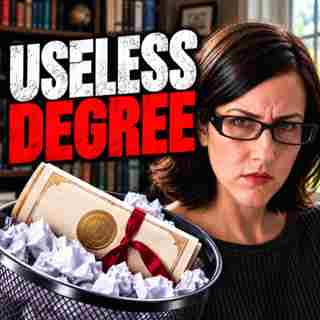
What Happened to Sociology?

What Happened to Sociology?

Is sociology becoming too political to function as a serious academic discipline? Professor Ashley T. Rubin discusses her new report for the Vanderbilt–WashU Commission on Scholarly Standards, which e...

6 Loka 1h 3min
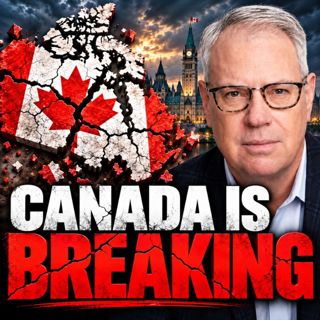
Canada’s Breaking Point Has Arrived (E220) - Darrell Bricker

Canada’s Breaking Point Has Arrived (E220) - Darrell Bricker

Darrell Bricker explains why Canada is approaching a potential breaking point as soaring housing costs, immigration pressures, generational divides, regional tensions, demographic decline, and a chang...

29 Syys 58min

Forget Biohacking: What Actually Helps You Live Longer  (E219)

Forget Biohacking: What Actually Helps You Live Longer (E219)

Bill Gifford, co-author of Outlive, explores why Americans are living less healthy lives despite spending more on healthcare, the surprising benefits of heat, and why relationships, purpose, and every...

22 Syys 1h 16min
Suosittua kategoriassa Liike-elämä ja talous

vallattomat
sijotuskasti
mimmit-sijoittaa
rss-rahapodi
rss-oivalluksia-rahasta-elamasta
psykopodiaa-podcast
rss-hereilla
pomojen-suusta
rss-inderes
ostan-asuntoja-podcast
rss-pinnan-alle
hyva-paha-johtaminen
rss-yritys-ja-erehdys
rss-paasipodi
rss-porssipuhetta
sijoituspodi
oppimisen-psykologia
rss-sahkaripodi
rss-hilden-kaira
rss-karon-grilli