
Norway Wants to Ban Bitcoin Mining. The Miners Already Left | Rachel Geyer, EBEA

Norway Wants to Ban Bitcoin Mining. The Miners Already Left | Rachel Geyer, EBEA

Rachel Geyer chairs the European Bitcoin Energy Association. In this talk for Bitcoinpolitisk Institutt in Oslo, she argues that Norway's proposed ban on Bitcoin mining solves a problem the country does not have.

She starts in Germany. In 2011 the Bundestag voted to phase out nuclear power. The last three reactors went offline in 2023, and Germany now imports nuclear electricity from France. German power is the fifth most expensive in the world, and industrial rates sit 23 percent above the European average. Geyer uses her own family, most of whom have left the country, to show what that costs a nation over time.

Then she turns to Norway. The country produces somewhere between 1 and 1.8 percent of global hash rate, yet mining consumes under one percent of Norwegian electricity. The two large operators in the north are already pivoting to AI, and they are doing it because AI pays better right now, not because anyone regulated them out.

Her central argument is that Bitcoin mining is not primarily money. It is a flexible data center: a load that can be switched off in seconds, moved to wherever the power actually is, scaled down to the size of a chest freezer, and converted almost one to one into usable heat. Miners in Finland earn more being curtailed than they earn mining. France alone could double global hash rate with surplus nuclear output.

And since roughly half of all global energy consumption goes to heating, her prediction is that the future of mining in Norway is heat recapture, not warehouses.

The talk closes with a long audience Q&A on who ends up owning mining, whether individuals can participate, and whether AI can deliver the same flexibility. The short answer to the last one is no, because AI needs 99.99 percent uptime.

CHAPTERS
00:00 First time in Norway, and one Oslo dinner bill
00:34 Why she is here: Norway is considering a ban
00:45 Germany 2011: what were the politicians voting for?
01:35 France went the other way
02:58 When her whole family left Germany
04:06 Who Rachel Geyer is
05:53 The European Bitcoin Energy Association
06:21 Why they talk to energy companies, not politicians
08:34 The lab that gives people the lightbulb moment
10:39 Europe's biggest problem is demographics
11:16 The energy trilemma
11:51 The EU wants to mandate that you use less power
12:54 There is no such thing as a high income, low energy country
13:21 The German rulebook that was supposed to fix everything
15:33 The biogas subsidy that put farmers out of business
17:18 Fifth most expensive electricity in the world
17:49 Europe imports 58 percent of its energy
18:54 The grid cannot absorb more renewables
19:33 Blackouts, and the man who knew how close we come
20:53 The sustainability targets Europe will miss
21:21 Flexible data centers as the solution
21:53 Three use cases: grid stability, surplus power, heat
23:04 Property 1: interruptible
23:35 Finnish miners earn more sitting idle
24:40 France, EDF and surplus nuclear
26:27 Property 2: location agnostic
27:43 Property 3: extremely price sensitive
28:25 How big is mining in Norway, really?
29:32 Bitdeer and Bitzero are pivoting to AI
30:27 Regulating a problem that does not exist
30:54 Prediction: the energy companies become the miners
31:30 Property 4: modular
32:29 Property 5: it makes heat
33:36 Half of all energy goes to heating
34:11 What heat recapture looks like in Finland
35:01 Who gets to pick the winners and losers?
36:11 Fewer rules, more trust
36:32 The EBEA Summit in Helsinki
38:13 Why the future of mining is in Europe
38:59 Q&A: will energy companies become the miners?
42:15 Q&A: can ordinary people mine?
44:48 Q&A: which political arguments actually work?
51:19 Q&A: does AI compete for demand response?

About BPI: Bitcoinpolitisk Institutt is a Norwegian membership organisation working for evidence based policy on Bitcoin and energy. We do not represent mining companies.

Tämä jakso on lisätty Podme-palveluun avoimen RSS-syötteen kautta eikä se ole Podmen omaa tuotantoa. Siksi jakso saattaa sisältää mainontaa.

Jaksot(16)

Er bitcoin vinnaren av krigen mot Iran? | Arendalsuka 2026

Er bitcoin vinnaren av krigen mot Iran? | Arendalsuka 2026

Iran kontrollerer Hormuzsundet. Nå har styresmaktene signalisert at de vil kreve toll fra tankskip som passerer, og at tollen kan betales i bitcoin. Blant annet for å komme utenom amerikanske sanksjon...

3 Syys 44min

Kan bitcoin bli penger i Palestina?

Kan bitcoin bli penger i Palestina?

Palestina har ingen egen valuta. Israelske sjekel er tvungent betalingsmiddel, mens dollar og jordanske dinarer sirkulerer side om side i hverdagen. I Gaza er kontantene nesten borte. Hundre sjekel di...

18 Elo 46min

Kan Bitcoin-utvinning bli en samfunnsnyttig tjeneste? – Anders Lie Brenna

Kan Bitcoin-utvinning bli en samfunnsnyttig tjeneste? – Anders Lie Brenna

Anders Lie Brenna, redaktør i EnergiWatch, uttalte til NRK at Bitcoinmining har potensial til å bli en samfunnsnyttig tjeneste – forutsatt at bransjen møtes med strenge og tydelige krav. Vi inviterte ...

14 Heinä 44min
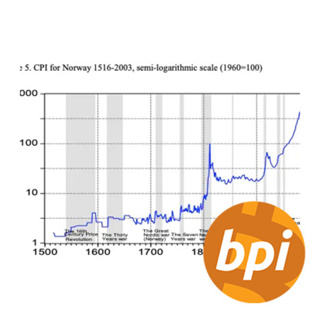
Pengetrykking og inflasjon Korleis påverkar pengesystemet vårt inflasjonen i riket? I kva grad er bitcoin eit "alternativ"?

Pengetrykking og inflasjon Korleis påverkar pengesystemet vårt inflasjonen i riket? I kva grad er bitcoin eit "alternativ"?

I fleire tiår var inflasjon eit ikkje-tema i det offentlege ordskiftet. Dei siste åra er alt ved det gamle: Inflasjon har gjort "comeback" og pengepolitikken til Noregs Bank er sett under lupa - og le...

19 Kesä 1h 14min
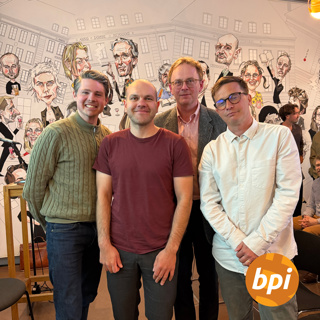
Bitcoin og Friedrich Hayek!

Bitcoin og Friedrich Hayek!

Hayek fekk Nobelprisen i økonomi i 1974. Skriftene hans om pengar og stat leier tankane til bitcoin.Hayek var (mildt sagt) skeptisk til statleg kontroll med pengar i stort og særleg pengeproduksjon.Ha...

7 Touko 1h 18min
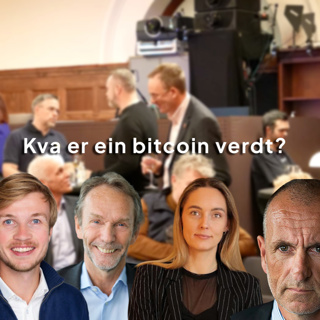
Hva er bitcoin verdt? Med Vetle Lunde, Peter C. Warren, Harald Magnus Andreassen og Kaja Vagle

Hva er bitcoin verdt? Med Vetle Lunde, Peter C. Warren, Harald Magnus Andreassen og Kaja Vagle

Bitcoin koster rundt 720 000 kroner. Men hvorfor har det egentlig verdi, og hva styrer kursen fremover? I denne episoden møtes fire eksperter med ulike syn til samtale på Litteraturhuset i Oslo.Vetle ...

23 Huhti 1h 15min

Er bitcoin kvantesikker? Torbjørn Bull Jensen og Peder Østbye (Norges Bank) diskuterer

Er bitcoin kvantesikker? Torbjørn Bull Jensen og Peder Østbye (Norges Bank) diskuterer

I Satoshi-samtale nr. 6 setter Morten Søberg bitcoins fremtid på dagsordenen. Kan kvantedatamaskiner knekke krypteringen bitcoin er bygget på? Hva skjer med sikkerheten til nettverket når belønningen ...

18 Maalis 1h 8min