British Military Administration of Occupied Territories in Africa - Eritrea 1941-1947

British Military Administration of Occupied Territories in Africa - Eritrea 1941-1947

In 1941, British forces took Eritrea from Fascist Italy and inherited an economy built to sustain Italy's imperial ambitions in East Africa.

Behind the imposing marble banks and colonial infrastructure was a remarkably fragile system.

As British forces advanced, Italian banks received instructions to destroy financial records, safeguard or conceal valuables, and deny the incoming administration a functioning financial system. Yet instead of complete financial collapse, something unexpected happened.

Banks reopened. Depositors returned. Money began flowing back into the system. British administrators cut costs, introduced new banking arrangements, moved financial records across an active war zone and even used banking to contain emerging currency black markets.

But the greater challenge was food.

Italian colonial policy had distorted local production while Eritrea had become dependent on imported supplies. When wartime shipping was disrupted, the new administration discovered that military bureaucracy could not efficiently feed the population.

What worked instead was much older.

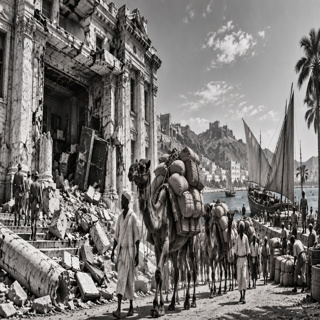
Camel caravans brought grain from Sudan. Traditional Red Sea trading routes connected Massawa and Assab with regional markets. Wooden dhows followed seasonal winds. Existing merchant networks moved food with remarkably little central coordination. Massawa's enormous salt reserves became economic leverage for securing supplies from Ethiopia.

British administrators even discovered that attempts at official grain rationing struggled to compete with these informal trading networks, which could often move goods faster and more cheaply.

The structures built to project power and permanence had fallen apart.

The quiet networks of survival that had existed for centuries barely missed a step.

And that raises a question for today:

Our economy now depends on centralised digital banking, electronic payments, algorithmic markets and highly optimised global supply chains.

If those systems stopped working, what would our equivalent of the camel caravan and the wooden dhow be?

This episode draws extensively on Lord Rennell of Rodd's 1948 official account, British Military Administration of Occupied Territories in Africa 1941–1947, examining British military administration, banking, currency, trade and food supply in Eritrea during the Second World War.

#Eritrea #EritreanHistory #Asmara #Massawa #Assab #AfricanHistory #EastAfricanHistory #HornOfAfrica #WWII #WorldWarII #BritishEmpire #ItalianColonialism #ColonialHistory #EconomicHistory #BankingHistory #RedSea #History #HistoryPodcast #EritrawiPodcast

Tämä jakso on lisätty Podme-palveluun avoimen RSS-syötteen kautta eikä se ole Podmen omaa tuotantoa. Siksi jakso saattaa sisältää mainontaa.

Jaksot(128)

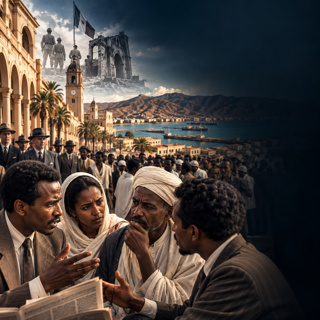
How Eritrea Became a Nation: Newspapers, Politics and the Struggle for Unity

How Eritrea Became a Nation: Newspapers, Politics and the Struggle for Unity

How Eritrea Became a Nation: Newspapers, Politics and the Struggle for UnityHow did Eritrea's people begin to imagine themselves as part of a single nation?In the 1940s, Eritrea emerged from Italian c...

13 Syys 21min
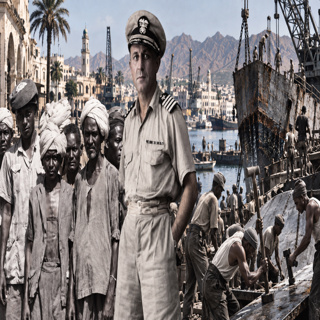
How Massawa, Eritrea Helped Defeat the Nazis in North Africa

How Massawa, Eritrea Helped Defeat the Nazis in North Africa

How Massawa, Eritrea Helped Defeat the Nazis in North AfricaIn 1941, the British captured Massawa, Eritrea — only to find one of the most strategically important harbours on the Red Sea deliberately w...

6 Syys 22min
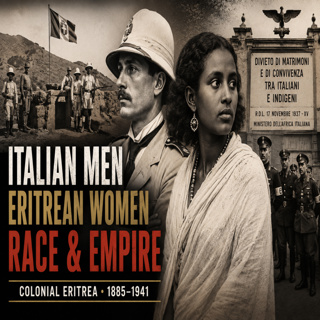
Madamato: Italian Men, Eritrean Women — Race, Intimacy and Power in Colonial Eritrea

Madamato: Italian Men, Eritrean Women — Race, Intimacy and Power in Colonial Eritrea

Madamato: Italian Men, Eritrean Women — Race, Intimacy and Power in Colonial EritreaBetween 1885 and 1941, relationships between Italian men and Eritrean women became deeply entangled with the constru...

23 Elo 23min
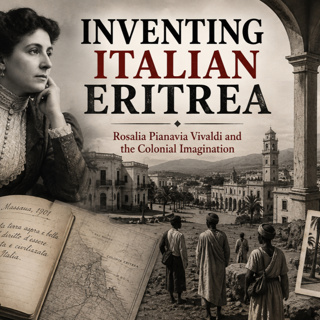
Inventing Italian Eritrea Rosalia Pianavia Vivaldi and the Colonial Imagination

Inventing Italian Eritrea Rosalia Pianavia Vivaldi and the Colonial Imagination

What did Italian colonizers actually see when they looked at Eritrea, and how much of what they described was a projection of themselves?This episode examines the literary construction of Italian Erit...

9 Elo 13min
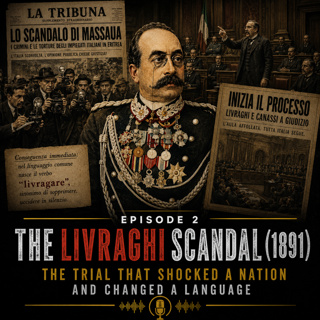
Episode 2 The Livraghi Scandal (1891) Italy's First Colonial Scandal in Eritrea

Episode 2 The Livraghi Scandal (1891) Italy's First Colonial Scandal in Eritrea

The Livraghi scandal did not end with the arrests—it transformed into one of the most consequential political and legal dramas in modern Italian history.Following Lieutenant Dario Livraghi's capture i...

25 Heinä 8min
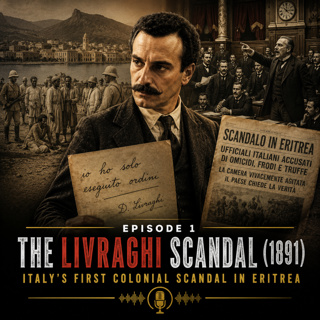
Episode 1: The Livraghi Scandal (1891) | Italy's First Colonial Scandal in Eritrea

Episode 1: The Livraghi Scandal (1891) | Italy's First Colonial Scandal in Eritrea

1891, the Livraghi scandal became the first major public exposure of Italian colonial atrocities in Eritrea. What began as an investigation into two colonial officials—Lieutenant Dario Livraghi and go...

18 Heinä 19min
The Construction of Racial Hierarchies in Colonial Eritrea

The Construction of Racial Hierarchies in Colonial Eritrea

This episode explores one of the most misunderstood aspects of Italian colonial rule in Eritrea. Drawing on the research of historian Giulia Barrera, it examines how racial hierarchy was not an accide...

12 Heinä 26min

Suosittua kategoriassa Politiikka ja uutiset

uutiscast
vallattomat
aikalisa
politiikan-puskaradio
rss-viihde-media
ootsa-kuullut-tasta-2
rss-vaalirankkurit-podcast
rss-ootsa-kuullut-tasta
rss-voi-venaja
rss-asiastudio
rikosmyytit
rss-raha-talous-ja-politiikka
et-sa-noin-voi-sanoo-esittaa
tervo-halme
rss-kaikki-uusiksi
rss-pinnalla
rss-ulkopoditiikkaa
the-ulkopolitist
rss-seksicast
otetaan-yhdet