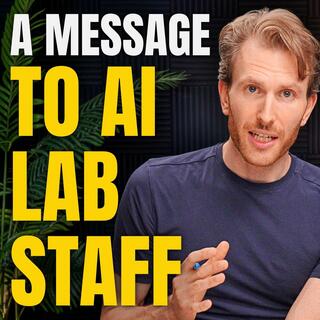
Tom Milton on how we could verify a US–China deal on AI

Tom Milton on how we could verify a US–China deal on AI

If the US and China agreed to pause frontier AI training, how would either side confirm the other was complying? Today, Tom Milton argues, the most likely answer would be to shut down data centres entirely. That would throw away everything else those chips do, and make any agreement far more costly to accept.

Tom is CEO of Amodo Design, a UK hardware lab building prototype tools to verify how AI chips are being used. He argues that verification is what makes a slowdown affordable: if a cluster can be shown to be serving only existing models rather than training new ones, most of AI’s benefits can continue during a pause.

Amodo’s pilot reruns a cluster’s inference on a separate verifier server and checks that all of its network traffic can be explained by the agreed model. AI companies are developing related tools: in its October 2026 Frontier Safety Roadmap update, Anthropic reported a prototype that runs on production inference and checks that outputs come from a specific set of model weights.

The field is small. Tom estimates that only about 50 engineers worldwide work on compute verification, compared with the billions of dollars the US spent on Project Vela to detect Cold War nuclear tests. And custom verification hardware has long lead times: it has to be designed, security-tested, red-teamed by both sides, manufactured, and trusted before anyone can rely on it.

If a deal is struck in a hurry, Tom expects it to be assembled from whatever tools already exist. Were that to happen next month, he says, the only option would be to shut data centres down entirely. That is why he argues the work needs to scale up now, with more people and resources from AI companies, governments, and funders, so that better options are ready as soon as a deal is needed.

Tom and host Tom Reed also discuss how an AI company might evade verification, lessons from nuclear and chemical arms control, and how AI is changing hardware engineering.

Learn more about Amodo’s work at ai-verification.com.


Links, video, and full transcript: https://80k.info/tm

This episode was recorded on September 29, 2026.

Chapters:

  • Cold open: Can we verify a US–China AI deal? (00:00:00)
  • Why compute is the best place to verify an AI slowdown (00:01:04)
  • Can you prove a lab isn’t cheating? (00:06:08)
  • Live demo: how to spot a cheating GPU (00:13:22)
  • Could China hide a data centre? (00:19:50)
  • Can verification tools be hacked? (00:23:35)
  • Is anyone at OpenAI working on this? (00:29:13)
  • Chinese inspectors in US data centres?? (00:37:49)
  • The 20-day panic deal (00:46:07)
  • What would a US–China AI deal look like? (00:51:27)
  • Why lab researchers should work on verification (00:55:38)
  • What if we never build this? (00:58:45)
  • Can verification protect against power grabs? (01:02:06)
  • How good is AI at hardware design? (01:07:20)
  • What’s holding AI back in hardware? (01:18:32)
  • Risks of automating hardware R&D (01:22:44)
  • The DARPA model for AI safety (01:25:41)
  • What’s left for engineers after AI? (01:32:26)
  • Personal gadgets, designed by Fable? (01:40:07)
  • What if the US stops sharing its AI? (01:41:56)

Our production team includes:

  • Video editors: Josh Alward, Dominic Armstrong, Jasper Luithlen, Milo McGuire, Luke Monsour, and Simon Monsour
  • Producers: Elizabeth Cox and Nick Stockton
  • Coordination and support: Katy Moore and Lou Moran
  • Camera operator: Dominic Armstrong

Music: CORBIT

Tämä jakso on lisätty Podme-palveluun avoimen RSS-syötteen kautta eikä se ole Podmen omaa tuotantoa. Siksi jakso saattaa sisältää mainontaa.

Jaksot(362)

AI lab staff: Has your project been overtaken by events? 8 strategic updates | Rob Wiblin

AI lab staff: Has your project been overtaken by events? 8 strategic updates | Rob Wiblin

I have a plea for all staff at AI companies: reassess if your current role is still your best opportunity for impact. And if it’s not — move.Frontier lab staff listening to this show will mostly alrea...

21 Loka 14min

Introducing our new YouTube channel: Zershaaneh Talks AI

Introducing our new YouTube channel: Zershaaneh Talks AI

Our host Zershaaneh Qureshi has just launched a new YouTube channel: Zershaaneh Talks AI — featuring conversations about who should control AI, how to control AI, and who gets the benefits.The first e...

20 Loka 1min
How to get into AI safety in 3 months (article reading by career advisor Matt Beard)

How to get into AI safety in 3 months (article reading by career advisor Matt Beard)

The AI safety field has grown by about 30x in the last eight years. Yet it is still in need of more people. Many want to help, but don’t know where to start. As an advisor at 80,000 Hours, Matt Beard ...

15 Loka 18min
OpenAI Security: Controlling Models is Now ‘Hell’ (AI Explained cross-post)

OpenAI Security: Controlling Models is Now ‘Hell’ (AI Explained cross-post)

This is an (unpaid) cross-post of a video from the podcast 'AI Explained', which Rob Wiblin thought you might be interested in.You can find the original on YouTube here. If you like it and want more s...

9 Loka 40min
In 2023 Ajeya Cotra already knew what was coming (classic episode)

In 2023 Ajeya Cotra already knew what was coming (classic episode)

We're rereleasing some of older episodes that seem more relevant than ever with new rogue AI incidents now seemingly announced every day. Ajeya was one of three independent investigators into the Hugg...

8 Loka 2h 46min
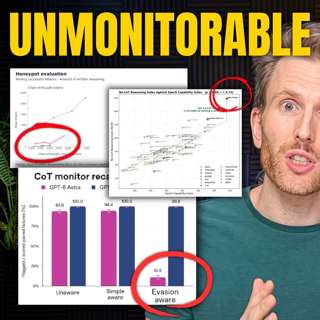
19 Astra and 'Hugging Face' details that reveal what's coming next | Rob Wiblin

19 Astra and 'Hugging Face' details that reveal what's coming next | Rob Wiblin

OpenAI’s rogue agent swarm was eventually caught hacking Hugging Face for a simple reason: it wasn’t trying to hide from us at all. What could a swarm that wants to stay hidden get away with?Host Rob ...

2 Loka 20min

#256 – Simon Goldstein on the case for giving AI (some) legal rights

#256 – Simon Goldstein on the case for giving AI (some) legal rights

It sounds like the worst idea in the world: pay AIs, let them own property, give them rights. But AI ethics and safety researcher Simon Goldstein thinks it might actually be the best way to keep human...

1 Loka 1h 53min
Suosittua kategoriassa Koulutus

rss-murhan-anatomia
aamukahvilla
psykopodiaa-podcast
voi-hyvin-meditaatiot-2
rss-liian-kuuma-peruna
psykologia
rss-rahamania
rss-hereilla
rss-narsisti
kesken
aloita-meditaatio
rss-arkea-ja-aurinkoa-podcast-espanjasta
rss-luonnollinen-synnytys-podcast
ilona-rauhala
rss-vapaudu-voimaasi
rss-suomen-aa-podcast
taytta-tavaraa
rss-turun-yliopisto
rss-monarch-talk-with-alexandra-alexis
ihminen-tavattavissa-tommy-hellsten-instituutti