The Psychology of Security: A Conversation with Gary S. Chan, CISO of SSM Health

The Psychology of Security: A Conversation with Gary S. Chan, CISO of SSM Health

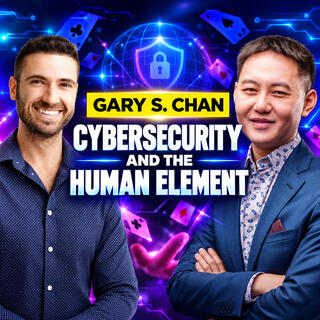
Most conversations about cybersecurity revolve around systems: networks, endpoints, vulnerabilities, the latest tool. My conversation with Gary S. Chan revolved around something harder to patch: the human mind. Chan is Chief Information Security Officer of SSM Health, a nonprofit healthcare organization with 50,000 team members. He is also a trained interrogator and performing mentalist. To him, these are the same discipline seen from different angles.

Chan studied electrical engineering and computer science at MIT, worked in IT consulting, and moved into identity fraud prevention, where the adversary is often someone pretending to be someone else. Along the way, he trained as an interrogator. Today he leads security for a major health system, though he made clear he spoke with me personally, not on behalf of his employer. Each step reinforced his belief that security is ultimately about people.

The name tying it all together came almost by accident. At his wife’s work dinner party, Chan introduced himself to some guests as a security specialist and to others as a mentalist. Neither description drew much interest. Later, two guests compared notes and asked which one he really was. Rather than choose, Chan combined the two on the spot: “Security Mentalist.”

The mood changed instantly. Everyone wanted to know what a Security Mentalist did. Chan spent the next half hour telling hacker stories, and the lesson stayed with him: the same facts, framed differently, can move an audience from indifference to fascination. He now has a trademark pending on Security Mentalism®.

That instinct for framing sits at the core of his philosophy. Chan argues that the human element is the most critical and overlooked layer in security. From interrogation, he draws on managing “headspace”: people have limited cognitive capacity, and how that capacity is loaded shapes what they reveal. Mentalism helps him understand how attention and suggestion guide decisions. Game theory provides a framework for anticipating others’ actions. Together, these ideas help him defend an organization and navigate it.

As a Security Mentalist and keynote speaker, Chan shows audiences how social engineering and hidden influence can exploit even smart people and secure systems.

The toolkit has real-world stakes. Chan described a job applicant with an impressive resume who passed a technical interview and convinced the hiring manager. Chan examined the resume and LinkedIn profile again. He wasn't scanning for keywords. He was looking for psychological and narrative inconsistencies, places where the story didn't hold together. He discovered the candidate was fake before the company made a bad hire. As polished credentials and confident interviews become easier to manufacture, reading the story behind a resume is a security skill in its own right.

Partway through our conversation, Chan demonstrated his point with a deck of cards. He spread the cards across the table, placing a duplicate of one card face down to the side before asking me to choose any card. He even let me change my mind. I chose the Three of Spades. It matched the card that had been sitting face down in full view the entire time. The moment captured what he'd been describing: attention, framing, and influence can shape a decision someone believes is entirely their own.

Listening to Chan makes one thing clear. The attack surface that matters most isn't purely technical. Fraudsters exploit narratives, employees resist change, and executives respond to stories more readily than specifications. Security leaders who understand psychology as deeply as technology can better protect their organizations and move them forward. Chan has built his career and stage persona around that idea.

Learn more about Gary S. Chan and security mentalism at https://www.securitymentalist.com. Follow him on YouTube at https://www.youtube.com/@SecurityMentalist.

Tämä jakso on lisätty Podme-palveluun avoimen RSS-syötteen kautta eikä se ole Podmen omaa tuotantoa. Siksi jakso saattaa sisältää mainontaa.

Jaksot(1171)

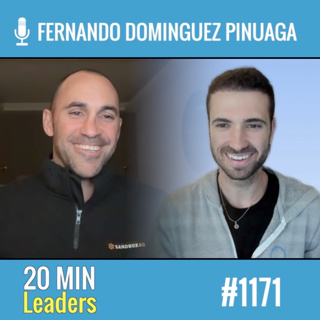
Ep1171: Fernando Dominguez Pinuaga: Quantum Meets AI

Ep1171: Fernando Dominguez Pinuaga: Quantum Meets AI

Fernando Dominguez Pinuaga shares his journey from energy systems to Google X, where he learned to think in true moonshot scale before joining SandboxAQ. At the crossroads of AI and quantum physics, h...

1 Tammi 23min

Ep1169: Lauren Freund: Engagement Over Reach

Ep1169: Lauren Freund: Engagement Over Reach

Lauren Freund has spent the last few years inside her dream company, leading social media and influencer marketing at Canva. She describes why traditional influencer playbooks—optimizing for follower ...

18 Joulu 202520min

Ep1168: Anya Law: Actionable Social Listening

Ep1168: Anya Law: Actionable Social Listening

Coming from years of manual social monitoring in marketing roles, Anya Law saw how expensive and ineffective traditional social listening was for startups. Meeting her co-founder at Atlanta Tech Villa...

15 Joulu 202521min

Ep1167: Daniel Adix: The Recovery Rebrand

Ep1167: Daniel Adix: The Recovery Rebrand

Growing up in Wisconsin’s drinking culture, Daniel Adix launched LiQure to help people “feel good the next day.” After discovering DHM and developing a gummy-based recovery supplement, he navigated ta...

3 Joulu 202521min
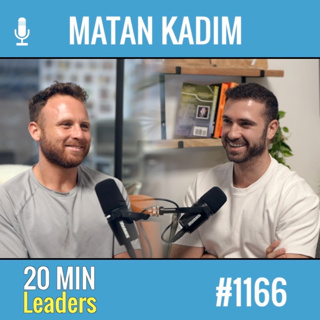
Ep1166 | Matan Kadim: Identity Drives Fitness

Ep1166 | Matan Kadim: Identity Drives Fitness

Matan Kadim’s path into fitness began with a personal struggle and grew into a career of coaching and international learning. He argues that real change comes not from short-term resolutions but from ...

11 Marras 20251h 4min
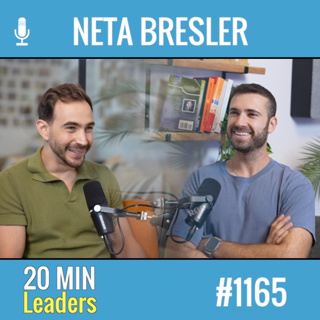
Ep1165 | Neta Bresler: Mind Art for Tech Teams

Ep1165 | Neta Bresler: Mind Art for Tech Teams

Neta Bresler’s journey began with a childhood magic kit and evolved into a 1,500-student academy and global recognition as a top mentalist. Today, he reframes mentalism as “mind art”—a discipline that...

10 Marras 202540min

AI & the Fifth Domain of Warfare: A Talk with Eyal Balicer, Cybersecurity Innovator & Thought Leader

AI & the Fifth Domain of Warfare: A Talk with Eyal Balicer, Cybersecurity Innovator & Thought Leader

By Michael Matias, CEO of Clarity and Forbes 30 Under 30 alumCybersecurity has entered a new domain—literally. As Eyal Balicer put it in our recent conversation: “Cyberspace is now the fifth domain of...

14 Syys 202542min

Suosittua kategoriassa Liike-elämä ja talous

sijotuskasti
vallattomat
mimmit-sijoittaa
psykopodiaa-podcast
rss-rahapodi
rss-oivalluksia-rahasta-elamasta
rss-hereilla
ostan-asuntoja-podcast
yrittaja
rss-sami-miettinen-neuvottelija
hyva-paha-johtaminen
rss-laakispodi
rss-inderes
juristipodi
rss-hilden-kaira
rss-yritys-ja-erehdys
rss-lahtijat
rss-karon-grilli
rss-viisas-raha-podi
rss-paikoillenne-valmiit-laakikseen