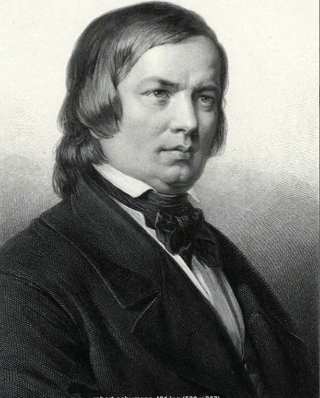
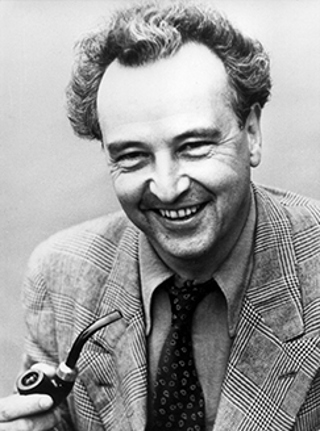
R. Schumann Piano Concerto

R. Schumann Piano Concerto

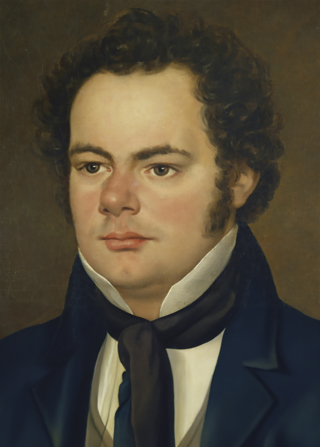
In January of 1839, Clara Wieck, Robert's future wife, wrote to Robert, "Don't take it amiss if I tell you that I've been seized by the desire to encourage you to write for orchestra. Your imagination and your spirit are too great for the weak piano." Clara knew that she would have struck a nerve with Robert, whose history with the piano was full of trials and tribulations. Robert had trained as a pianist, but a 3 year period of reckless amounts of practicing as well as the exacerbating effects of experimental devices meant to strengthen his fingers had destroyed his ability to play professionally. But already from the age of 17, in 1827, Robert had considered writing a piano concerto, probably for himself to perform. He made 4 further attempts to write a concerto, but it seems, like so many things in Schumann's life, that his marriage to Clara was the final inspiration that he needed to get over the hump. It made sense, as Clara Schumann was possibly the greatest pianist of her age, and someone who was ceaselessly devoted to promoting her husband's works wherever she played. In 1841, one year after their marriage, Robert finished a one movement piano concerto in A minor, which he called a Phantasie. Clara reported adoring the piece, but no publisher was interested in the work of a still relatively unknown composer. They were especially uninterested in a on movement concerto, and so Robert knew he needed to "finish" the piece with two extra movements. It would take him 4 more years to finally tack on those extra movements, and the first performance would be given 4 years after that Phantasie had been written, of course with Clara as soloist. This concerto has remained popular practically ever since it was written, and there are so many reasons for it, from its arresting opening, to its abundant lyricism, to its constant interplay with the orchestra, something that Robert grappled with when writing this concerto. This piece is one that doesn't have a story behind it, or any sort of narrative - it lives in the world as a sort of fantasy, constantly evolving in its beauty throughout. We're going to talk about this piece in detail, from start to finish on this Patreon Sponsored Episode. Join us!

Tämä jakso on lisätty Podme-palveluun avoimen RSS-syötteen kautta eikä se ole Podmen omaa tuotantoa. Siksi jakso saattaa sisältää mainontaa.

Jaksot(296)

Grieg: Peer Gynt

Grieg: Peer Gynt

Grieg's Peer Gynt suites are among the best-known and best-loved works of classical music in the world. They are practically embedded into popular culture, being used in a dizzying number of cartoons,...

3 Syys 1h 7min

Mozart Clarinet Concerto

Mozart Clarinet Concerto

When it comes to a piece like the Mozart Clarinet Concerto, a few words or phrases regularly come up: the concerto is described as "mellow" or Mozart's "swan song," but most often it is described as "...

20 Elo 51min

Bohuslav Martinu Symphony No. 1

Bohuslav Martinu Symphony No. 1

It took a lot to make the composer and critic Virgil Thomson happy. He was famous for savaging new works he didn't like, and the truth is, he didn't like very many new works at all. One exception was ...

6 Elo 1h 1min

Scriabin Poem of Ecstasy

Scriabin Poem of Ecstasy

Thence the universe resounds
 With a joyful cry  I AM. These are the final lines of Alexander Scriabin's epic Poem of Ecstasy, a 300-line poem that takes nearly 10 minutes to read aloud and is one of ...

23 Heinä 51min

Sibelius Tapiola

Sibelius Tapiola

Ancient, mysterious, brooding savage dreams; Within them dwells the Forest's mighty God, And wood-sprites in the gloom weave magic secrets. These lines are affixed to the first page of Sibelius' tone...

10 Heinä 47min

Arthur Honneger, Symphony No. 3, "Liturgique"

Arthur Honneger, Symphony No. 3, "Liturgique"

In the aftermath of World War II, the Swiss composer Arthur Honegger, who had been living in occupied Paris throughout the war, wrote a new symphony entitled "Liturgical." He wrote an extended comment...

25 Kesä 53min
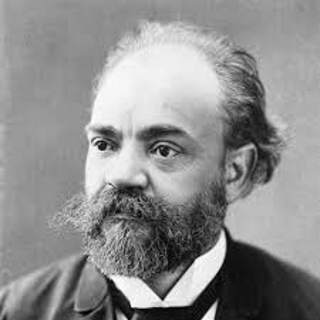
Dvorak Piano Quintet, Op. 81

Dvorak Piano Quintet, Op. 81

In 1872, at the age of 31, Dvořák wrote a Piano Quintet designated as Opus 5. Dvořák was not a prodigy like some other famous composers; instead, his development as a composer was slow and steady. Lat...

11 Kesä 49min
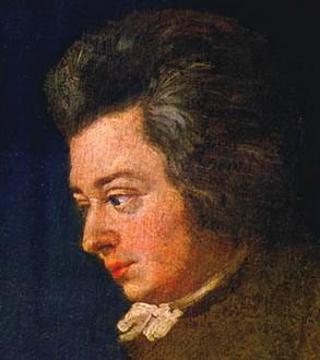
Mozart String Quartet, K. 465, "Dissonance"

Mozart String Quartet, K. 465, "Dissonance"

You might be wondering: why on earth would I choose a piece that is literally called "Dissonance" when I was looking for something a bit simpler or cleaner to talk about on the show today? Actually, M...

28 Touko 49min
Suosittua kategoriassa Viihde

aamuvuoro
anni-jaajo
tuplakaak
grekovit
hei-baby-3
terveisia-perheesta
hupiklubi
antin-palautepalvelu
dear-shirly
seitseman
bella-table
ellen-jari-tamakin-viela
everypodi
the-harlin-show
antin-elokuvakerho
trippileiri
nonsensepodi
dear-shirly-ja-arttu
verhon-takaa
tahtitehdas