Textile recycling is helping create a circular economy

Textile recycling is helping create a circular economy

Tackling the global textile waste challenge.

The fashion and textile industries are at a pivotal point, urgently needing to incorporate sustainable practices, particularly in textile recycling. With the industry's shift towards synthetic materials like polyester, there's a significant challenge in handling the large quantity of textile waste, estimated at 92 million tons globally every year. Emerging chemical textile recycling technologies, especially those focusing on common polyester-cotton blends, are key to reducing waste and decreasing reliance on new raw materials.

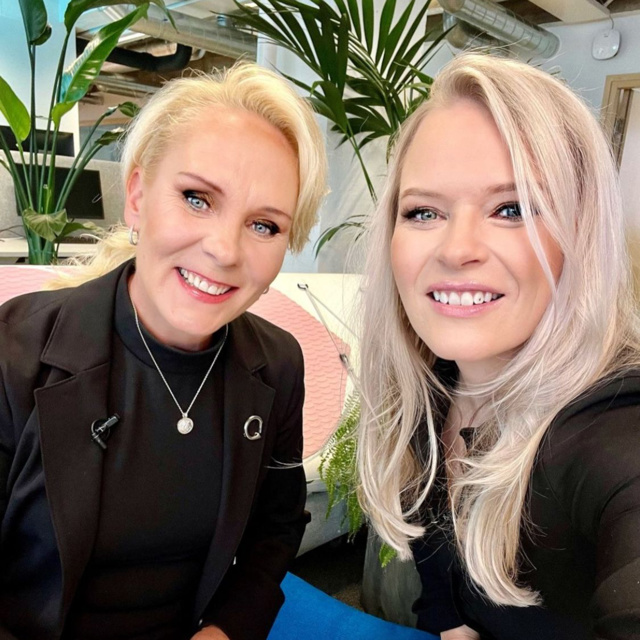
This has major implications for the circular economy; if you can reduce textile waste to zero then the techniques could theoretically be used across other manufacturing sectors. To discuss this, we are joined by Toby Moss and Erik Koep from Worn Again. Worn-Again focuses on recycling polycotton blends, which make up 80% of all textiles.

Erik and Toby explain how they navigate the intricacies of recycling materials in a world where the average garment contains multiple fabric blends, often with less than 1% of unknown materials. What strategies are they employing to expand their technology's reach, considering the scale of this global challenge?

The use of polyester in textiles is almost as widespread as the use of plastic bottles in Europe. Effective recycling methods for these widely used materials are essential in reducing environmental impact, marking an important stride in changing the industry's waste management and sustainability strategies.

See Privacy Policy at https://art19.com/privacy and California Privacy Notice at https://art19.com/privacy#do-not-sell-my-info.

Tämä jakso on lisätty Podme-palveluun avoimen RSS-syötteen kautta eikä se ole Podmen omaa tuotantoa. Siksi jakso saattaa sisältää mainontaa.

Jaksot(349)

Bigger turbines, bigger consequences: how wind is rethinking risk, insurance, and predictive maintenance

Bigger turbines, bigger consequences: how wind is rethinking risk, insurance, and predictive maintenance

Wind remains fundamentally healthy: electricity demand is rising, decarbonised power is still needed, and both Europe and the US continue to pull new projects forward, albeit for different reasons. Bu...

14 Heinä 45min

As racks scale, power must change: The AC-to-DC rethink inside AI factories

As racks scale, power must change: The AC-to-DC rethink inside AI factories

As AI systems scale, the infrastructure challenge is no longer just about chips, models, and software performance. It is increasingly about the physical systems that allow computation to happen at all...

30 Kesä 33min

Handing back the mic: Six months of data center reality, from Bragawatts to behind-the-meter, and the questions still open

Handing back the mic: Six months of data center reality, from Bragawatts to behind-the-meter, and the questions still open

A year ago the data centre conversation was about scale. Increasingly it is about what happens when the announcements meet the physical grid. New capacity is being announced at roughly 435 megawatts a...

16 Kesä 43min

The grid's missing operating system: Why a $100,000 AI controller could defer trillions in hardware and why utilities won't buy it

The grid's missing operating system: Why a $100,000 AI controller could defer trillions in hardware and why utilities won't buy it

The energy transition conversation focuses on what connects to the grid. Far less attention goes to whether anyone is coordinating what those assets do once connected. AI training runs swing hundreds ...

2 Kesä 43min

The grid's immune system is retiring: Synchronous condensers, AI data centers and the physics gap that software alone can't close

The grid's immune system is retiring: Synchronous condensers, AI data centers and the physics gap that software alone can't close

As coal and gas plants retire, the energy transition conversation focuses on replacing their generation capacity. What gets far less attention is the loss of the physical properties those machines pro...

19 Touko 1h 2min

Beyond combustion: Long Island's first hydrogen-powered linear generator and the fuel-flexible answer to the dispatchable emissions-free resource problem

Beyond combustion: Long Island's first hydrogen-powered linear generator and the fuel-flexible answer to the dispatchable emissions-free resource problem

Utilities are under pressure to deliver generation that is dispatchable, affordable, and clean enough to satisfy increasingly stringent environmental rules, notoriously hard to do in one asset. As ren...

5 Touko 39min

The electrolyzer reckoning: Can disciplined product development deliver on green hydrogen's promise before the survivors run out of runway?

The electrolyzer reckoning: Can disciplined product development deliver on green hydrogen's promise before the survivors run out of runway?

Empty gigawatt factories, product recalls, participation rates that never materialised, and a policy environment that has now stripped the green premium entirely. The electrolyzer industry has had a b...

21 Huhti 1h

Flexibility as a service: Can Octopus's acquisition of Uplight finally make US residential VPPs work?

Flexibility as a service: Can Octopus's acquisition of Uplight finally make US residential VPPs work?

Millions of enrolled devices, 60 utilities, and the participation rate gap that's been embarrassing the US market for a decade. US residential virtual power plants have been a promising idea that's co...

7 Huhti 45min

Suosittua kategoriassa Liike-elämä ja talous

sijotuskasti
psykopodiaa-podcast
mimmit-sijoittaa
rss-rahapodi
rss-karon-grilli
rss-sami-miettinen-neuvottelija
rahapuhetta
oppimisen-psykologia
rss-tarkeista-asioista-2
rss-inderes
rss-rahataito-podcast
hyva-paha-johtaminen
asuntoasiaa-paivakirjat
rss-perho-rajoilla
rss-rahamania
rss-rentotapaus
rss-ysin-muijat
rss-pinnan-alla-kiehuu
rss-tyoelaman-muodonmuutos
rss-paasipodi