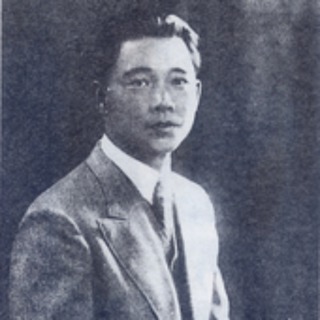
Chiang Kai Shek is Kidnapped

Chiang Kai Shek is Kidnapped


After the Long March, the Chinese Communists were mostly in northern Shaanxi, wanting a breather.


Japan had continued its aggression in China after it set up the puppet state of Manchukuo under Emperor Pu Yi. It manufactured incident after incident and had expanded its army’s reach into northern and northeast China. It was trying to influence Inner Mongolia and Hebei, around Beijing. It looked to set up warlords as puppet leaders under Japanese control.


Students and intellectuals in Beijing and other Chinese cities began protesting against the Japanese and against politicians that they perceived as being too friendly to Japan. It was a reminder of earlier demonstrations against Japan like the May Fourth movement of 1919.


The Communist Party and Comintern supported these student protests against Japan. The Soviet Union was very concerned by Japan’s aggression and the fact that Nazi Germany and Imperial Japan had signed an anti-Comintern pact in late 1936. Stalin wanted either an anti-Japanese China, or alternatively, a Communist controlled buffer state between it and Japan.


Chiang Kai-shek and his KMT government in Nanjing was prioritizing pacifying internal enemies before resisting foreign aggression. Chiang was not against resisting Japan. He had done so when Japan had attacked Shanghai and at other times, but Chiang Kai-shek's strategy was clear-cut. First, eliminate the internal threat posed by the Chinese Communists, then turn attention towards the aggressive expansion of Japan.


His subordinates, especially Generals Zhang Xueliang and Yang Hucheng had other ideas.


They then kidnapped Chiang Kai shek and placed him under house arrest in Xi'an. Negotiations ensued. Madame Chiang Kai Shek and Zhou Enlai both travelled to Xi'an. Eventually Chiang was released and Zhang Xueliang volunteered to travel with him back to Nanjing.


Zhang was then put under house arrest for 5 decades.


This ended the encirclement of the Chinese Communists and started the Second United Front. This time, they would focus on resisting Japanese expansion into China. But Japan was furious by this development and the Xian Incident helped cause the Second Sino-Japanese War.


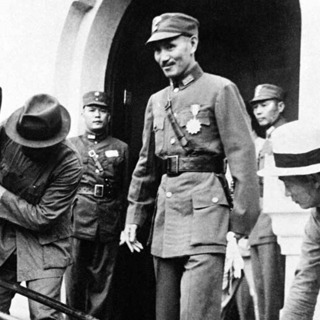
Image: "1937 China Nanking Chiang Kai-Shek" by manhhai is licensed under CC BY 2.0.

Hosted on Acast. See acast.com/privacy for more information.

Tämä jakso on lisätty Podme-palveluun avoimen RSS-syötteen kautta eikä se ole Podmen omaa tuotantoa. Siksi jakso saattaa sisältää mainontaa.

Jaksot(67)

The Wang Jingwei Regime: A Puppet Regime in Nanjing

The Wang Jingwei Regime: A Puppet Regime in Nanjing

In 1938, after the Battle of Wuhan, Wang Jingwei left Chongqing and the Republic of China team in Chongqing for Hanoi. He negotiated with Japanese officials and eventually set up a puppet regime know ...

30 Kesä 202428min
Living Under Japanese Occupation

Living Under Japanese Occupation

Japan controlled Taiwan as a colony from 1895 to 1945. During the Second Sino-Japanese War, Chinese language education and publications stopped and the Imperial Subject Movement tried to Japanize resi...

27 Touko 202429min
The Brilliance of Chairman Mao

The Brilliance of Chairman Mao

By the early 1940s, the Communists in Yan’an were feeling relatively secure. The Japanese advance in north China had not reached that area. The Sino-Japanese War and the United Front meant that Chiang...

7 Huhti 202420min
Hope and the Second United Front in Wuhan

Hope and the Second United Front in Wuhan

For ten months in 1938, Hankou in Wuhan was the center of China's Second United Front and defense against the Japanese invasion.Artistic expression, political parties and free speech all blossomed. Ne...

3 Maalis 202426min
The National Palace Museum Treasures During the Second Sino Japanese War

The National Palace Museum Treasures During the Second Sino Japanese War

The treasures of the National Palace Museum, originally the Forbidden City, followed China's path. They escaped the invading Japanese by leaving Beijing, first for Shanghai, then Nanjing and then foll...

12 Helmi 202455min
The Beginning of the Second Sino-Japanese War and the Nanjing Massacre

The Beginning of the Second Sino-Japanese War and the Nanjing Massacre

On July 7, 1937, the Second Sino-Japanese War and World War II began with the Marco Polo Bridge Incident. It is also known as the Lugou Bridge Incident. Within days of the small skirmish with 100 Chin...

15 Tammi 202425min
The Long March

The Long March

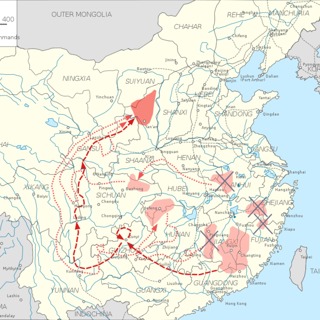
Zhou Enlai planned in secret the details of the Chinese Communist's escape from the encirclement of the Central Soviet. He identified a Guangdong warlord who preferred to save his troops rather than f...

25 Joulu 202341min

Suosittua kategoriassa Yhteiskunta

olipa-kerran-otsikko
seitseman
i-dont-like-mondays
siita-on-vaikea-puhua
sita
hupiklubi
ihme-ja-kumma
kaksi-aitia
poks
uutiscast
antin-palautepalvelu
mamma-mia
kolme-kaannekohtaa
gogin-ja-janin-maailmanhistoria
yopuolen-tarinoita-2
rss-palmujen-varjoissa
aikalisa
rss-murhan-anatomia
kummitusjuttuja
meidan-pitais-puhua