184: Fighting for Pharaoh (The Egyptian Army in the Age of Sety I)

184: Fighting for Pharaoh (The Egyptian Army in the Age of Sety I)

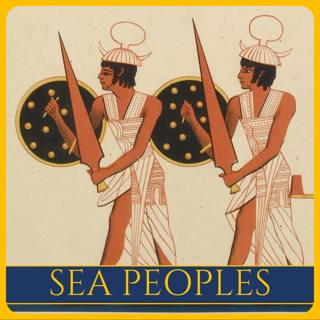
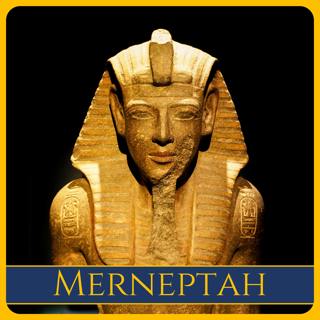
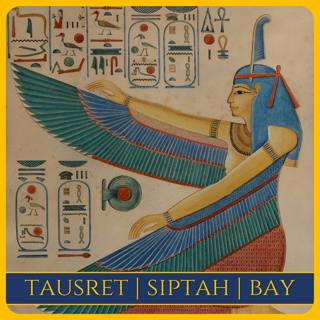
Sety I (Part 6): Mesha, Menfat, Pedjet, Pecherer. By 1300 BCE, Egyptians had developed a sophisticated, well-organised military system. Distinct branches and types of troops (infantry, archers, auxiliaries, and more) marched and fought in identifiable units. Their weapons survive in the archaeological record, and ancient texts and art reveal their equipment, behaviour, and battlefield roles. Today, we introduce the soldiers who won Sety I’s wars… Details and sources: Date: c. 1300 BCE. Website: www.egyptianhistorypodcast.com. Support the show via Patreon www.patreon.com/egyptpodcast. Make a one-time donation via PayPal payments. Music intro and interludes: Bettina Joy de Guzman. Interludes: Luke Chaos. Music outro: Keith Zizza. Texts: Kenneth Kitchen's Ramesside Inscriptions volume 1. Hieroglyph versions at Internet Archive, English translations at Abercromby Press. Peter Brand, Ramesses II: Egypt's Ultimate Pharaoh, out now from Lockwood Press. Select Bibliography: P. J. Brand, The Monuments of Seti I: Epigraphic, Historical and Art Historical Analysis (2000). P. J. Brand, Ramesses II: Egypt’s Ultimate Pharaoh (2023). A. H. Gardiner, ‘The Ancient Military Road between Egypt and Palestine’, The Journal of Egyptian Archaeology 6 (1920), 99–116. B. Heagren, ‘The Art of War in Pharaonic Egypt’, Unpublished PhD. Thesis, The University of Auckland (2010). M. Healy, Qadesh 1300 BC: Clash of the Warrior Kings (1993). K. A. Kitchen, Ramesside Inscriptions Translated and Annotated: Notes and Comments, I (Oxford, 1993). K. A. Kitchen, Ramesside Inscriptions Translated and Annotated: Translations, I (Wallasey, 2017). S. McDermott, ‘Ancient Egyptian Footsoldiers and Their Weapons: A Study of Military Iconography and Weapon Remains’, Unpublished PhD. Thesis, The University of Manchester (2002). E. F. Morris, The Architecture of Imperialism: Military Bases and the Evolution of Foreign Policy in Egypt’s New Kingdom (2005). W. J. Murnane, The Road to Kadesh: A Historical Interpretation of the Battle Reliefs of King Sety I at Karnak (1985). A. R. Schulman, ‘Military Rank, Title, and Organization in the Egyptian New Kingdom’, Unpublished PhD. Thesis, University of Pennsylvania (1962). A. J. Spalinger, Aspects of the Military Documents of the Ancient Egyptians (1982). A. J. Spalinger, War in Ancient Egypt: The New Kingdom (2005). A. J. Spalinger, ‘The Army’, in T. Wilkinson (ed.), The Egyptian World (New York, 2007), 118–131. The Epigraphic Survey, Medinet Habu, Volume I. Earlier Historical Records of Ramses III (1930). The Epigraphic Survey, Medinet Habu, Volume II. The Later Historical Records of Ramses III (1932). The Epigraphic Survey, Reliefs and Inscriptions at Karnak Volume 4: The Battle Reliefs of King Sety I (1986). Learn more about your ad choices. Visit megaphone.fm/adchoices

Tämä jakso on lisätty Podme-palveluun avoimen RSS-syötteen kautta eikä se ole Podmen omaa tuotantoa. Siksi jakso saattaa sisältää mainontaa.

Jaksot(369)

The Odyssey (2026) First Impressions

The Odyssey (2026) First Impressions

A few slightly rambling thoughts (NOT A FULL REVIEW) Video version available free on Patreon and YouTube https://youtu.be/5GYyfqFq__E Learn more about your ad choices. Visit megaphone.fm/adchoice...

17 Heinä 15min

Preserving Howard Carter & Tutankhamun (An Appeal from The Griffith Institute)

Preserving Howard Carter & Tutankhamun (An Appeal from The Griffith Institute)

The Griffith Institute preserves thousands of documents, plate photographs, and records of Howard Carter's excavation in the tomb of Tutankhamun. But funding cuts are threatening their work to digitis...

10 Heinä 9min

237: Drinking with Khonsu / The Dream Book

237: Drinking with Khonsu / The Dream Book

Ramessid Daily Life (Part 2). Why did a tomb-builder skip work for “drinking with Khonsu”? Why was Parahotep never invited to parties? And what did it mean if you dreamed about drinking wine? Records ...

6 Heinä 26min

Was Pharaoh literally a god? Listener Questions 1

Was Pharaoh literally a god? Listener Questions 1

Bonus episode. I took some listener questions in a livestream, and here they are. We cover topics like: Was pharaoh literally a god? How common was tattooing? Was there an ancient canal between the Ni...

30 Kesä 52min

Ramesses Eternal with Prof. Peter Brand

Ramesses Eternal with Prof. Peter Brand

Prof. Peter Brand joins us for one final conversation about Ramesses II: Egypt's "Ultimate Pharaoh." If you haven't read it, I highly recommend Peter's book Ramesses II: Egypt’s Ultimate Pharaoh (20...

22 Kesä 19min

236: Legends of Ramesses "the Great"

236: Legends of Ramesses "the Great"

How does Ramesses II stack up to his predecessors? Why did ancient writers connect him with the Trojan War? In this episode we explore tales of Ramesses, told in antiquity, and consider his legacy in ...

15 Kesä 30min

235: Ramesses the Great God

235: Ramesses the Great God

In 1226 BCE, his sixty-seventh year of rule, the long life of Ramesses II finally ended. We explore his final decades, the difficult life revealed by his mummy, his ascent to status of "living god," a...

8 Kesä 30min

234: Destroying Amarna / Splitting Heirs

234: Destroying Amarna / Splitting Heirs

Sometime in Ramesses II's reign, royal artisans dismantled the city of Akhet-Aten (Amarna). Carefully, methodically, they removed the talatat blocks and carted them away to the nearby town Hemenu (Her...

25 Touko 28min

Suosittua kategoriassa Yhteiskunta

olipa-kerran-otsikko
seitseman
siita-on-vaikea-puhua
sita
i-dont-like-mondays
poks
antin-palautepalvelu
hupiklubi
mamma-mia
kaksi-aitia
gogin-ja-janin-maailmanhistoria
kolme-kaannekohtaa
yopuolen-tarinoita-2
ihme-ja-kumma
aikalisa
rss-palmujen-varjoissa
loukussa
lahko
rss-haudattu
meidan-pitais-puhua