191: Sety I, Libya Minus One

191: Sety I, Libya Minus One

How the west was won. Around 1298 BCE, King Sety I (Men-ma’at-Ra) attacked the peoples of modern-day Libya and, in a supposedly swift victory, took many captives back to Egypt. The relationship between Libyans and ancient Egyptians is complicated, but we go in search of some answers… Date: c.1298 BCE (Sety I, year 6). Website: www.egyptianhistorypodcast.com. Support the show via Patreon www.patreon.com/egyptpodcast. Make a one-time donation via PayPal payments. Music intro/outro: “Godzilla theme” by Akira Ifukube, cover version by Luke Chaos. Music interludes by: Keith Zizza, Luke Chaos. Sety’s War Reliefs at Karnak: Available in Open Access at The University of Chicago. Select Bibliography: P. J. Brand, The Monuments of Seti I: Epigraphic, Historical and Art Historical Analysis (2000). P. J. Brand, Ramesses II: Egypt’s Ultimate Pharaoh (2023). W. A. Cooney, ‘Egypt’s Encounter with the West: Race, Culture and Identity’, Unpublished PhD. Thesis, University of Durham (2011). A. Dodson, Sethy I King of Egypt: His Life and Afterlife (2019). A. A. el Magd, ‘Dehumanization of the “Other:” Animal Metaphors of Defeated Enemies in the New Kingdom Military Texts’, Journal of the American Research Center in Egypt 52 (2016), 329–341. H. El Saady, ‘The Wars of Sety I at Karnak: A New Chronological Structure’, Studien zur Altägyptischen Kultur 19 (1992), 285–94. R. O. Faulkner, ‘The Wars of Sethos I’, The Journal of Egyptian Archaeology 33 (1947), 34–9. J. C. M. García, ‘Ḥwt jḥ(w)t, The Administration of the Western Delta and the “Libyan Question” in the Third Millennium BC’, Journal of Egyptian Archaeology 101 (2015), 69–105. K. A. Kitchen, Ramesside Inscriptions Historical and Biographical, I (Oxford, 1975). K. A. Kitchen, ‘The Arrival of the Libyans in Late New Kingdom Egypt’, in A. Leahy (ed.), Libya and Egypt c.1300–750 BC (1990), 15–27. K. A. Kitchen, Ramesside Inscriptions Translated and Annotated: Translations Volume I: Ramesses I, Sethos I and Contemporaries (Second Publication edn, 2017). E. F. Morris, The Architecture of Imperialism: Military Bases and the Evolution of Foreign Policy in Egypt’s New Kingdom (2005). W. J. Murnane, The Road to Kadesh: A Historical Interpretation of the Battle Reliefs of King Sety I at Karnak (1985). D. O’Connor, ‘The Nature of Tjemhu (Libyan) Society in the Later New Kingdom’, in A. Leahy (ed.), Libya and Egypt c.1300–750 BC (1990), 29–113. A. J. Spalinger, ‘The Northern Wars of Seti I: An Integrative Study’, Journal of the American Research Center in Egypt 16 (1979), 29–47. A. J. Spalinger, War in Ancient Egypt: The New Kingdom (2005). The Epigraphic Survey, Medinet Habu, Volume I. Earlier Historical Records of Ramses III (1930). The Epigraphic Survey, Medinet Habu, Volume II. The Later Historical Records of Ramses III (1932). The Epigraphic Survey, Reliefs and Inscriptions at Karnak Volume 4: The Battle Reliefs of King Sety I (1986). Learn more about your ad choices. Visit megaphone.fm/adchoices

Tämä jakso on lisätty Podme-palveluun avoimen RSS-syötteen kautta eikä se ole Podmen omaa tuotantoa. Siksi jakso saattaa sisältää mainontaa.

Jaksot(367)

Ramessid Biographies with Prof. Elizabeth Frood

Ramessid Biographies with Prof. Elizabeth Frood

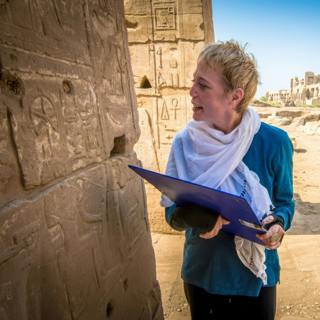
Elizabeth Frood is Associate Professor of Egyptology and Director of the Griffith Institute at the University of Oxford, UK. In a lively discussion, Dr. Frood shares her insights into ancient lives an...

13 Helmi 202537min
202: A Valley of the Queens & The Womb of Hathor

202: A Valley of the Queens & The Womb of Hathor

The Place of Beauties (Ta-Set-Neferu). In the reigns of Ramesses I and Sety I (c.1304—1292 BCE), the Valley of the Queens finally earned its moniker. Having been a burial ground for royal children and...

31 Tammi 202536min
A Memory of Gods with Dr. Tamara Siuda

A Memory of Gods with Dr. Tamara Siuda

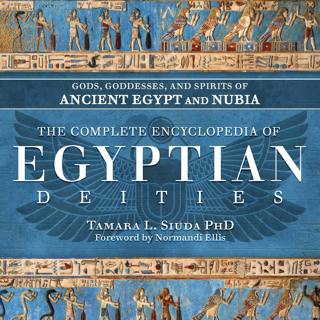
Understanding the deities requires us to move beyond inherited preconceptions and prejudices. Fortunately, there are many gods worthy of the effort. From the deified Sphinx Horemakhet, to the meme-lor...

24 Tammi 20251h 34min

201: When Hathor Destroyed the World (The Book of the Sky Cow)

201: When Hathor Destroyed the World (The Book of the Sky Cow)

The Book of the Sky Cow. In the waning years of the 18th Dynasty (the reign of Tut’ankhamun) royal artisans began decorating tombs and funerary equipment with a new text. Sometimes known as “The Destr...

17 Tammi 202551min
Dendera: Temple of Time with José M. Barrera

Dendera: Temple of Time with José M. Barrera

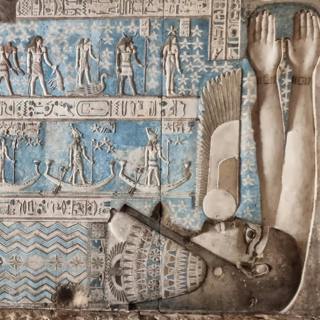
Hathor's temple at Dendera is one of the best in Egypt. Constructed in the late 1st Millennium BCE (but with roots stretching back to the Old Kingdom), Hathor’s house preserves amazing art, hieroglyph...

10 Tammi 20251h 12min

200: 198: Deir el Medina - The Golden Age (Part 3)

200: 198: Deir el Medina - The Golden Age (Part 3)

Livestream recording. The tombs of Deir el-Medina are some of the most vibrant and beautiful in Waset (Thebes). How did they build them, which artists decorated them, and how did folk like Sennedjem p...

2 Tammi 202535min

199: The Winter War

199: The Winter War

Sety’s final campaign. In winter of year 8 (approx. December 1296 BCE), the King of Egypt Sety I received news: rebellion in the south. In a land called Irem, now in modern Sudan, locals were resistin...

20 Joulu 202436min

198: Deir el Medina - The Golden Age (Part 2)

198: Deir el Medina - The Golden Age (Part 2)

Livestream recording. The village of Deir el-Medina first arose in the 18th Dynasty (c.1550—1310 BCE), but the historical records really multiply in the 19th and 20th Dynasties (c.1310—1070 BCE). In t...

13 Joulu 20241h 13min

Suosittua kategoriassa Yhteiskunta

olipa-kerran-otsikko
sita
kaksi-aitia
i-dont-like-mondays
ihme-ja-kumma
hupiklubi
siita-on-vaikea-puhua
uutiscast
poks
antin-palautepalvelu
gogin-ja-janin-maailmanhistoria
rss-murhan-anatomia
mamma-mia
kolme-kaannekohtaa
yopuolen-tarinoita-2
aikalisa
rss-palmujen-varjoissa
lahko
meidan-pitais-puhua
rss-haudattu