Is Productivity Technology Going Too Far?
Your Time, Your Way26 Helmi 2024

Is Productivity Technology Going Too Far?

Where does technology help, and where does it hinder your productivity? That’s what we’ll be exploring in this week’s episode.

You can subscribe to this podcast on:

Podbean | Apple Podcasts | Stitcher | Spotify | TUNEIN

Links:

Email Me | Twitter | Facebook | Website | Linkedin

The Working With… Weekly Newsletter

The FREE Beginners Guide To Building Your Own COD System

Carl Pullein Learning Centre

Carl’s YouTube Channel

Carl Pullein Coaching Programmes

The Working With… Podcast Previous episodes page

Script | 313

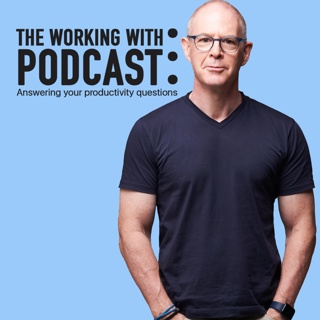
Hello, and welcome to episode 313 of the Working With Podcast. A podcast to answer all your questions about productivity, time management, self-development and goal planning. My name is Carl Pullein, and I am your host for this show.

Over the last ten years or so, there’s been an explosion in the world of productivity technology. Prior to around 2010, most of our technology use was to create documents and presentations and send and reply to emails. We were in control, and technology served us.

Today, technology is creeping more and more into our lives. Now, you can use apps that will look at your task manager and your calendar and tell you when to work on what. Microsoft Outlook suggests times for focused work (not taking a walk or a rest, I notice), and many developers are promising more and more automation.

The thing is do we really need that?

When it comes to time management and productivity, I believe it’s important to retain control. My calendar or task manager telling me to work on the report when I feel exhausted is only going to leave me feeling guilty if I do what’s best for me—taking a rest.

Now, don’t get me wrong here. I think technology is great, and one of my favourite features of Spotify and Apple Music is how these apps use my listening history to create random playlists. I love playing those playlists. I like how YouTube serves up recommendations, again, based on my watch history. This is useful. I find documentaries I would otherwise have missed. However, I get to choose what to watch and when.

I was reminded of this recently with the sad death of BBC Radio 2’s DJ, Steve Wright. I was able to open YouTube and type in Steve’s name and was able to listen to some of his most iconic moments. I discovered long-lost recordings of him—stuff I would never have been able to find ten years ago.

These are some examples of where technology works and enhances our lives.

But (and there are many buts here) that nicely leads me to this week’s question. Which means, it’s time to hand you over to the Mystery Podcast Voice for this week’s question.

This week’s question comes from Scott. Scott asks, hi Carl, what do you think of apps like Motion and others that will organise your appointments and tasks for you so you no longer need to do any planning?

Hi Scott, thank you for your question.

Let’s look at where technology has an advantage. Communications. Digital communications are brilliant. They are instant, and because of that, the number of phone call interruptions has significantly reduced over the years.

Phone call interruptions are the worst, aren’t they? Your phone rings, and it’s like an alarm call that we feel obligated to answer. We have no idea what the caller is calling about or how long it will take, and that creates its own anxieties.

Today, I can see who’s calling and can decide whether to answer or not. I can also put my phone on silent so I don’t get that horrendous shock when the phone rings.

And I know a lot of you may have a downer on email, but compared to what we had thirty years ago, it’s far better. And, no, we are not getting more emails than letters. It’s about the same. The difference is with letters, we did not feel they had to be replied to instantly, and we could take our time.

Although, as an aside, in the past, large companies employed people to work in the mail room. These wonderful people’s job was to sort the mail, so you only got the correspondence that mattered. Sadly, these people are gone now, and we are left to sort our own mail. That’s where the problem is. A large proportion of people don’t set up rules in their email service to filter out the rubbish from the stuff that matters.

Give yourself a couple of hours to set up some rules, and in effect, you will have given yourself your own mail room staff.

Digital calendars are fantastic. Rather than having to carry around a large diary with all your appointments, you can now have your calendar on all your digital devices, which makes it so easy to see where you should be and with whom. It’s also a lot easier to make appointments with people with services such as Calendarly—where you send a link to the other person, and they can choose the best time for them based on your availability.

Now, things go wrong when you blindly accept meeting requests. When we had paper diaries, we had to manually enter the appointment, and we could see instantly we had already committed to something else. We either asked for another date or cancelled the previous appointment.

Today, I see so many people with conflicts in their calendars where they are double—and even triple-booked. I mean, come on. Your digital calendar makes it easy to see your conflicts. Sort them out. You cannot be in two meetings at the same time. Don’t let that happen.

The problem here, it’s far more difficult to rearrange a meeting or appointment after you have accepted it. When you get a meeting request, and it conflicts with another commitment, decline it. Or, if it’s more important than the commitment you currently have, give yourself a few minutes to sort out the conflict.

And, technology has really helped with creating reports, presentations, books and videos. Technology has brought previously prohibitively expensive tools to us all for less than $100 a year.

When I look back over the last ten years, I have been able to produce four books, over a thousand videos, 300 podcasts and millions of words in blog posts and articles. It’s mind-blowing what a computer and an internet connection give us the ability to do.

And yet, I suppose it’s human nature to go too far. It’s like discovering chocolate cake for the first time. That first experience leads to you wanting more and more and more. Forget vegetables, fruit and other healthy foods. I want cake!!!! And more of it.

Of course, only eating cake will have negative consequences, and I feel this is where time management and productivity technology is beginning to go. Just because you can doesn’t mean you should.

As I alluded to, allowing your calendar to schedule your day for you is not necessarily a good thing. Your calendar does not know if you have the flu or didn’t sleep well last night. It doesn’t know whether you had a fight with your partner over the breakfast table or had a car accident on the way to work. All it knows is you have a ton of work to do in your task manager, and you have eight meeting requests. It’s programmed to schedule all that for you.

Perhaps doing all that work and attending all those meetings is not the best thing you could do that day. Maybe the best thing you could do is go back to bed or take a walk to clear your head.

On planning, I think we need to be careful here. What makes humans different from other mammals is our ability to make choices. We can choose to do one thing over an alternative. Now, each choice has a consequence, and we have sufficient intelligence to weigh the consequences against each other. Louis, my little dog, does not have that ability. Sure, he can choose to attack his squeaky ball or not, but he has no concept of the consequences.

If we allow technology to make those choices for us and we blindly follow them, we lose the very essence of being human—our freedom to make decisions about what to do.

Doing your own planning allows you to choose what you will work on and when. For example, last night, I slept well, and I had two appointments cancel on me this morning. This gave me two extra hours I was not expecting and I chose to clean up my office and write this script in that time. I didn’t need to go to my task manager to make this decision. I looked around my office and realised things needed to be tidied up. That took me twenty minutes, and this script will take around ninety minutes.

I could have chosen to read, take Louis out for a walk or go back to bed. But I chose to do work. I wanted to work, and I loved it. If a computer was telling me to do this and then that, it would take the joy out of making decisions.

Task managers are great for collecting tasks and for having everything in a central place. Where task managers are less good is showing us what needs to be worked on and when. Only you know what’s important right now and how much energy you have to do your work.

For example, over the years, I’ve come to learn when I am at my most focused and when I struggle with focus. Afternoons are a struggle if I need to sit down and focus. Yet, I find focusing very easy in the morning and later at night. This means I can structure my days based on when I know I will likely be at my best for doing specific types of work. An app based on AI is going to be using data from all over the place and will likely be based on the average of other people. You are not the average of other people. You are you, and you are unique.

When it comes to digital note-taking and information storage, technology is fantastic! You can quickly grab an idea, a webpage or a document and save it into your notes. You can then later do a search for that idea or document on any device in any location, and within a second, you have it in front of you. That’s way better than how we used to do it with large, cumbersome filing cabinets that were in a static location. Finding something often took hours.

I also like the idea that AI is then able to summarise that information into bite-sized chunks. That helps us. We have the choice to be able to go into the document for a deeper read or read the summary.

However, with all that said, technology helps us when it can speed things up that don’t need us to make decisions or choices. Technology does not help us when it starts to make those decisions and choices for us. That is where we should push back.

This means your planning should always be done by you. You decide what to work on based on the information you have to hand. You can make it fun by pulling out your pens, highlighters, and a pad of paper and letting your brain think without technology influencing your decisions.

Great thinkers from the past scribbled their thoughts down on paper, and humanity is so much the better for it today. You don’t want to lose that ability—the ability to think, decide and make choices of your own. It’s what makes you special and unique.

Thank you, Scott, for your question and that you to you too for listening. It just remains for me now to wish you all a very, very productive week.

Jaksot(200)

How To Plan Out Projects

How To Plan Out Projects

How do you plan out your projects? Not just your professional ones, but your personal ones too. That’s what we will be exploring in this week’s episode.    You can subscribe to this podcast on: Podbea...

21 Maalis 202214min

How To Time Block Efectively

How To Time Block Efectively

This week’s question is about time blocking effectively.    You can subscribe to this podcast on: Podbean | Apple Podcasts | Stitcher | Spotify | TUNEIN   Links: Email Me | Twitter | Facebook | Websit...

14 Maalis 202212min

How To Find Your Purpose

How To Find Your Purpose

This week’s podcast is about identifying your purpose—possibly the most difficult area of focus to define. You can subscribe to this podcast on: Podbean | Apple Podcasts | Stitcher | Spotify | TUNEIN ...

7 Maalis 202212min

’I’m Just Not a Productive kind Of Person’

’I’m Just Not a Productive kind Of Person’

This week, we’re entering into the realm of personal identity and how successful and productive people think and I explain why this is important.    You can subscribe to this podcast on: Podbean | App...

28 Helmi 202213min

How To Be Motivated Every Day

How To Be Motivated Every Day

Podcast 219 This week’s question is about the tyranny of the to-do list. Something I’m confident we’ve all felt at times.   You can subscribe to this podcast on: Podbean | Apple Podcasts | Stitcher | ...

21 Helmi 202215min

Work/Life Balance -V- Work/Life Integration

Work/Life Balance -V- Work/Life Integration

This week’s question is about how to balance your work life with your professional life.   You can subscribe to this podcast on: Podbean | Apple Podcasts | Stitcher | Spotify | TUNEIN   Links: Email M...

14 Helmi 202212min

Why I Switched from Getting Things Done

Why I Switched from Getting Things Done

This week’s episode is a question that came about because of my recently updated Time Sector System course. You can subscribe to this podcast on: Podbean | Apple Podcasts | Stitcher | Spotify | TUNEIN...

7 Helmi 202214min

Do This To Be More Productive

Do This To Be More Productive

This week’s question is about deciding what to work on and prioritising   You can subscribe to this podcast on: Podbean | Apple Podcasts | Stitcher | Spotify | TUNEIN   Links: Email Me | Twitter | Fac...

31 Tammi 202214min

Suosittua kategoriassa Liike-elämä ja talous

sijotuskasti
mimmit-sijoittaa
rss-rahapodi
psykopodiaa-podcast
ostan-asuntoja-podcast
hyva-paha-johtaminen
rss-rahamania
herrasmieshakkerit
rss-lahtijat
rahapuhetta
rss-tarkeista-asioista-2
rss-sami-miettinen-neuvottelija
rss-muutoksenanatomiaa-podcast
rss-rentotapaus
rss-doulapodi
rss-bisnesta-bebeja
rss-sisalto-kuntoon
kultaiset-hoitajat
rss-uppoava-vn-laiva
rss-bisneksen-pehmea-puoli