Copland Symphony No. 3

Copland Symphony No. 3

There has always been a debate about "The Great American Symphony." By the time most prominent American composers got around to writing large scale symphonic works, the symphony had very nearly gone out of fashion. To many musicians and thinkers, the symphony had passed on with the death of Mahler. With the advent of atonality, which essentially destroyed the developmental structure that symphonies rested on, there seemed to be nowhere for the symphonic genre to go. The traditional udnerstanding is that composers like Shostakovich, Prokofiev, and Sibelius, among others, picked the symphony back up from its deathbed and resurrected it. But there was a generation of American composers also writing symphonies around this time, and many of them have never quite gotten the consideration they deserve. Ives wrote 4 brilliant symphonies, Bernstein wrote 3 ambitious symphonies, there are the symphonies by the first generation of Black American composers, namely William Dawson's Negro Folk Symphony, and then there are much less known symphonies by composers like Roy Harris, which were huge successes at the time of their premiers, but which have faded into obscurity. Despite many strong efforts, very few American symphonies have made their way into the standard "canon." That is, except for one: Copland's 3rd Symphony, which is almost certainly the most played American symphony. It was written as World War II was coming to an end, and it is one of Copland's most ardent and life-affirming works. Naturally, connections were made to the Allied triumph in World War II, but Copland insisted that the symphony wasn't a reflection of the era, writing: "if I forced myself, I could invent an ideological basis for the Third Symphony. But if I did, I'd be bluffing—or at any rate, adding something ex post facto, something that might or might not be true but that played no role at the moment of creation."

Whatever the inspiration, this symphony has become one of Copland's most enduring works, even though it is also in many ways one of his most complex. It is a massive work, nearly 40 minutes in length, and it requires a huge and virtuosic orchestra. It also features some of Copland's most recognizable tunes, including of course, the Fanfare for the Common Man, which permeates the symphony and is in many ways its central theme. So today, on this Patreon Sponsored episode, we'll dig deep into this symphony, mapping out its unusual form, and savoring the energy, optimism, and creativity with which Copland attacked the well-worn genre of the symphony. Join us!

Jaksot(283)

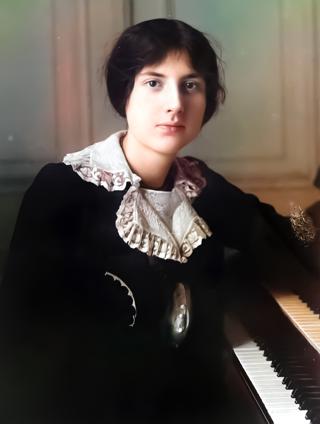
The Life and Music of Lili Boulanger

The Life and Music of Lili Boulanger

The history of classical music is littered with the stories of great composers who tragically died young. The composer I've been talking about for the last two episodes, Franz Schubert, died at 31. Mo...

4 Heinä 202447min
Schubert Sonata in B Flat, D. 960 (Part 2)

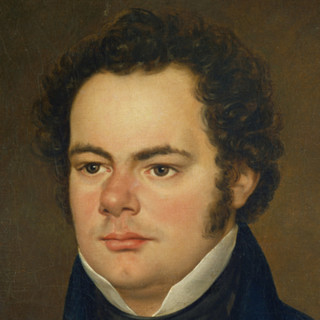
Schubert Sonata in B Flat, D. 960 (Part 2)

There are a few tropes when it comes to Schubert's late music. The pieces are very long. They have four movements. The first two movemnts are expansive, magisterial explorations of the human psyche, ...

20 Kesä 202454min
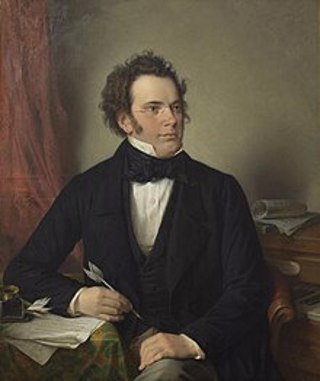
Schubert Sonata in B Flat, D. 960 (Part 1)

Schubert Sonata in B Flat, D. 960 (Part 1)

For a long time I've received emails and messages from people asking, and sometimes demanding, that I explore the solo piano repertoire. Other than a look at the Goldberg Variations of Bach, I've basi...

6 Kesä 202440min

Mozart Piano Concerto in D Minor, K. 466

Mozart Piano Concerto in D Minor, K. 466

H.C. Robbins Landon, the great musicologist, once wrote about Mozart that his music was "an excuse for mankind's existence and a small hope for our ultimate survival." I couldn't agree more, especiall...

24 Touko 202448min

What is a Mode?

What is a Mode?

My first interaction with the musical term modes was Leonard Bernstein's brilliant Young People's Concert, also called What is a Mode? In that show, Bernstein showed how modes are an essential part of...

9 Touko 202444min
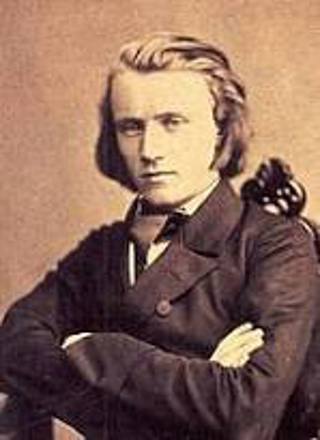
Brahms Piano Concerto No. 1

Brahms Piano Concerto No. 1

In 1857, Brahms wrote to his friend Joseph Joachim about his first Piano Concerto, saying, " "I have no judgment about this piece anymore, nor any control over it." Brahms first began sketching his f...

25 Huhti 20241h 3min

Fast, Furious, Fortissimo

Fast, Furious, Fortissimo

Very often, when I tell people that I'm a classical musician, I am told, "wow, I love classical music! It's so relaxing!" I think almost all classical musicians have heard that before, and you know wh...

12 Huhti 202446min

Suosittua kategoriassa Viihde

anni-jaajo
tuplakaak
grekovit
hei-baby-3
terveisia-perheesta
the-harlin-show
dear-shirly
antin-palautepalvelu
bella-table
antin-elokuvakerho
verhon-takaa
nonsensepodi
dear-shirly-ja-arttu
ootsa-kuullut-tasta-2
hollywood-love-stories-2
get-jassud
tahtitehdas
tervo-halme
everypodi
terkuin-jenna