Bonus: The Global Story
A bonus episode from The Global Story podcast: Washington’s antitrust cases against Amazon, Apple, Google and Meta The US government is suing some of the biggest tech companies on the planet – Amazon, Apple, Google and Meta – in antitrust cases. The face of Washington’s crackdown is Federal Trade Commission Chair Lina Khan, the youngest person ever to hold the post.So, who is the woman taking on Silicon Valley? And can she succeed? To answer these questions, host Adam Fleming speaks the BBC's North America business correspondent Michelle Fleury and former North America tech reporter James Clayton.
12 Huhti 202426min
From the Archive: Heart and Soul - Faith, terrorists and mercy at Guantanamo
An episode of Heart and Soul from our Archive. Dr Jennifer Bryson interrogated suspected Al-Qaeda terrorists at the infamous Guantanamo Bay. She worked at the detention centre in Cuba for two years and says that some of the inmates bragged openly about helping to organise the terrorist attacks of 9/11 that killed 3,000 people. Bryson was the first woman to take up the role of lead interrogator at Guantanamo, and the first who was not a member of the military. She would carry out interrogations herself but was also responsible for signing off methods and techniques used by other interrogators. After some time, she started to feel uneasy about some of the 'enhanced interrogation' methods she was asked to approve, such as playing extremely loud music to inmates for prolonged periods, exposing them to strobe lighting, etc. In her gut, she felt something was not right. She says it was her faith-formed conscience that led her to deny her colleagues’ requests to use such interrogation techniques.What are the moral challenges of this work for a person of faith? Are 'enhanced interrogation techniques' ever justified? What if these methods help to prevent more deaths in the future? In this edition of Heart & Soul for the BBC World Service, Colm Flynn explores these questions with Dr Jennifer Bryson. He discovers how her faith guided her through what she regards as the most radical time of her life.Producer/ Presenter: Colm Flynn Series Producer: Rajeev Gupta Production Coordinator: Mica Nepomuceno Editor: Helen Grady
12 Huhti 202426min
Bonus: What in the World
A bonus episode from the What in the World podcast. When it comes to elephant conservation, Botswana is the world leader. It is now home to more than 130,000 elephants — or around a third of the world's elephant population. But this growing number poses major problems for humans: the animals destroy homes and crops, and even injure and kill people. To manage its elephant population, Botswana allows so-called “trophy hunting”. Hunters from abroad pay for permits to shoot and kill elephants — and can then take a piece of the elephant home. Botswana then re-invests this income into conservation efforts. It’s a controversial practice. Animal rights activists want Botswana’s government to seek alternatives to trophy hunting, which they deem as cruel. And in Germany — Europe’s biggest importer of African elephant trophies — the government has suggested there should be stricter limits on importing them. The president of Botswana recently threatened to send 20,000 elephants to Germany as part of the dispute. Shingai Nyoka, a BBC reporter in neighbouring Zimbabwe, explains the laws that govern trophy hunting and why they’re up for debate. And John Murphy, a BBC News reporter in London, recounts his experience visiting an “elephant corridor” — regular routes taken by elephants in their daily commute between their feeding grounds on one side and water on the other. Instagram: @bbcwhatintheworld WhatsApp: +44 0330 12 33 22 6 Email: whatintheworld@bbc.co.uk Presenter: Hannah Gelbart with Shingai Nyoka Producers: Alex Rhodes and William Lee Adams Editors: Verity Wilde and Simon Peeks
11 Huhti 202416min
Forward Thinking: Jocelyn Bell Burnell
In 1967, Jocelyn Bell Burnell discovered a previously unknown kind of star, the Pulsar. A Nobel prize followed, but not for Jocelyn; her male boss took the honour. Jocelyn has never been bitter about the award, but says that today things should have moved much further than they have. More women are working in space research, but is it enough? In conversation with Nuala McGovern, she argues that different perspectives are essential for moving the science forward. One of these is a more global, inclusive vision to exploring the cosmos. India and China have prestigious space programmes, and the low-key space missions of Japan and South Africa collaborate with international partners from around the world. We discuss how global enthusiasm for space research can be used to propel change. Jocelyn Bell Burnell is professor of astrophysics at the University of Oxford.This is the second of a series of four programmes from the Oxford Literary Festival, presented by Nuala McGovern, produced by Julian Siddle.Recorded in front of an audience at Worcester College Oxford.
10 Huhti 202449min
Assignment: New Caledonia - new agreement needed
New Caledonia is an island archipelago in the south Pacific. It has an incredible diversity of birds and plants. Its history includes a period serving as a 19th Century penal colony for the French colonisers and being an allied naval base during World War Two. An agreement signed 26 years ago about how the islands are run is expiring. But talks to make a new one have stalled, as the opposing sides - French settlers and indigenous Kanak - both demand their rights. Peter Hadfield has been to New Caledonia to see if a new deal can be made.
9 Huhti 202426min
In the Studio: Ellie Simmonds
Public swimming pools are more than just concrete and water. Often, they are the heart of a community, a place to exercise, to meet people and connect. Paralympic gold medallist Ellie Simmonds explores what it takes to design and build a swimming pool, and asks why they are so important in a post-pandemic era. She joins award-winning Dutch architects VenhoevenCS as they sign off their biggest project to date - the aquatic centre for Paris 2024. Their lead architects talk us through their plans for the new pool, looking at sustainability, accessibility and safety. She also hears from British architect, author and swimming advocate Chris Romer Lee about the importance of public pools, and why he thinks more of us should be getting into the water.
8 Huhti 202426min
El Salvador's missing children
During El Salvador’s brutal civil war hundreds of children were separated from their families. Some were seized by soldiers during military operations against left-wing rebels, and later found living with new families in Europe and North America. Others were given up for adoption by mothers forced into poverty or displaced by the conflict. Three decades on some of those adopted are trying to piece together their lives and find their birth relatives. Former BBC correspondent in Central America, Mike Lanchin, follows their dramatic stories. Mike meets Jazmin who was raised in France and two sisters who managed to locate the son of one of their younger siblings and Flor who has long struggled to understand why her birth mother gave her up.
7 Huhti 202452min
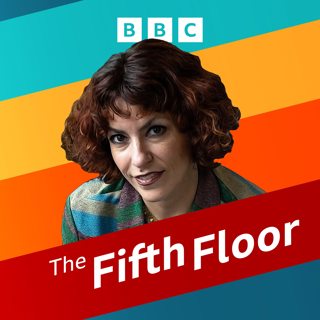
The Fifth Floor: My Ramadan
Ramadan is the ninth month of the Islamic calendar. It’s a period of prayer, celebrations and community gatherings and Muslims worldwide observe it by fasting from dawn to sunset. As this year’s Ramadan draws to a close, Faranak Amidi is joined by three BBC World Service colleagues who share their personal experiences and the stories that made headlines in their countries during this year’s celebrations.Asif Farooqi, Aalia Farzan and Deena Easa have been looking at how conflict, natural disasters and the cost-of-living crisis are impacting people in Pakistan, Afghanistan and Gaza. Plus... Ramadan cricket, why do people want to get married during the Holy Month, and the TV series that everyone’s talking about.Produced by Alice Gioia and Caroline Ferguson(Image: Presenter Faranak Amidi. Credit: Tricia Yourkevich)
6 Huhti 202426min