John Steinberg, “All the Tsar’s Men: Russia’s General Staff and the Fate of the Empire, 1898-1914” (Johns Hopkins UP, 2010)

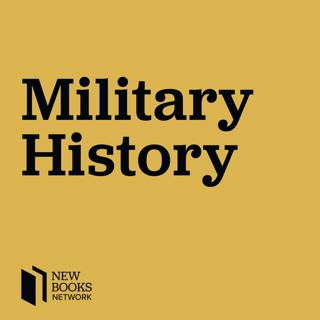
John Steinberg, “All the Tsar’s Men: Russia’s General Staff and the Fate of the Empire, 1898-1914” (Johns Hopkins UP, 2010)

The Bolshevik Revolution of 1917 was the most important political event of the twentieth century (no Revolution; no Nazis; no Nazis, no World War II; no World War II, no Cold War). It’s little wonder, then, that historians have expended oceans of effort and ink trying to explain why and how it happened. The answer is complex, but it boils down to this: Nicholas II’s armies had a rough time of it in World War I, his regime lost credibility, the hungry cities revolted, and the Bolsheviks usurped power in an armed coup. The key event was, then, the Russian loss to the Germans on the Eastern Front. Surprisingly, the Russian defeat –arguably the second most important political event of the twentieth century because it triggered the first–has not been widely studied. For my generation of Russian historians (and, I should add, the one that preceded it), the Revolution–the last, best hope of mankind to many–was a sexy topic indeed; the failure of the Russian Imperial Army, not so much. So we were left in the dark (or, rather, left ourselves in the dark). There were, however, historians who went against this grain. Among them are (to name only a few and those who write in English): John Bushnell, William Fuller, Peter Gatrell, Hubertus Jahn, Eric Lohr, Bruce Menning, David Rich, David Schimmelpenninck van der Oye, Norman Stone, Allen Wildman and our guest today John Steinberg. Steinberg’s wonderful new book All the Tsar’s Men: Russia’s General Staff and the Fate of the Empire, 1898-1914 (Johns Hopkins/Wilson Center, 2010) is a significant contribution to our understanding of the roots of the Russian defeat in World War I. His focus is the Imperial General Staff and its struggle (failed, as it turned out) to reform itself and the army that it commanded. As Steinberg points out, their task was a difficult one, made much more so by Russia’s all-encompassing (and to a considerable degree self-imposed) backwardness. The leaders of the General Staff were smart people. They knew what to do to make the Imperial Army a first-rate fighting force. Under other leadership, they might have succeeded in modernizing the army. But Nicholas did not lead, and so nothing could be done. Autocracies depend on autocrats, and Russia had none when it needed one most. Please become a fan of “New Books in History” on Facebook if you haven’t already. Learn more about your ad choices. Visit megaphone.fm/adchoices Support our show by becoming a premium member! https://newbooksnetwork.supportingcast.fm/military-history

Jaksot(1621)

Colleen M. Moore, "The Peasants' War: Russia's Home Front in the First World War and the End of the Autocracy" (McGill-Queen's UP, 2025)

Colleen M. Moore, "The Peasants' War: Russia's Home Front in the First World War and the End of the Autocracy" (McGill-Queen's UP, 2025)

During the First World War, Russia relied on the mass mobilization of its peasant population. In the summer of 1914, approximately four million peasants answered the state’s call to arms, while the mi...

14 Helmi 55min

Amos Fox and Franz-Stefan Gady, "Multidomain Operations: The Pursuit of Battlefield Dominance in the 21st Century" (Howgate Publishing, 2026)

Amos Fox and Franz-Stefan Gady, "Multidomain Operations: The Pursuit of Battlefield Dominance in the 21st Century" (Howgate Publishing, 2026)

In Multidomain Operations: The Pursuit of Battlefield Dominance in the 21st Century (Howgate Publishing Limited, 2026), Amos Fox and Franz-Stefan Gady challenge one of modern war’s most influential do...

14 Helmi 1h 51min

Claire Morelon, "Streetscapes of War and Revolution: Prague, 1914–1920" (Cambridge UP, 2024)

Claire Morelon, "Streetscapes of War and Revolution: Prague, 1914–1920" (Cambridge UP, 2024)

Prague entered the First World War as the third city of the Habsburg empire, but emerged in 1918 as the capital of a brand new nation-state, Czechoslovakia. In Streetscapes of War and Revolution: Prag...

13 Helmi 42min

Mark Stout, "World War I and the Foundations of American Intelligence" (UP of Kansas, 2023)

Mark Stout, "World War I and the Foundations of American Intelligence" (UP of Kansas, 2023)

Ask an American intelligence officer to tell you when the country started doing modern intelligence and you will probably hear something about the Office of Strategic Services in World War II or the N...

11 Helmi 1h 12min

Rosina Buckland and Oleg Benesch, "Samurai" (British Museum, 2025)

Rosina Buckland and Oleg Benesch, "Samurai" (British Museum, 2025)

Samurai (British Museum Press 2026) is a richly illustrated volume co-authored by exhibition curator Rosina Buckland (British Museum) and Oleg Benesch (York) to accompany the special exhibition "Samur...

7 Helmi 1h 11min

Andrew Monaghan, "Blitzkrieg and the Russian Art of War" (Manchester UP, 2025)

Andrew Monaghan, "Blitzkrieg and the Russian Art of War" (Manchester UP, 2025)

A cutting-edge investigation of how Russia makes war. Russian strategy in the twenty-first century has been described in terms of 'hybrid' warfare, an approach characterised by measures short of war,...

3 Helmi 1h 41min

Peter Stansky, "The Socialist Patriot: George Orwell and War" (Stanford UP, 2023)

Peter Stansky, "The Socialist Patriot: George Orwell and War" (Stanford UP, 2023)

Few English writers wielded a pen so sharply as George Orwell, the quintessential political writer of the twentieth century. His literary output at once responded to and sought to influence the tumult...

2 Helmi 43min

Nicole Wegner, "Martialling Peace: How the Peacekeeper Myth Legitimises Warfare" (Edinburgh UP, 2023)

Nicole Wegner, "Martialling Peace: How the Peacekeeper Myth Legitimises Warfare" (Edinburgh UP, 2023)

Martialling Peace: How the Peacekeeper Myth Legitimises Warfare (Edinburgh University Press, 2023) by Dr. Nicole Wegner is not a book about peacekeeping practices. This is a book about storytelling, f...

1 Helmi 50min

Suosittua kategoriassa Yhteiskunta

olipa-kerran-otsikko
sita
kaksi-aitia
ihme-ja-kumma
siita-on-vaikea-puhua
i-dont-like-mondays
uutiscast
gogin-ja-janin-maailmanhistoria
poks
antin-palautepalvelu
kolme-kaannekohtaa
mamma-mia
rss-murhan-anatomia
yopuolen-tarinoita-2
aikalisa
rss-nikotellen
loukussa
meidan-pitais-puhua
rss-palmujen-varjoissa
naakkavalta