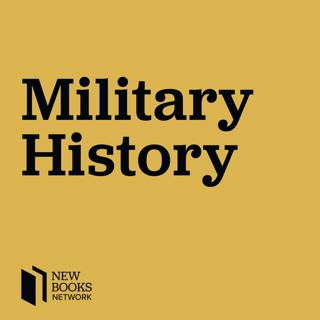
Michael Matheny, “Carrying the War to the Enemy: American Operational Art to 1945” (University of Oklahoma Press, 2011)

Michael Matheny, “Carrying the War to the Enemy: American Operational Art to 1945” (University of Oklahoma Press, 2011)

Ask many military historians about the origins of American operational art and many will place it sometime after the Second World War. Conventional wisdom has long held that the American military only developed a rough understanding of operations – the planning and conduct of large-scale (Corps-size or greater) coordinated offensive and defensive actions – in the twin crucibles of the European Theater of Operations and in the US Navy’s drive across the Central Pacific. These traditionalist accounts have generally put the United States Army in the role of either being reluctant students, schooled in the nuances of modern warfare by the masters of the art, the German Wehrmacht, or as being pulled along unwillingly by the more sophisticated Navy and Marine Corps. If that is what passes for conventional wisdom, then Michael Matheny is having none of it. A senior instructor at the United States Army War College and a retired Army officer, Matheny is the author of Carrying the War to the Enemy: American Operational Art to 1945 (University of Oklahoma Press, 2011). In this enlightened study of the US Army’s experiences and educational efforts between 1917 to 1945, Matheny introduces a new perspective in the story of American operational art. Even as the United States Army was struggling to learn how to wage mass modern industrial war in the forested hills of France, insightful officers were considering how best to achieve the maximum offensive result, applying the greatest concentration of force at the minimal cost. The new problems uncovered during the First World War became the subject of intensive study during the Interwar Years in the Army’s professional schools, which, Matheny argues quite persuasively, ultimately gave American military officers a qualitative edge over its foreign allies and enemies in the Second World War. While admittedly a take on the American way of war that is rather exceptionalist and triumphalist, Matheny backs up his claims with four solid case studies – Operations TORCH and OVERLORD in the European-Mediterranean Theater, and Operations KING II and ICEBERG, the 1944 invasions of the Philippines and the 1945 invasion of Okinawa. In the end Carrying the War to the Enemy presents an interesting foundation through which to begin reconsidering the course of American arms in the Second World War, and which makes a strong effort to recast a flawed conventional narrative. Learn more about your ad choices. Visit megaphone.fm/adchoices Support our show by becoming a premium member! https://newbooksnetwork.supportingcast.fm/military-history

Jaksot(1625)

Julian E. Zelizer, “Arsenal of Democracy: The Politics of National Security From WWII to the War on Terrorism” (Basic Books, 2010)

Julian E. Zelizer, “Arsenal of Democracy: The Politics of National Security From WWII to the War on Terrorism” (Basic Books, 2010)

Historians are by their nature public intellectuals because they are intellectuals who write about, well, the public. Alas, many historians seem to forget the “public” part and concentrate on the “int...

14 Tammi 20101h 7min

Rebecca Manley, “To the Tashkent Station: Evacuation and Survival in the Soviet Union at War” (Cornell UP, 2009)

Rebecca Manley, “To the Tashkent Station: Evacuation and Survival in the Soviet Union at War” (Cornell UP, 2009)

By the time the Nazis invaded the Soviet Union on June 22, 1941, the Bolshevik Party had already amassed a considerable amount of expertise in moving masses of people around. Large population transfer...

20 Marras 20091h 8min

Alexander Watson, “Enduring the Great War: Combat, Morale and Collapse in the German and British Armies, 1914-1918” (Cambridge UP, 2008)

Alexander Watson, “Enduring the Great War: Combat, Morale and Collapse in the German and British Armies, 1914-1918” (Cambridge UP, 2008)

It’s a question I’ve long asked myself: Why and how did common soldiers fight for so long in the First World War? The conditions were awful, death was all around, and there was no real hope of a “brea...

6 Elo 20091h 3min

Susan Brewer, “Why America Fights: Patriotism and War Propaganda from the Philippines to Iraq” (Oxford UP, 2009)

Susan Brewer, “Why America Fights: Patriotism and War Propaganda from the Philippines to Iraq” (Oxford UP, 2009)

Like it or not, governments need to mobilize their populations in times of crisis and one of the ways they do it is to disseminate propaganda. Now this is uncomplicated if you are, say, Stalin and cla...

11 Heinä 20091h 15min

Giles MacDonogh, “After the Reich: The Brutal History of the Allied Occupation” (Basic Books, 2007)

Giles MacDonogh, “After the Reich: The Brutal History of the Allied Occupation” (Basic Books, 2007)

Many years ago I had the opportunity to spend a summer in Germany, more specifically in a tiny town on the Rhine near Koblenz. The family I stayed with looked for all the world like typical Rhinelande...

20 Kesä 20091h 7min

Benjamin Carp, “Rebels Rising: Cities in the American Revolution” (Oxford UP, 2007)

Benjamin Carp, “Rebels Rising: Cities in the American Revolution” (Oxford UP, 2007)

When I was in college about a million years ago, we used to sit in bars and talk about the Revolution. Actually, it was this bar and something like this “Revolution.” Clearly nothing ever came of our ...

5 Kesä 20091h 7min

Norman Stone, “World War One: A Short History” (Basic Books, 2009)

Norman Stone, “World War One: A Short History” (Basic Books, 2009)

When I was in high school, I really didn’t go in for reading. Until, that is, I somehow encountered Erich Maria Remarque’s All Quiet on the Western Front. I remember hiding in the back of all my class...

14 Touko 20091h 3min

Yuma Totani, “The Tokyo War Crimes Trials: The Pursuit of Justice in the Wake of World War II” (Harvard UP, 2008)

Yuma Totani, “The Tokyo War Crimes Trials: The Pursuit of Justice in the Wake of World War II” (Harvard UP, 2008)

Most everyone has heard of the Nuremberg Trials. Popular books have been written about them. Hollywood made movies about them. Some of us can even name a few of the convicted (Hermann Goering, Albert ...

4 Huhti 20091h 5min

Suosittua kategoriassa Yhteiskunta

sita
olipa-kerran-otsikko
kaksi-aitia
hupiklubi
siita-on-vaikea-puhua
i-dont-like-mondays
ihme-ja-kumma
uutiscast
poks
gogin-ja-janin-maailmanhistoria
antin-palautepalvelu
kolme-kaannekohtaa
mamma-mia
rss-murhan-anatomia
aikalisa
yopuolen-tarinoita-2
meidan-pitais-puhua
rss-palmujen-varjoissa
naakkavalta
mystista