Michael Mackenzie, "Otto Dix and the First World War: Grotesque Humor, Camaraderie and Remembrance" (Peter Lang, 2019)

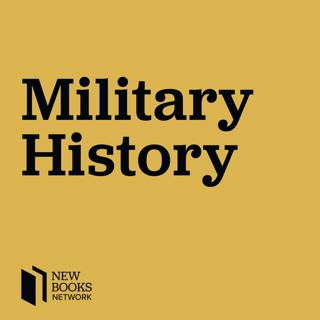
Michael Mackenzie, "Otto Dix and the First World War: Grotesque Humor, Camaraderie and Remembrance" (Peter Lang, 2019)

Otto Dix fought in the First World War for the better part of four years before becoming one of the most important artists of the Weimar era. Marked by the experience, he made monumental, difficult and powerful works about it. Whereas Dix has often been presented as a lone voice of reason and opposition in Germany between the wars, this book locates his work squarely in the mainstream of Weimar society. Informed by recent studies of collective remembrance, of camaraderie, and of the popular, working-class socialist groups that commemorated the war, Michael Mackenzie's book Otto Dix and the First World War: Grotesque Humor, Camaraderie and Remembrance (Peter Lang, 2019) takes Dix's very public, monumental works out of the isolation of the artist's studio and returns them to a context of public memorials, mass media depictions, and the communal search for meaning in the war. The author argues that Dix sought to establish a community of veterans through depictions of the war experience that used the soldier's humorous, grotesque language of the trenches and that deliberately excluded women and other non-combatants. His depictions were preoccupied with heteronormativity in the context of intimate touch and tenderness between soldiers at the front and with sexual potency in the face of debilitating wounds suffered by others in the war. Learn more about your ad choices. Visit megaphone.fm/adchoices Support our show by becoming a premium member! https://newbooksnetwork.supportingcast.fm/military-history

Jaksot(1632)

John Steinberg, “All the Tsar’s Men: Russia’s General Staff and the Fate of the Empire, 1898-1914” (Johns Hopkins UP, 2010)

John Steinberg, “All the Tsar’s Men: Russia’s General Staff and the Fate of the Empire, 1898-1914” (Johns Hopkins UP, 2010)

The Bolshevik Revolution of 1917 was the most important political event of the twentieth century (no Revolution; no Nazis; no Nazis, no World War II; no World War II, no Cold War). It’s little wonder,...

9 Heinä 20101h 11min

Michael Kranish, “Flight from Monticello: Thomas Jefferson at War” (Oxford UP, 2010)

Michael Kranish, “Flight from Monticello: Thomas Jefferson at War” (Oxford UP, 2010)

The past is always with us, but it’s really always with politicians. Once you put yourself up for office, and particularly national office, everybody and his brother is going to start digging into you...

1 Heinä 201058min

Heather Cox Richardson, “Wounded Knee: Party Politics and the Road to an American Massacre” (Basic Books, 2010)

Heather Cox Richardson, “Wounded Knee: Party Politics and the Road to an American Massacre” (Basic Books, 2010)

Of all the events in American history, two are far and away the most troubling: slavery and the near-genocidal war against native Americans. In truth, we’ve dealt much better with the former than the ...

3 Kesä 20101h 12min

Fearghal McGarry, “The Rising: Ireland, Easter 1916” (Oxford UP, 2010)

Fearghal McGarry, “The Rising: Ireland, Easter 1916” (Oxford UP, 2010)

Sometimes when you win you lose. That’s called a Pyrrhic victory. But sometimes when you lose you win. We don’t have a name for that (at least as far as I know). But we might call it an “Easter Rising...

24 Touko 20101h 8min

Jeffrey Reznick, “John Galsworthy and the Disabled Soldiers of the Great War” (Manchester UP, 2009)

Jeffrey Reznick, “John Galsworthy and the Disabled Soldiers of the Great War” (Manchester UP, 2009)

You may not know who John Galsworthy is, but you probably know his work. Who hasn’t seen some production of The Forsyte Saga? Galsworthy was one of the most popular and famous British writers of the e...

18 Touko 201058min

Andrew Donson, “Youth in the Fatherless Land: War Pedagogy, Nationalism, and Authority in Germany, 1914-1918” (Harvard UP, 2010)

Andrew Donson, “Youth in the Fatherless Land: War Pedagogy, Nationalism, and Authority in Germany, 1914-1918” (Harvard UP, 2010)

I was a little kid during the Vietnam War. It was on the news all the time, and besides my uncle was fighting there. I followed it closely, or as closely as a little kid can. I never thought for a mom...

23 Huhti 20101h 4min

Ben Kiernan, “Blood and Soil: A World History of Genocide and Extermination from Sparta to Darfur” (Yale UP, 2007)

Ben Kiernan, “Blood and Soil: A World History of Genocide and Extermination from Sparta to Darfur” (Yale UP, 2007)

Chimps, our closest relatives, kill each other. But chimps do not engage in anything close to mass slaughter of their own kind. Why is this? There are two possible explanations for the difference. The...

12 Helmi 20101h 6min

Julian E. Zelizer, “Arsenal of Democracy: The Politics of National Security From WWII to the War on Terrorism” (Basic Books, 2010)

Julian E. Zelizer, “Arsenal of Democracy: The Politics of National Security From WWII to the War on Terrorism” (Basic Books, 2010)

Historians are by their nature public intellectuals because they are intellectuals who write about, well, the public. Alas, many historians seem to forget the “public” part and concentrate on the “int...

14 Tammi 20101h 7min

Suosittua kategoriassa Yhteiskunta

i-dont-like-mondays
sita
olipa-kerran-otsikko
kaksi-aitia
siita-on-vaikea-puhua
ihme-ja-kumma
hupiklubi
uutiscast
poks
antin-palautepalvelu
gogin-ja-janin-maailmanhistoria
kolme-kaannekohtaa
mamma-mia
rss-murhan-anatomia
yopuolen-tarinoita-2
aikalisa
rss-palmujen-varjoissa
meidan-pitais-puhua
loukussa
mystista