#351 The Founder of Rolex: Hans Wilsdorf
Founders4 Kesä 2024

#351 The Founder of Rolex: Hans Wilsdorf

What I learned from reading about Hans Wilsdorf and the founding of Rolex. ---- Build relationships at the Founders Conference on July 29th-July 31st in Scotts Valley, California ---- "Learning from history is a form of leverage." — Charlie Munger. Founders Notes gives you the superpower to learn from history's greatest entrepreneurs on demand. Get access to Founders Notes here. You can search all my notes and highlights from every book I've ever read for the podcast. You can also ask SAGE any question and SAGE will read all my notes, highlights, and every transcript from every episode for you. A few questions I've asked SAGE recently: What are the most important leadership lessons from history's greatest entrepreneurs? Can you give me a summary of Warren Buffett's best ideas? (Substitute any founder covered on the podcast and you'll get a comprehensive and easy to read summary of their ideas) How did Edwin Land find new employees to hire? Any unusual sources to find talent? What are some strategies that Cornelius Vanderbilt used against his competitors? Get access to Founders Notes here. ---- (0:01) At the age of twelve I was an orphan. (1:00) My uncles made me become self-reliant very early in life. Looking back, I believe that it is to this, that much of my success is due. (9:00) The idea of wearing a watch on one's wrist was thought to be contrary to the conception of masculinity. (10:00) Prior to World War 1 wristwatches for men did not exist. (11:00) Business is problems. The best companies are just effective problem solving machines. (12:00) My personal opinion is that pocket watches will almost completely disappear and that wrist watches will replace them definitively! I am not mistaken in this opinion and you will see that I am right." —Hans Wilsdorf, 1914 (14:00) The highest order bit is belief: I had very early realized the manifold possibilities of the wristlet watch and, feeling sure that they would materialize in time, I resolutely went on my way. Rolex was thus able to get several years ahead of other watch manufacturers who persisted in clinging to the pocket watch as their chief product. (16:00) Clearly, the companies for whom the economics of twenty-four-hour news would have made the most sense were the Big Three broadcasters. They already had most of what was needed— studios, bureaus, reporters, anchors almost everything but a belief in cable. — Ted Turner's Autobiography (Founders #327) (20:00) Business Breakdowns #65 Rolex: Timeless Excellence (27:00) Rolex was effectively the first watch brand to have real marketing dollars put behind a watch. Rolex did this in a concentrated way and they've continued to do it in a way that is simply just unmatched by others in their industry. (28:00) It's tempting during recession to cut back on consumer advertising. At the start of each of the last three recessions, the growth of spending on such advertising had slowed by an average of 27 percent. But consumer studies of those recessions had showed that companies that didn't cut their ads had, in the recovery, captured the most market share. So we didn't cut our ad budget. In fact, we raised it to gain brand recognition, which continued advertising sustains. — Four Seasons: The Story of a Business Philosophy by Isadore Sharp. (Founders #184) (32:00) Social proof is a form of leverage. — Poor Charlie's Almanack: The Wit and Wisdom of Charlie Munger. (Founders #329) (34:00) What really matters is Hans understood the opportunity better than anybody else, and invested heavily in developing the technology to bring his ideas to fruition. (35:00) On keeping the main thing the main thing for decades: In developing and extending my business, I have always had certain aims in mind, a course from which I never deviated. (41:00) Rolex wanted to only be associated with the best. They ran an ad with the headline: Men who guide the destinies of the world, where Rolex watches. (43:00) Opportunity creates more opportunites. The Oyster unlocked the opportunity for the Perpetual. (44:00) The easier you make something for the customer, the larger the market gets: “My vision was to create the first fully packaged computer. We were no longer aiming for the handful of hobbyists who liked to assemble their own computers, who knew how to buy transformers and keyboards. For every one of them there were a thousand people who would want the machine to be ready to run.” — Steve Jobs (48:00) More sources: Rolex Jubilee: Vade Mecum by Hans Wilsdorf Rolex Magazine: The Hans Wilsdorf Years Hodinkee: Inside the Manufacture. Going Where Few Have Gone Before -- Inside All Four Rolex Manufacturing Facilities Vintage Watchstraps Blog: Hans Wilsdorf and Rolex Business Breakdowns #65 Rolex: Timeless Excellence Luxury Strategy: Break the Rules of Marketing to Build Luxury Brands by Jean Noel Kapferer and Vincent Bastien ---- “I have listened to every episode released and look forward to every episode that comes out. The only criticism I would have is that after each podcast I usually want to buy the book because I am interested so my poor wallet suffers. ” — Gareth Be like Gareth. Buy a book: All the books featured on Founders Podcast ---- Founders Notes gives you the ability to tap into the collective knowledge of history's greatest entrepreneurs on demand. Use it to supplement the decisions you make in your work. Get access to Founders Notes here. ---- “I have listened to every episode released and look forward to every episode that comes out. The only criticism I would have is that after each podcast I usually want to buy the book because I am interested so my poor wallet suffers. ” — Gareth Be like Gareth. Buy a book: All the books featured on Founders Podcast

Jaksot(436)

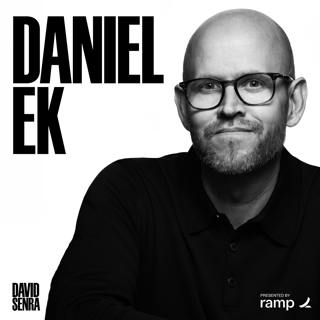
My conversation with Daniel Ek: Founder of Spotify

My conversation with Daniel Ek: Founder of Spotify

I started a new show so I can have long-form conversations with the greatest living founders. You can watch on Spotify, Apple Podcasts, YouTube, X, or the web.  The new show is on a separate feed so ...

28 Syys 20252h 9min

#401 How Bill Gates Works

#401 How Bill Gates Works

This episode is about Bill Gates' obsessive drive and hardcore work ethic. Bill Gates had the rarest entrepreneurial talent—the ability to see the leverage point in a new industry, seize it with relen...

24 Syys 20251h 8min

#400 The Stubborn Genius of James Dyson

#400 The Stubborn Genius of James Dyson

This episode covers the extreme perseverance and the stubborn genius of James Dyson. Dyson has a business philosophy which is very different from anything you might have encountered before. A philos...

12 Syys 20251h 13min

#399 How Elon Works

#399 How Elon Works

This episode covers the insanely valuable company-building principles of Elon Musk—and nothing else. I spent well over 60 hours reading (and rereading) the biography of Elon Musk written by Walter Is...

25 Elo 20251h 33min

#398 Steve Jobs In His Own Words (Make Something Wonderful)

#398 Steve Jobs In His Own Words (Make Something Wonderful)

A curated collection of Steve’s speeches, interviews, and correspondence, Make Something Wonderful offers a window into how one of the world’s most creative entrepreneurs approached his life and work....

14 Elo 20252h 1min

#397 Jiro Ono: Simplicity Is The Ultimate Advantage

#397 Jiro Ono: Simplicity Is The Ultimate Advantage

Jiro Ono is the greatest living sushi chef. He was kicked out his house when he was 9. He started working in a restaurant so he wouldn't have to sleep under a bridge. He never stopped. Over his 75 ye...

4 Elo 202541min

#396 The Obsession of Enzo Ferrari

#396 The Obsession of Enzo Ferrari

I've read hundreds of thousands of words about Enzo Ferrari. For this episode I distilled down his most important ideas into 1 hour. Ferrari was truly one of history's greatest obsessives. Episode sp...

30 Heinä 202557min

#395 How Geniuses and Speed Freaks Reengineered F1 into the World's Fastest-Growing Sport

#395 How Geniuses and Speed Freaks Reengineered F1 into the World's Fastest-Growing Sport

Those on the margins often come to control the center. That maxim ties together the three remarkable people profiled in this episode: Colin Chapman, known as “the mad scientist of F1”, did more to in...

22 Heinä 20251h 4min

Suosittua kategoriassa Liike-elämä ja talous

sijotuskasti
psykopodiaa-podcast
mimmit-sijoittaa
rss-rahapodi
rss-rahamania
rss-lahtijat
ostan-asuntoja-podcast
rahapuhetta
rss-neuvottelija-sami-miettinen
rss-h-asselmoilanen
rss-laakispodi
inderespodi
rss-porssipuhetta
rss-startup-ministerio
rss-bisnesta-bebeja
sijoituspodi
rss-strategian-seurassa
asuntoasiaa-paivakirjat
rss-merja-mahkan-rahat
rss-paasipodi