71: The History of European Nihilism

71: The History of European Nihilism

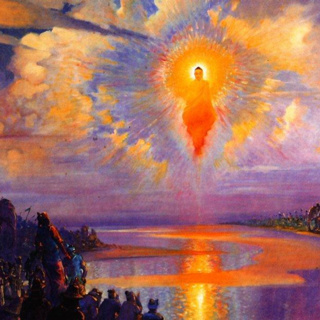
What does eternal recurrence mean in the historical sense? Nietzsche invites us to explore that question in his raising of the Problem of Science, and the notion of conflict as central to life. Today, in the penultimate episode of the season, we'll take a look into a section from Will to Power called "The History of European Nihilism", in which Nietzsche takes on the history of Europe from the perspective of his cultural/moral analysis, and charts the history of the descent into materialism as it played out in Enlightenment Europe. In his Pre-Platonic lectures, Nietzsche suggests a parallel between the project of Greek philosophy, and the progression that played out in the centuries of the Enlightenment. The Pre-Platonic Greeks experimented with materialist philosophy, eventually culminating in the atomism of Democritus and the arrival of Socrates, the ultimate logician - soon, the values of their traditions, and their long-held superstitions came to be questionable. The values of the society were undermined, and a crisis of nihilism set it. Nietzsche believes that this played out over the course of several centuries in Europe: in the form of the Reformation, then the scientific dawning of the Enlightenment rationalism with Descartes at the forefront. He comments on many of the figures we have covered this season, such as Kant, Rousseau, Schopenhauer, and others, as manifestations of the spirit of their times, who signified shifts or turning points in the European psyche. He reimagines Kant as a sentimentalist towards the concept of duty, a twin spirit with the moralistic Rousseau, who rebelled against the self-legislating rationalism of the 17th century and instead opted to be guided by feeling. Now, in Nietzsche's 19th century, he sees the ascendance of a more honest yet more gloomy period of European thought. The animalian in man is fully uncovered and embraced, and man becomes understood as a historical creature. This has dire consequences, bringing on the dissolution of society and the disbelief in all past metaphysical and moral comforts. But, as a result, the European psyche has the opportunity to enter a period of "Active Nihilism", and overcome the previous dogmas as part of a revaluation of all values. In spite of his predictions of coming great wars, Nietzsche is hopeful that the conditions of decay will lay infinite possibilities before us for the future. Contrary to many who warn of degeneration or decadence, Nietzsche cleaves to the conviction that with decay comes new growth, and that periods of dissolution are always periods of great creativity. This is, somewhat paradoxically, one of the more hopeful passages of Nietzsche, which acquiesces both to his belief in eternal recurrence, as much to the hope for something new in the future. Episode art: George Frederic Watts - Hope

Tämä jakso on lisätty Podme-palveluun avoimen RSS-syötteen kautta eikä se ole Podmen omaa tuotantoa. Siksi jakso saattaa sisältää mainontaa.

Jaksot(278)

145: The Religion of Self-Redemption (Nietzsche vs Buddhism, pt. 1)

145: The Religion of Self-Redemption (Nietzsche vs Buddhism, pt. 1)

Welcome back to The Nietzsche Podcast, Season Seven! We're beginning with a two-part episode concerning Nietzsche's view of Buddhism. This episode, we will consider some of the basic teachings of Budd...

18 Elo 1h 53min
Q&A #16

Q&A #16

Season seven begins soon! For now, enjoy a selection of fascinating questions.

11 Elo 2h 51min
The Gay Science #25 (V.372-393)

The Gay Science #25 (V.372-393)

We've finally arrived at the conclusion of The Gay Science. The theme of these final sections is perspectivism - we have opened up a "new infinite", penetrating beyond narrow, limited views of the wor...

4 Elo 1h 51min
The Gay Science #24 (V.364-371)

The Gay Science #24 (V.364-371)

We incomprehensible ones - how our thought branches in every direction, how willing we are to shed our bark, to grow, to change! In this episode, we discuss, among many other sections, important passa...

28 Heinä 1h 37min
The Gay Science #23 (V.356-363)

The Gay Science #23 (V.356-363)

In this chapter of our readthrough, we confront "the problem of the actor". Nietzsche predicts that things shall become ever more "artistic" in Europe, as the actor's talent self-falsification becomes...

21 Heinä 2h 21min
The Gay Science #22 (V.348-355)

The Gay Science #22 (V.348-355)

The grand experiment continues with a series of naturalistic explanations for the origins of ideas or modes of life. The scholar's intellectual habits are inherited "in blood and instinct"; Spinoza's ...

14 Heinä 1h 54min

The Gay Science #21 (V.343-347)

The Gay Science #21 (V.343-347)

"You tremble, carcass?" After a long hiatus, we shall now fearlessly embark upon book V of The Gay Science, added to the text in 1887. In this final division of the text, we'll see Nietzsche's attempt...

7 Heinä 2h 5min

Q&A #15

Q&A #15

You know what it is. Questions get answered. The Gay Science readthrough begins in a week's time.

30 Kesä 2h 49min

Suosittua kategoriassa Yhteiskunta

olipa-kerran-otsikko
i-dont-like-mondays
hupiklubi
siita-on-vaikea-puhua
download
uutiscast
seitseman
sita
poks
antin-palautepalvelu
mamma-mia
gogin-ja-janin-maailmanhistoria
kaksi-aitia
kolme-kaannekohtaa
yopuolen-tarinoita-2
rss-murhan-anatomia
aikalisa
rss-palmujen-varjoissa
loukussa
ihme-ja-kumma