Unmasking the Lethality of Family Violence
Cracking Addiction5 Heinä 2023

Unmasking the Lethality of Family Violence

Dr. Ferghal Armstrong and Steve Herd delve into the grim reality of family violence, exposing its potential for lethality. They focus on key risk factors, including the perpetrators' behaviour towards pets and their use of jealousy as a tool for control. The discussion begins by highlighting the alarming connection between the mistreatment of animals and domestic violence.

Steve Herd emphasises that harm to pets serves as a significant risk factor, revealing the narcissism and psychopathy behind the abusers' actions. Animals and people become pawns in their need for dominance, erasing any notion of respect for their victims. Dr. Armstrong further elucidates how the mistreatment of pets reflects the perpetrators' hunger for control. Their narrative of blame and avoidance of responsibility sets the stage for further violence. Dr. Armstrong chillingly suggests that targeting and harming pets often precede the escalation to harming a partner, indicating the dire situation at hand.

The conversation then delves into the risk factors associated with lethality in family violence. Jealousy emerges as a toxic and obsessive behaviour, capable of being misinterpreted as an expression of love. Steve Herd and Dr. Armstrong explore the concept of Othello syndrome, characterised by delusional jealousy that can lead to tragic consequences, as seen in the Shakespearean play. Sexual violence takes centre stage as another high-risk factor for lethality. Steve Herd highlights the historical context surrounding marital rape, with its criminalisation only occurring in the 1990s.

Dr. Armstrong challenges outdated beliefs, expressing concern over the perception of sexual violence as a right and the role of a submissive spouse. They emphasise that sexual violence stems from a desire for dominance and control rather than any biological need. The discussion concludes by reinforcing that the risk factors discussed are not isolated incidents but rather pervasive patterns within family violence. It is stressed that family violence is a gendered behaviour, driven by choices and a hunger for power. Steve Herd and Dr. Armstrong highlight the importance of addressing these issues comprehensively to effect meaningful change. In the final moments, Steve Herd and Dr. Armstrong emphasise the need to evaluate risk levels in cases of family violence.

By critically assessing the identified risk factors, they can develop effective intervention strategies to protect potential victims. Join Dr. Ferghal Armstrong and Steve Herd in this revealing episode of Cracking Addiction, where they unravel the dark truths behind family violence, unmasking its potential for lethality and offering insights into the path to intervention.

Jaksot(238)

Dopamine, Relapse, and Recovery: Why Addiction Needs Long-Term Management

Dopamine, Relapse, and Recovery: Why Addiction Needs Long-Term Management

A lot of people still think addiction recovery is just about willpower.But addiction neuroscience tells a different story: dopamine, the reward system, and relapse risk all help explain why recovery o...

25 Maalis 5min
Why You Can Be Detoxed and Still Addicted

Why You Can Be Detoxed and Still Addicted

Addiction neuroscience, dopamine, cravings: detox ends withdrawal, but it does not end addiction.The MythA common myth in addiction recovery is that once detox is over, the problem is solved. Many peo...

18 Maalis 5min
Relapse Happens to Everyone: Here's the Science Why - Addiction Basics 06

Relapse Happens to Everyone: Here's the Science Why - Addiction Basics 06

Dr. Fergal Armstrong reframes relapse in addiction, explaining why it's not a personal failure but a common part of the recovery journey, comparable to chronic illnesses. Understanding the neuroscienc...

11 Maalis 5min
The Science of Withdrawal: What's Actually Happening? - Addiction Basics #5

The Science of Withdrawal: What's Actually Happening? - Addiction Basics #5

Withdrawal is one of the most feared parts of addiction recovery.But neuroscience shows something important:Withdrawal isn’t a failure of willpower — it’s the brain restoring balance after long-term c...

4 Maalis 5min

Addiction vs Dependence vs Tolerance: The Critical Medical Difference

Addiction vs Dependence vs Tolerance: The Critical Medical Difference

🚨 TOLERANCE ≠ ADDICTION 🚨Most people — even healthcare professionals — use these terms incorrectly.And that confusion is hurting patients.In this episode, we break down:🧠 The real definition of add...

25 Helmi 5min

Why Buprenorphine Is Safer Than Full Opioid Agonists

Why Buprenorphine Is Safer Than Full Opioid Agonists

Most people think methadone is the only real option for opioid addiction.Wrong.Buprenorphine — especially long-acting injectable depot — is flipping the entire system upside down.No daily pharmacy vis...

23 Helmi 28min

How Cravings Work: Limbic System vs Prefrontal Cortex - Addiction Basics EP3

How Cravings Work: Limbic System vs Prefrontal Cortex - Addiction Basics EP3

Addiction neuroscience explains why wanting to quit isn’t the same as being able to quit. Dopamine reshapes the brain’s reward system.In Episode 3 of Addiction Basics, we tackle one of the most painfu...

18 Helmi 6min
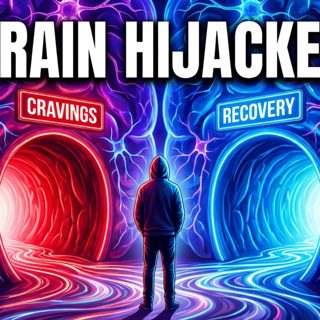
Dopamine and Addiction: The Science of Cravings - Addiction Basics EP2

Dopamine and Addiction: The Science of Cravings - Addiction Basics EP2

Addiction neuroscience explained. Dopamine, cravings, brain recovery, and neuroplasticity — backed by research.If you’ve ever wondered how addiction works in the brain, this is the science most people...

12 Helmi 6min

Suosittua kategoriassa Terveys ja hyvinvointi

unicast
rss-hanna-tikander
rss-pitaisko-erota
voi-hyvin-meditaatiot-2
tiedenaiset-podcast
psykopodiaa-podcast
rss-narsisti
rss-kuumilla-aalloilla
vakeva-elama-viisaampi-mieli-vahvempi-keho
rss-pt-paahtio
puhu-muru
meditaatiot-suomeksi
terapiassa
junnut-pelissa
rss-kyykkya-ja-kuoharia
fitnessvastaanotto
selviytyjat-tarinoita-elamasta
katilon-kahvitunti
rss-seuraava-potilas
rss-piia-ja-betti